
Products Knowledge
What Is Fruit Juice OEM and How Does It Work?
Jan
As the global beverage industry continues to expand, brands face increasing pressure to innovate quickly while maintaining consistent quality, cost efficiency, and regulatory compliance. For many companies, especially startups and international brands, building an in-house production facility is neither practical nor scalable. This is where Fruit Juice OEM becomes a strategic solution. Fruit Juice OEM allows brands to outsource juice production to specialized manufacturers while retaining full control over branding, formulation goals, and market positioning.
Rather than focusing solely on manufacturing, Fruit Juice OEM partners provide end-to-end support, helping brands move seamlessly from idea development to finished products ready for retail or export. Vietnam has become a key hub for Fruit Juice OEM thanks to its abundant fruit resources, modern processing capabilities, and growing reputation for international-quality manufacturing. This article explores what Fruit Juice OEM is, how it works, and why it has become a preferred model for beverage brands worldwide.
1. What Is Fruit Juice OEM?
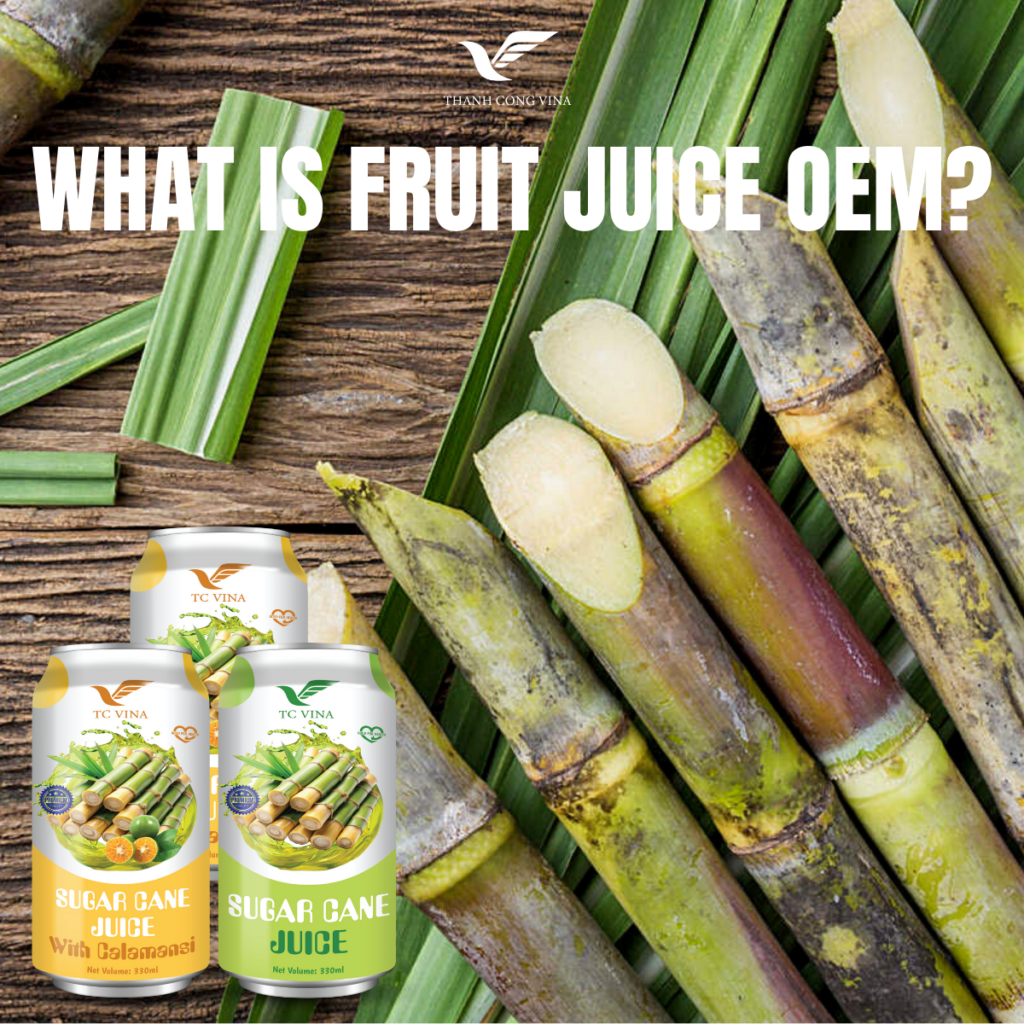
Fruit Juice OEM refers to a manufacturing model in which a specialized producer manufactures juice products on behalf of a brand according to predefined specifications. The brand owns the product concept and market identity, while the OEM partner handles production, quality control, and often logistics.
Core Definition and Business Model
In a Fruit Juice OEM arrangement, the manufacturer produces juice products under the brand’s requirements rather than selling pre-existing formulas. This differs from private label manufacturing, where products are typically standardized and only lightly customized.
OEM manufacturing allows brands to define juice composition, sweetness levels, ingredient sources, packaging formats, and compliance standards. The manufacturer’s role is to translate these requirements into a scalable, repeatable production process.
Why Brands Choose Fruit Juice OEM
Fruit Juice OEM offers flexibility and control without the capital burden of owning a factory. Brands can focus on marketing, distribution, and consumer engagement while relying on the OEM’s technical expertise.
This model is especially attractive to brands entering new markets, as it reduces upfront investment, shortens time to market, and ensures consistent quality from the first batch onward.
2. How the Fruit Juice OEM Process Works
The Fruit Juice OEM process is structured, collaborative, and designed to minimize risk while maximizing efficiency. Each phase plays a crucial role in ensuring product success.
Initial Consultation and Concept Alignment
The process begins with a detailed consultation to understand the brand’s vision, target market, and commercial goals. OEM partners assess product concepts for feasibility, cost implications, and regulatory considerations.
This early alignment ensures that expectations are realistic and that the final product can be produced at scale without compromising quality or profitability.
Sample Development and Validation
After concept approval, the manufacturer develops product samples for evaluation. These samples allow brands to test flavor profiles, texture, and appearance before committing to mass production.
Adjustments are made through iterative testing until the product meets both sensory and technical standards. This stage is critical for avoiding costly changes later in the production cycle.
3. Ingredient Sourcing and Formulation in Fruit Juice OEM
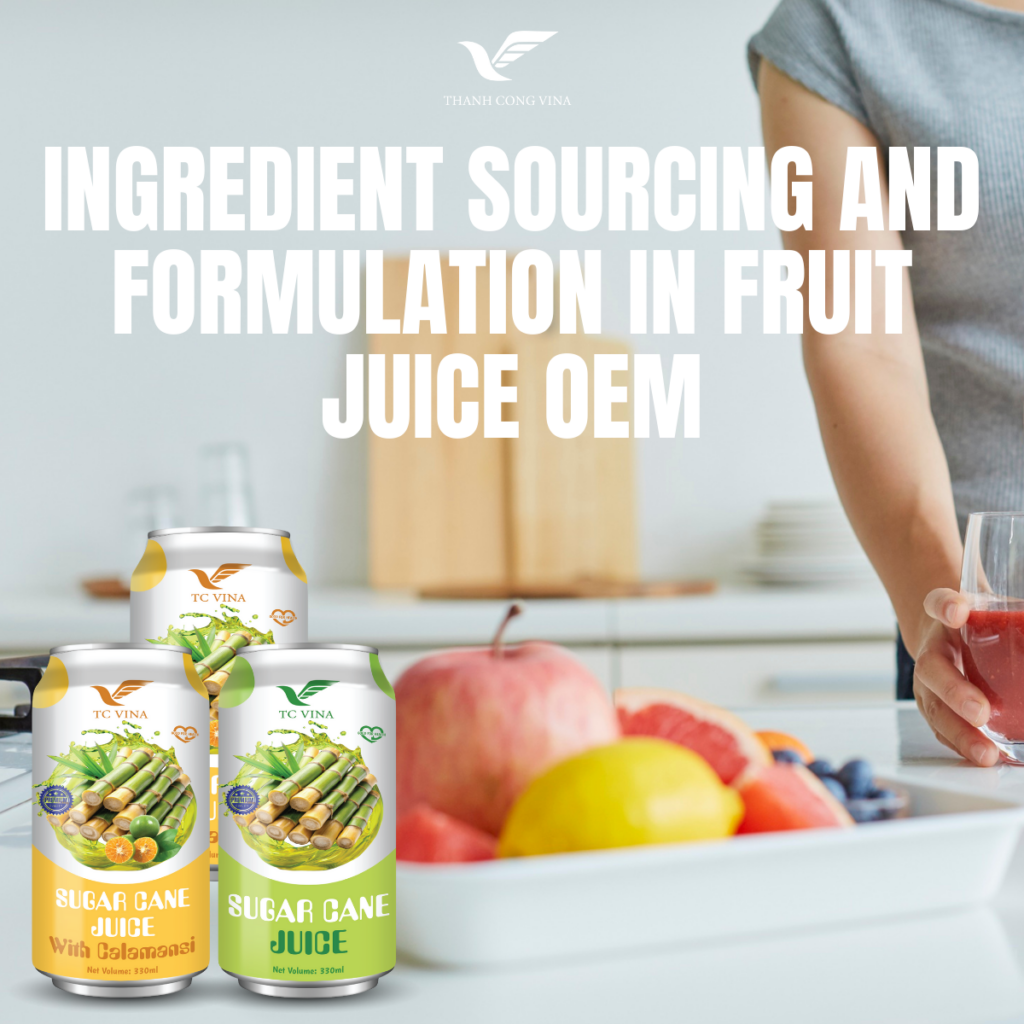
Ingredient quality is fundamental to any juice product. Fruit Juice OEM manufacturers are responsible for sourcing, testing, and integrating ingredients into stable, high-quality formulations.
Raw Material Selection and Traceability
Reliable Fruit Juice OEM partners source fruits from certified suppliers with full traceability. This ensures consistent quality and supports food safety requirements.
Vietnam’s agricultural diversity allows OEM manufacturers to access tropical fruits such as mango, pineapple, passion fruit, and guava, offering brands a competitive advantage in flavor variety and freshness.
Formulation for Stability and Consistency
Formulation development balances taste, nutrition, shelf life, and production efficiency. OEM manufacturers conduct laboratory testing to ensure products remain stable under various storage conditions.
By standardizing formulations, manufacturers guarantee consistency across batches, which is essential for maintaining brand credibility and consumer trust.
4. Quality Control and Regulatory Compliance
One of the most significant advantages of Fruit Juice OEM is access to established quality systems and regulatory expertise.
International Quality Standards
Professional Fruit Juice OEM manufacturers operate under globally recognized standards such as ISO and HACCP. These systems govern every aspect of production, from ingredient inspection to final product testing.
Continuous monitoring reduces the risk of contamination, spoilage, or labeling errors, protecting both brands and end consumers.
Export and Market-Specific Regulations
Different regions have different regulatory requirements. OEM manufacturers guide brands through ingredient approvals, nutritional labeling, and documentation for export markets.
This expertise allows brands to enter international markets confidently without navigating complex regulations independently.
5. Manufacturing Technology and Production Efficiency
Modern manufacturing technology is essential for producing high-quality juice at scale. Fruit Juice OEM manufacturers invest heavily in advanced processing systems.
Processing Methods and Shelf Life Optimization
Depending on product positioning, OEM manufacturers may use pasteurization, aseptic filling, or other technologies to preserve flavor and nutrients while extending shelf life.
The choice of processing method impacts product quality, logistics, and pricing, making manufacturer expertise critical to decision-making.
Cost Efficiency Through Scale
Fruit Juice OEM manufacturers achieve cost efficiency through optimized batch sizes, reduced waste, and streamlined workflows. These efficiencies translate into competitive pricing for brands.
Predictable production costs allow brands to plan pricing strategies and margins with confidence.
6. Packaging Solutions and Branding Support
Packaging is more than a container; it is a key component of product identity and consumer appeal. Fruit Juice OEM manufacturers provide packaging solutions that balance aesthetics and functionality.
Packaging Formats and Materials
OEM partners offer a wide range of packaging options, including glass bottles, PET bottles, cans, and aseptic cartons. Each option is evaluated for compatibility with the product and target market.
Sustainable packaging is increasingly prioritized, aligning with global environmental trends and consumer expectations.
Ensuring Brand Consistency
Manufacturers work closely with brands to ensure packaging designs are production-ready. This prevents technical issues while maintaining visual consistency across product lines.
By aligning packaging with brand identity, OEM partners contribute directly to market success.
7. Logistics, Supply Chain, and Market Readiness
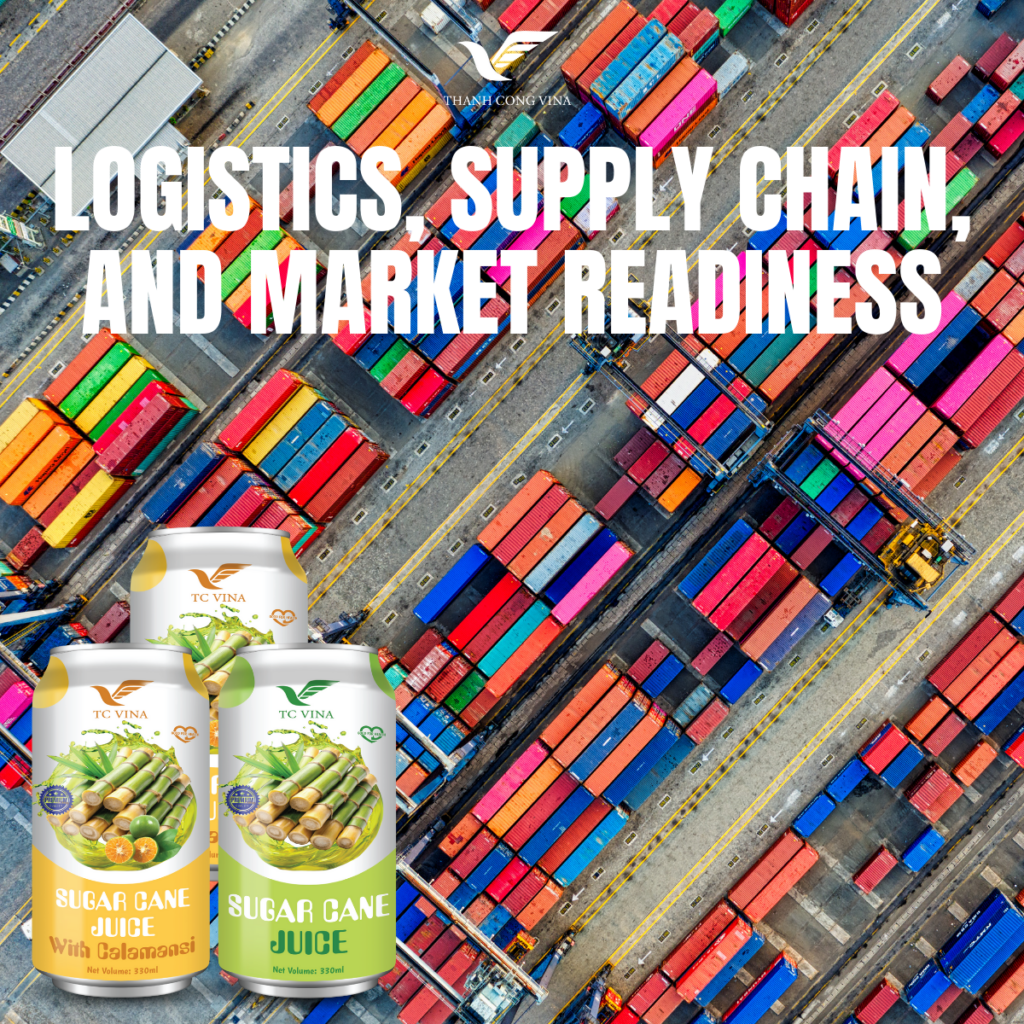
Efficient logistics are essential for bringing products from factory to shelf. Fruit Juice OEM manufacturers often provide integrated supply chain solutions.
End-to-End Supply Chain Coordination
OEM partners manage raw material procurement, production scheduling, and finished goods handling. This integrated approach reduces lead times and minimizes operational complexity.
Brands benefit from simplified coordination and reliable delivery timelines.
Supporting Global Distribution
Vietnam-based Fruit Juice OEM manufacturers are experienced in export logistics, supporting shipments to Asia, Europe, and the Middle East.
This global readiness makes OEM manufacturing a scalable solution for international growth.
8. Advantages of Fruit Juice OEM for Beverage Brands
Fruit Juice OEM offers strategic advantages that extend beyond production efficiency.
Reduced Risk and Faster Market Entry
By outsourcing manufacturing, brands avoid large capital investments and operational risks. Faster development cycles allow brands to respond quickly to market trends.
This agility is especially valuable in competitive beverage categories.
Long-Term Partnership and Innovation
Successful OEM relationships are built on long-term collaboration. Manufacturers continuously invest in technology and innovation, supporting product evolution over time.
Brands benefit from ongoing access to expertise and infrastructure without increasing internal complexity.
Conclusion
Fruit Juice OEM is more than a manufacturing solution; it is a strategic partnership that enables brands to bring high-quality juice products to market efficiently and reliably. By covering every stage from formulation and sourcing to production, packaging, and logistics, Fruit Juice OEM manufacturers allow brands to focus on growth and differentiation.
Vietnam’s position as a leading manufacturing hub makes it an ideal destination for Fruit Juice OEM partnerships. With strong quality systems, abundant raw materials, and export-ready infrastructure, Thanh Cong Vina has established itself as a trusted partner in the beverage industry. As an experienced Fruit Juice OEM provider, Thanh Cong Vina supports brands with consistent quality, scalable production, and long-term collaboration. Choosing Thanh Cong Vina means working with a Fruit Juice OEM partner committed to delivering value, reliability, and global market readiness.
