
Products Knowledge
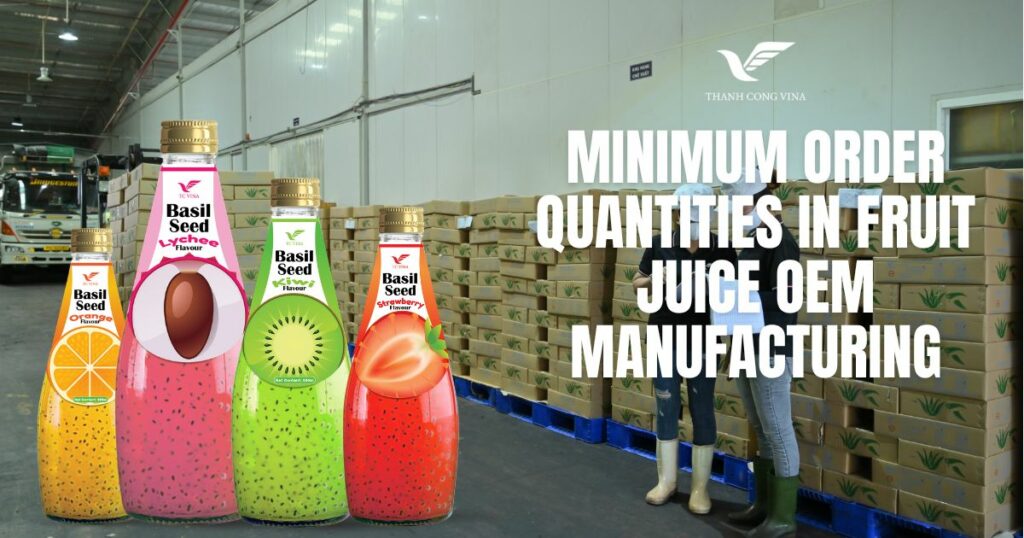
Minimum Order Quantities in Fruit Juice OEM Manufacturing
Mar
The global beverage industry continues to evolve rapidly, with fruit juice products remaining one of the most popular choices among health-conscious consumers. As new beverage brands emerge and established companies expand into new markets, many businesses turn to Fruit Juice OEM manufacturing as an efficient and scalable production solution. Original Equipment Manufacturing (OEM) allows companies to develop and distribute juice products under their own brand while relying on specialized manufacturers for production, processing, and packaging.
One important factor businesses must consider when working with OEM partners is the Minimum Order Quantity (MOQ). MOQ represents the smallest production volume that a manufacturer is willing to produce in a single order. It directly influences production costs, supply chain efficiency, and overall business strategy.
Understanding MOQ is crucial for brands planning to launch or scale fruit juice products. The right MOQ structure can help businesses optimize inventory, control costs, and maintain consistent product availability. In this article, we explore the concept of minimum order quantities in Fruit Juice OEM manufacturing, including how MOQs are determined, their benefits, and strategies for businesses to manage them effectively.
1. Understanding Minimum Order Quantities in Juice Manufacturing

What Minimum Order Quantity Means
Minimum Order Quantity, often referred to as MOQ, is the smallest number of units or production volume that a manufacturer requires per order. In the fruit juice industry, MOQs can vary widely depending on factors such as production equipment, packaging type, ingredient sourcing, and manufacturing complexity.
OEM manufacturers set MOQs to ensure efficient production operations. Producing very small quantities can increase operational costs because manufacturing lines require setup, cleaning, and quality checks before each production run. These processes consume time and resources regardless of production size.
By establishing a minimum order threshold, manufacturers can maintain production efficiency while ensuring that both parties benefit from the partnership.
Why MOQ Is Important for Beverage Brands
For beverage brands, MOQ plays a critical role in planning product launches and scaling operations. A well-defined MOQ ensures that production costs remain manageable while maintaining consistent product quality.
For startups entering the beverage market, understanding MOQ helps determine the initial investment required for production. Companies must carefully balance order size with demand forecasts to avoid excess inventory or supply shortages.
Large beverage brands also benefit from MOQ structures because they allow manufacturers to plan raw material sourcing, production schedules, and logistics more effectively.
In the context of Fruit Juice OEM manufacturing, MOQ serves as a foundation for building a sustainable production partnership between brands and manufacturers.
2. Factors That Influence Minimum Order Quantities
Production Equipment and Manufacturing Efficiency
Modern juice manufacturing relies on advanced production lines designed to process large volumes efficiently. These machines require a certain production scale to operate optimally.
For example, filling machines for bottled beverages often operate at high speeds, producing thousands of units per hour. Running such equipment for very small orders would result in inefficient production and higher costs.
As a result, OEM manufacturers typically set MOQs based on the optimal output of their machinery. This ensures that production runs are efficient and economically viable.
Packaging and Material Requirements
Packaging is another key factor influencing MOQ in Fruit Juice OEM manufacturing. Different packaging formats require different materials, molds, and production setups.
Common packaging options include:
-
PET bottles
-
Glass bottles
-
Aluminum cans
-
Aseptic cartons
Each packaging type has its own supply chain requirements. For instance, bottle suppliers may require bulk orders of containers, labels, or caps. These supply chain constraints contribute to the overall MOQ set by the manufacturer.
Ingredient Sourcing and Raw Material Supply
Fruit juice production depends heavily on agricultural raw materials. Manufacturers must source fruits, concentrates, sweeteners, and additives in quantities that meet production needs.
Purchasing ingredients in bulk helps reduce costs and ensures consistent supply. However, suppliers may also impose minimum purchase quantities. These requirements influence the final MOQ offered to beverage brands.
By aligning ingredient sourcing with production schedules, OEM manufacturers maintain both quality consistency and cost efficiency.
3. Benefits of MOQ in Fruit Juice OEM Partnerships

Cost Efficiency for Both Parties
One of the main advantages of MOQ is cost optimization. Large production volumes allow manufacturers to reduce per-unit production costs by spreading operational expenses across more units.
These savings can benefit beverage brands by lowering the cost of goods and improving profit margins. Efficient production also reduces waste and ensures better utilization of manufacturing resources.
For brands planning long-term growth, MOQ-based production offers a more sustainable approach to scaling operations.
Consistent Product Quality
Producing beverages in standardized batches helps maintain product consistency. OEM manufacturers can carefully monitor ingredient ratios, processing temperatures, and quality checks when production runs follow a structured MOQ system.
Consistency is especially important for beverage brands seeking to build consumer trust. Customers expect the same flavor, texture, and appearance every time they purchase a product.
By maintaining consistent batch sizes, manufacturers ensure that each production run meets the same quality standards.
Improved Supply Chain Management
MOQ also contributes to more efficient supply chain management. Larger production orders allow manufacturers to plan raw material purchases, packaging procurement, and distribution logistics more effectively.
This structured approach reduces delays and improves inventory management for both manufacturers and brand owners.
For international beverage brands, stable supply chains are essential for maintaining market presence and meeting retailer demands.
4. Fruit Juice OEM Manufacturing: How MOQ Affects Production Strategy
Planning Production for Market Demand
In Fruit Juice OEM manufacturing, MOQ directly influences how brands plan their production strategies. Companies must analyze market demand carefully before placing orders with their OEM partner.
Demand forecasting helps determine whether the MOQ aligns with expected sales volumes. Brands launching new products may initially place smaller orders to test market response before scaling production.
For established products with stable demand, larger production runs can help optimize costs and ensure continuous supply.
Inventory Management and Storage Considerations
Managing inventory is another important factor when working with MOQ-based manufacturing. Beverage products have shelf life limitations, so brands must ensure that stored inventory remains fresh and marketable.
Effective inventory strategies include:
-
Coordinating production schedules with sales cycles
-
Maintaining appropriate storage conditions
-
Distributing products across multiple markets
By aligning production quantities with market demand, companies can reduce the risk of excess stock or product waste.
Balancing Flexibility and Efficiency
Although MOQs provide efficiency benefits, manufacturers and brands often work together to create flexible production arrangements. Some OEM partners offer scalable MOQ options depending on product complexity or packaging type.
This flexibility allows businesses to experiment with new product lines while still benefiting from efficient production processes.
5. Strategies for Brands to Manage MOQ Requirements

Choosing the Right OEM Partner
Selecting the right OEM manufacturer is one of the most important steps for managing MOQ effectively. Experienced manufacturers understand the challenges faced by emerging beverage brands and may offer flexible production solutions.
When evaluating potential partners, companies should consider:
-
Production capacity
-
MOQ requirements
-
quality assurance systems
-
product development capabilities
-
export experience
A reliable partner will provide guidance on how to balance production costs with market demand.
Gradual Market Expansion
Brands entering the fruit juice industry often adopt a phased approach to production. Instead of launching nationwide immediately, they may begin with limited regional distribution.
This strategy allows companies to test consumer response while managing MOQ commitments. As demand grows, production volumes can gradually increase.
Gradual expansion reduces financial risk and allows businesses to refine their products based on market feedback.
Leveraging Multiple Product Variants
Another strategy for managing MOQ is producing multiple product variants within a single production run. For example, a brand may produce different fruit flavors using similar base ingredients and packaging.
This approach allows companies to meet MOQ requirements while offering a diverse product lineup.
It also helps brands attract different consumer segments without dramatically increasing production costs.
6. The Future of MOQ in Global Juice Manufacturing
Advancements in Flexible Manufacturing
Technological advancements are gradually transforming the beverage manufacturing industry. Modern production systems are becoming more flexible, allowing manufacturers to handle smaller batches without sacrificing efficiency.
Automation, digital monitoring, and modular production lines are helping OEM manufacturers reduce operational constraints associated with traditional MOQs.
As these technologies evolve, beverage brands may gain greater flexibility when launching new products.
Growing Demand for Custom Beverage Products
Consumers increasingly seek personalized and innovative beverage options. This trend encourages manufacturers to develop more adaptable production systems capable of supporting diverse product formulations.
While MOQ will likely remain a standard industry practice, future manufacturing models may offer more scalable solutions tailored to the needs of emerging brands.
This shift will create new opportunities for businesses entering the fruit juice market through OEM partnerships.
Conclusion
Minimum order quantities are a fundamental aspect of Fruit Juice OEM manufacturing. They ensure efficient production operations, cost optimization, and consistent product quality for both manufacturers and beverage brands. By understanding how MOQs are determined and how they influence production planning, companies can make informed decisions when launching or scaling juice products.
For brands entering competitive beverage markets, working with a reliable OEM partner is essential. Experienced manufacturers provide valuable guidance on production strategies, ingredient sourcing, packaging solutions, and regulatory compliance. These partnerships enable businesses to focus on branding and market expansion while maintaining high manufacturing standards.
Companies seeking dependable OEM solutions can benefit from collaborating with Thanh Cong Vina. With strong expertise in fruit juice production and international manufacturing standards, Thanh Cong Vina supports beverage brands in delivering high-quality products to global markets. By partnering with Thanh Cong Vina, businesses can effectively manage production volumes, maintain product consistency, and build a successful presence in the global fruit juice industry.
