
Products Knowledge
Top Benefits of Sourcing Fruit Juice Vietnam
May
The global beverage market is experiencing a massive shift toward clean-label products, natural ingredients, and authentic flavor profiles. As consumers increasingly reject synthetic additives and high-fructose corn syrups, international beverage brands, distributors, and food manufacturers are forced to rethink their supply chains. Sourcing high-quality raw materials has become the ultimate differentiator in a crowded marketplace. Amid this shifting landscape, global procurement professionals are turning their attention to Southeast Asia, where one particular nation has emerged as an undisputed powerhouse for agricultural excellence. Sourcing premium Fruit Juice Vietnam provides an exceptional opportunity for international businesses to secure nutrient-dense, high-yield, and cost-effective ingredients that satisfy the most stringent international standards. From the fertile plains of the Mekong Delta to state-of-the-art processing plants, the country offers an unparalleled combination of natural advantages, advanced technology, and competitive economic frameworks that make it the premier destination for modern beverage ingredient procurement.
1. The Natural Advantages of Fruit Juice Vietnam Production
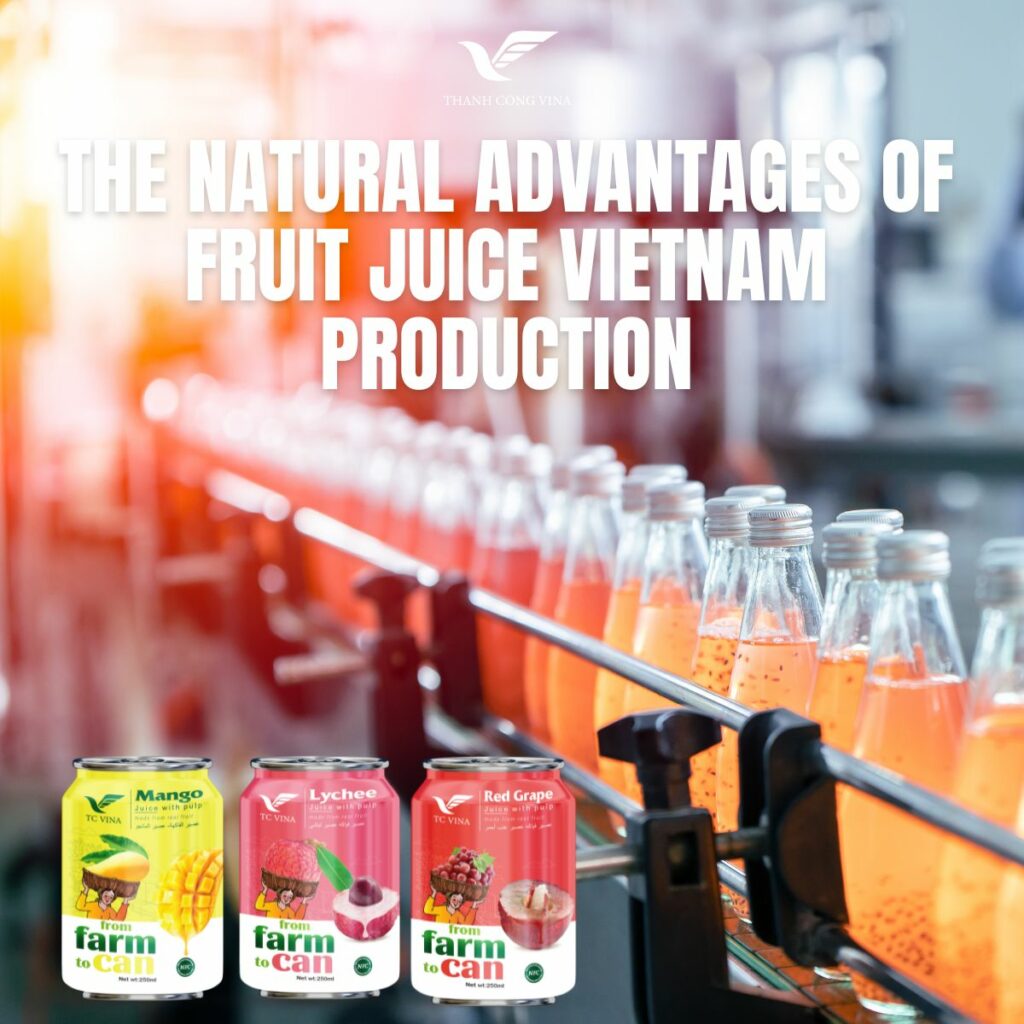
The foundation of Vietnam’s dominance in the agricultural export sector lies in its extraordinary geographical layout and unique climatic conditions. Stretching across more than fifteen degrees of latitude, the country encompasses a diverse range of microclimates, from the subtropical northern highlands to the purely tropical southern lowlands. This immense climatic diversity allows for a continuous, year-round harvest cycle of various fruit species, eliminating the harsh seasonal supply cliffs that frequently disrupt manufacturing operations in single-season geographic zones.
The southern region, anchored by the iconic Mekong Delta, features some of the most fertile alluvial soil on earth. Nourished by a vast network of river distributaries, this region provides an ideal environment for growing highly flavorful, nutrient-rich fruits such as passion fruit, mangoes, pineapples, dragon fruits, and calamansi. The abundance of natural sunlight combined with consistent rainfall patterns ensures that the harvested produce exhibits exceptionally high Brix levels (natural sugar content) and balanced acidity, which are the exact parameters required to produce world-class fruit juice ingredients.
Furthermore, the Central Highlands contribute unique high-altitude growing zones perfectly suited for temperate fruits, expanding the country’s portfolio even further. Because the processing facilities are strategically established in close proximity to these massive agricultural hubs, fruits are transported and processed within hours of being picked. This minimizes post-harvest degradation, locks in natural vitamins, and ensures that the final export product retains the vibrant color, aroma, and crisp taste profiles that global consumers demand.
2. Advanced Industrial Processing Technologies in Vietnamese Factories
Implementing Multi-Stage Falling Film Evaporators
To compete effectively on the global market, Vietnamese manufacturers have shifted away from traditional thermal concentration methods that often compromise the sensory attributes of the juice. Modern facilities utilize highly advanced multi-stage falling film evaporation systems that operate under a precise vacuum environment. By dropping the atmospheric pressure inside the processing columns, the boiling point of the fruit liquid is significantly reduced.
This low-temperature evaporation technique is absolutely critical for maintaining product integrity. It prevents the scorching or caramelization of natural sugars, which can ruin the color and create off-flavors in delicate products like clear pineapple or white guava juice. Furthermore, these vacuum systems are integrated with volatile aroma recovery units that capture the fleeting, natural scents released during concentration. These natural essences are later blended back into the final product, ensuring that the concentrate delivers an incredibly realistic sensory experience upon reconstitution.
Adopting Cold-Press and HPP Systems
In response to the skyrocketing global demand for premium, non-thermal beverage options, leading production facilities in Vietnam have integrated industrial cold-press extraction machinery paired with High-Pressure Processing (HPP) systems. Unlike traditional centrifugal extractors that generate friction heat and accelerate oxidation, cold-press systems gently crush the fruit pulp to extract every drop of liquid without raising the temperature or introducing excessive oxygen.
Following extraction, the liquid undergoes HPP, a non-thermal pasteurization technique where the packaged product is subjected to extreme levels of hydrostatic pressure. This immense pressure instantly inactivates harmful vegetative bacteria, molds, and yeasts while leaving the covalent bonds of vitamins, antioxidants, and flavor compounds completely intact. The result is a clean-label product with an extended refrigerated shelf life that mirrors the exact nutritional and sensory profile of freshly squeezed fruit, giving global brands a powerful edge in the premium beverage segment.
3. Strict Compliance with International Quality and Safety Standards
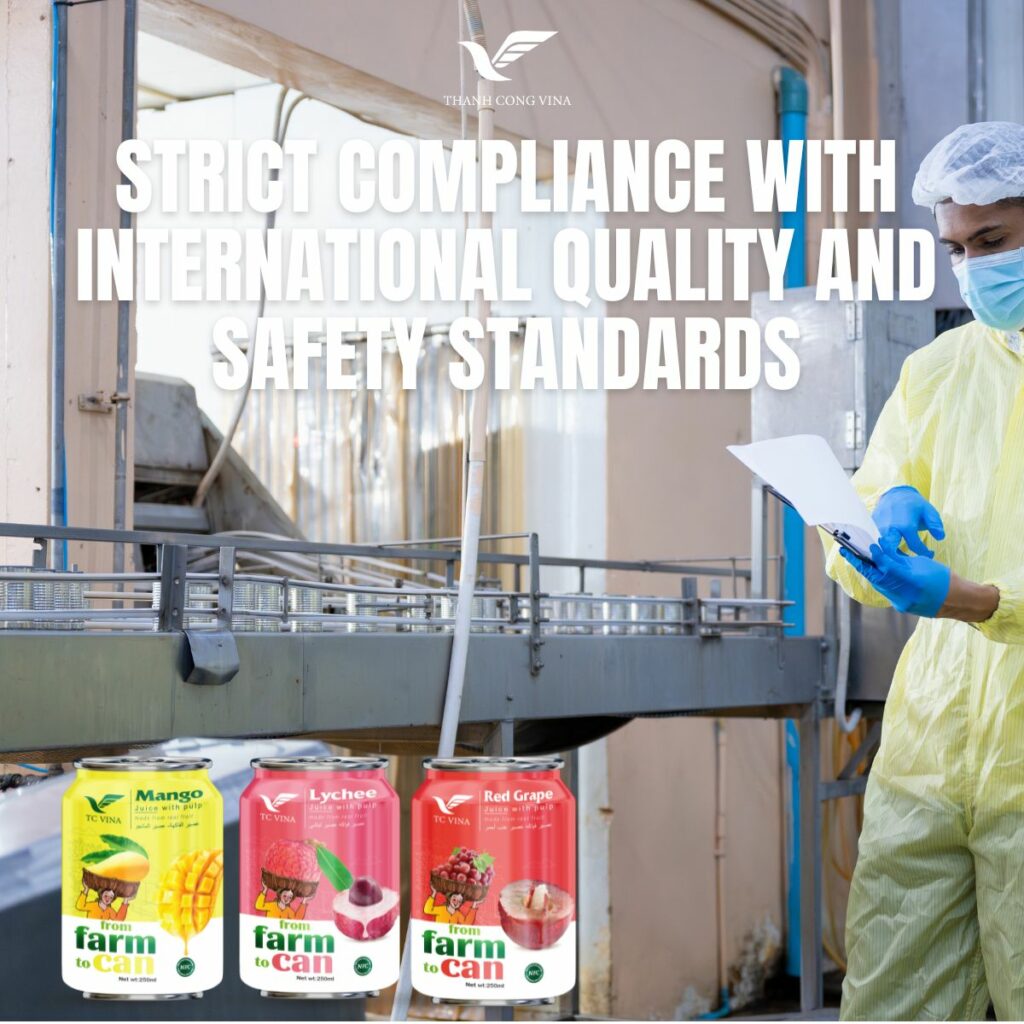
The modern landscape of agricultural manufacturing in Vietnam is defined by rigorous adherence to international food safety protocols. Local processors understand that entering highly regulated markets such as the European Union, the United States, Japan, and South Korea requires flawless compliance and absolute transparency. Consequently, top-tier manufacturing facilities across the country are audited continuously to maintain prestigious global certifications.
These systematic quality management frameworks cover every phase of the manufacturing pipeline, from initial raw material reception to the final automated aseptic filling stages. Advanced laboratories built within the factories conduct real-time microbiological testing, chemical analysis, and heavy metal screening on every batch. Any raw material or finished product that deviates even slightly from the predetermined international thresholds is immediately flagged and rejected, ensuring that only flawless products leave the shipping docks.
In addition to safety certifications, end-to-end traceability has become standard operating procedure throughout the industry. Utilizing digital batch-tracking software, manufacturers can trace an individual barrel of exported liquid back to the specific agricultural cooperative, cultivation zone, and harvest date. This granular transparency allows international buyers to confidently verify the absence of illegal pesticide residues or genetic modifications, fulfilling the strict documentation requirements of modern global customs and regulatory bodies.
4. Economic Efficiency and Strategic Logistics Frameworks
Maximizing Cost Effectiveness Through Local Labor and Infrastructure
The financial viability of sourcing agricultural ingredients from Vietnam is heavily supported by the country’s highly competitive operational cost structure. Vietnam offers a unique economic sweet spot: an abundance of highly skilled, technically proficient manufacturing labor combined with sensible, predictable operational overheads. This cost efficiency allows processing facilities to offer incredibly competitive pricing models to international buyers without cutting corners on raw material quality or safety protocols.
Additionally, the Vietnamese government has implemented highly supportive agricultural development policies. These include long-term tax incentives for high-tech agricultural processors, import tariff exemptions on advanced European manufacturing machinery, and heavy investments in rural infrastructure to connect remote farming communities directly with industrial manufacturing zones. These macroeconomic factors combine to stabilize production costs, insulating international procurement partners from the extreme price volatility frequently observed in other sourcing markets.
Leveraging Modern Deep-Water Ports and Global Trade Agreements
The strategic geographical location of Vietnam along the world’s primary maritime shipping lanes provides an immense logistical advantage for global distribution networks. Major manufacturing complexes are intentionally constructed within brief driving distances of sophisticated deep-water ports, such as Cat Lai in the south and Lach Huyen in the north. These ports are equipped with advanced cold-storage terminals and extensive electrical infrastructure to maintain precise temperature controls for refrigerated containers (reefers) awaiting transport.
Furthermore, Vietnam’s aggressive integration into the global economy through historical free trade agreements provides a massive financial shield for international buyers. Agreements such as the European Union-Vietnam Free Trade Agreement (EVFTA) and the Comprehensive and Progressive Agreement for Trans-Pacific Partnership (CPTPP) eliminate or dramatically reduce import tariffs on Vietnamese agricultural exports. This allows international beverage brands to import premium raw ingredients at substantially lower total landed costs compared to sourcing from nations without active trade pacts.
5. Sustainability and Circular Economy Initiatives in Processing
As environmental stewardship transitions from a corporate marketing buzzword to an absolute consumer mandate, the Vietnamese agricultural processing sector is heavily investing in sustainable manufacturing methodologies. Modern factories are actively shifting away from linear production models in favor of closed-loop, circular economic systems designed to eliminate agricultural waste and minimize carbon footprints.
A primary manifestation of this green transition is the comprehensive utilization of organic byproducts. The extensive volumes of fruit peels, seeds, inner cores, and fibrous pulp generated during the extraction phase are no longer discarded into local landfills. Instead, specialized processing loops convert these materials into nutrient-rich organic compost for local farmers, premium animal feed components, or dried biomass fuel. This biomass fuel is subsequently routed back into the factory’s industrial boilers, generating clean thermal energy to power the vacuum evaporation units and significantly reducing reliance on fossil fuels.
Water conservation represents another massive pillar of sustainable processing within the country. The concentration of fresh fruit inherently releases vast volumes of pure water vapor. Advanced processing plants utilize specialized vapors-recovery systems to capture, condense, and treat this evaporated water. The recycled water is then safely redirected to fulfill secondary factory requirements, including cooling tower loops, exterior facility cleaning, and the initial washing stages of incoming raw crops. By dramatically lowering groundwater consumption and operating state-of-the-art wastewater treatment facilities, the industry ensures long-term ecological balance.
6. Tailored Product Customization and Research Partnerships
The modern global beverage sector demands highly specific, customized ingredient profiles to satisfy niche consumer segments, including low-sugar formulations, high-pulp textural variations, and functional health blends. Recognizing this need, leading Vietnamese ingredient suppliers have evolved far beyond basic commodity trading; they have established cutting-edge, in-house Research and Development (R&D) laboratories staffed by experienced food scientists and flavor chemists.
These advanced R&D departments work directly with international clients to engineer custom product formulations that fit precise manufacturing parameters. Whether a client requires a specific Brix-to-acid ratio to ensure compatibility with existing blending machinery, a tailored pulp percentage to achieve a unique mouthfeel, or a customized multi-fruit blend designed for a trendy functional energy drink, local processors possess the technical agility to deliver exact specifications.
Furthermore, there is a powerful, synchronized movement toward scaling up international organic certifications, including USDA Organic, EU Organic, and JAS standards. Local manufacturers collaborate directly with agricultural cooperatives, providing farmers with the training, financial backing, and biological inputs required to transition traditional orchards into certified organic cultivation zones. This proactive adaptation ensures that international buyers looking to capture the high-margin organic beverage market can secure a reliable, long-term pipeline of certified materials.
Conclusion
The strategic decision to build a global ingredient procurement strategy around the agricultural outputs of Southeast Asia represents a massive step forward for forward-thinking beverage brands. By blending unmatched natural growing conditions, cutting-edge vacuum and non-thermal processing technologies, and a bulletproof commitment to international safety certifications, the country has solidified its reputation as a premier global hub for raw material excellence. Navigating this dynamic market requires a highly reliable, deeply experienced manufacturing partner who understands how to bridge the gap between local agricultural potential and international quality expectations.
International brands looking to capitalize on these competitive advantages can rely on the world-class capabilities of Thanh Cong Vina to streamline their ingredient supply chain. Armed with advanced manufacturing infrastructure, strict quality control protocols, and an unyielding commitment to environmental sustainability, Thanh Cong Vina ensures that your business receives premium products that drive consumer loyalty and operational growth. Partnering with Thanh Cong Vina guarantees seamless logistics, tailored product customization, and a reliable supply of premium ingredients designed to keep your beverage brand at the very top of a fiercely competitive global marketplace.
