
Products Knowledge
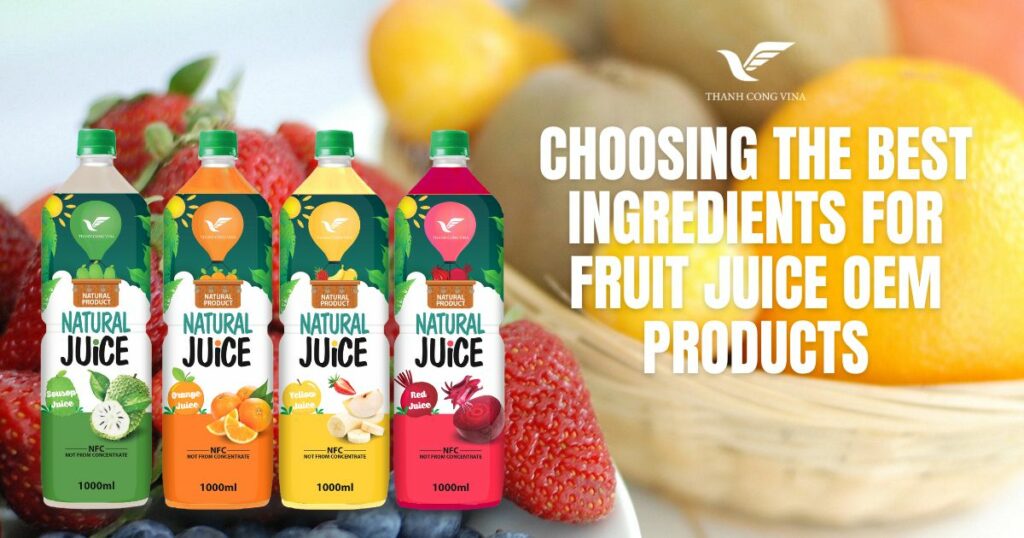
Choosing the Best Ingredients for Fruit Juice OEM Products
Mar
In today’s competitive beverage industry, ingredient selection is one of the most critical factors determining product quality, brand positioning, and long-term market success. For companies working with Fruit Juice OEM partners, choosing the best raw materials is not simply about taste — it involves food safety, supply chain stability, nutritional value, cost efficiency, and regulatory compliance. From fruit sourcing and sweetener options to functional additives and natural flavor systems, every ingredient influences the final product’s performance on retail shelves.
Fruit Juice OEM production requires a strategic approach to formulation and procurement. Brands must balance consumer demand for clean-label beverages with the realities of industrial-scale manufacturing. The right OEM partner provides technical guidance, quality assurance systems, and sourcing expertise that ensure consistency from batch to batch. This comprehensive guide explores how to choose the best ingredients for Fruit Juice OEM products while maintaining quality, safety, and profitability in global markets.
1. Understanding the Foundation of Fruit Juice OEM Formulation
Selecting high-quality ingredients begins with understanding the technical structure of fruit juice beverages. Every product is built on a foundation of core components that define its taste, texture, and shelf stability.
Core Components in Fruit Juice Production
The primary ingredient in any fruit juice product is, naturally, fruit. However, fruit can be supplied in various forms such as fresh juice, puree, pulp, or concentrate. The choice depends on product positioning, cost targets, and logistical considerations. Fresh juice and NFC options appeal to premium markets, while concentrate-based formulas often provide greater efficiency in export-oriented production.
Water quality is equally important. In Fruit Juice OEM manufacturing, purified water must meet strict microbiological and chemical standards. It serves as the base for reconstituted juices and plays a major role in taste clarity.
Sweeteners, acidity regulators, stabilizers, and natural flavors are additional foundational components. Each ingredient must be carefully selected to maintain balance, prevent separation, and ensure long shelf life without compromising taste or clean-label appeal.
The Role of OEM Technical Expertise
Professional Fruit Juice OEM manufacturers provide formulation expertise that aligns ingredient selection with target market preferences. For example, certain regions prefer higher Brix levels and sweeter taste profiles, while others favor lower sugar content and natural acidity.
OEM specialists conduct laboratory testing to determine optimal ratios of fruit solids, sugar content, and pH levels. This scientific approach ensures product consistency across large production volumes while complying with international food safety standards.
Understanding the structural composition of juice beverages allows brands to make informed ingredient decisions that support both quality and cost control.
2. Fruit Juice OEM: Selecting High-Quality Raw Fruit Sources
Fruit quality directly determines the sensory experience of the final beverage. Aroma, color, sweetness, and nutritional value all originate from the raw fruit itself.
Criteria for Premium Fruit Selection
When working with a Fruit Juice OEM partner, brands should evaluate fruit sources based on:
Origin and Traceability: Reliable sourcing from certified farms ensures transparency and safety.
Seasonality and Harvest Timing: Fruits harvested at peak ripeness deliver better flavor and higher nutrient density.
Pesticide and Residue Compliance: International markets require strict adherence to residue limits.
Consistency in Supply: Stable supply chains prevent production disruptions.
OEM manufacturers often establish long-term relationships with trusted growers to secure consistent quality. Some facilities even operate integrated supply chains, from farm-level procurement to final processing.
Fresh Juice vs. Concentrate vs. Puree
Different fruit forms offer different benefits. Fresh juice and NFC provide authentic flavor and premium positioning. Concentrates reduce shipping costs and extend shelf life. Purees add texture and mouthfeel, particularly in smoothies and tropical blends.
A strong Fruit Juice OEM partner will analyze cost structure, target retail pricing, and export logistics before recommending the most suitable fruit format. This strategic evaluation ensures that ingredient selection aligns with both branding objectives and operational efficiency.
By prioritizing fruit integrity and traceability, brands build trust with consumers while maintaining product excellence.
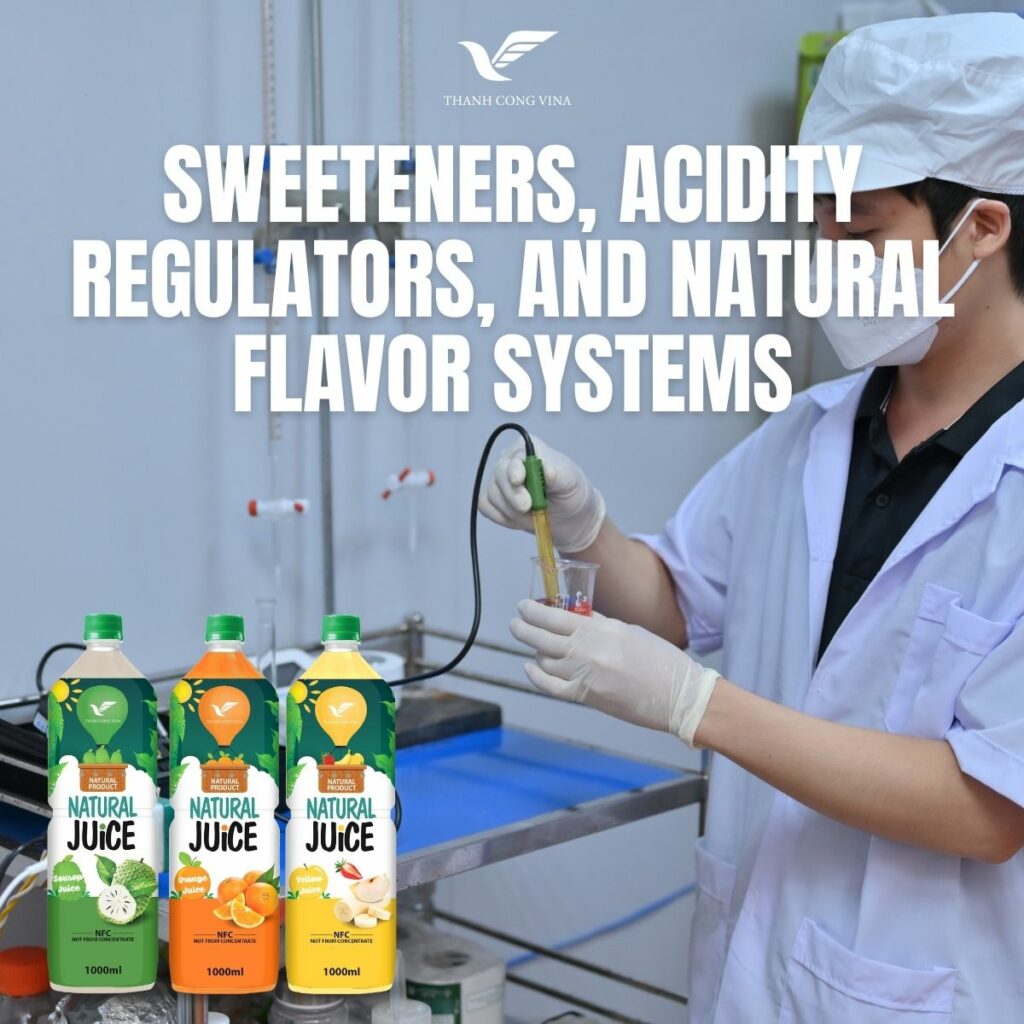
3. Sweeteners, Acidity Regulators, and Natural Flavor Systems
Balancing sweetness and acidity is essential for creating a pleasant and stable juice product.
Natural and Alternative Sweeteners
Traditional sucrose remains widely used due to its affordability and familiar taste. However, increasing consumer demand for healthier options has driven interest in alternatives such as stevia, monk fruit extract, and fruit-derived sweeteners.
In Fruit Juice OEM production, sweetener selection depends on labeling regulations, calorie targets, and regional taste preferences. OEM R&D teams test various combinations to ensure sweetness profiles remain natural without leaving unwanted aftertaste.
Reduced-sugar formulations require advanced formulation techniques to preserve mouthfeel and flavor depth.
Managing Acidity and Flavor Stability
Acidity regulators such as citric acid or natural fruit acids help maintain pH levels that inhibit microbial growth. Proper pH balance also enhances flavor brightness and prolongs shelf life.
Natural flavors and aroma recovery systems are used to compensate for potential flavor loss during pasteurization. High-quality OEM manufacturers preserve volatile aroma compounds during processing to maintain authentic fruit character.
The careful selection of sweeteners and acidity regulators ensures that Fruit Juice OEM products achieve both taste satisfaction and technical stability.
4. Functional Ingredients and Value-Added Formulations
Modern consumers seek beverages that offer functional benefits beyond hydration.
Fortification and Nutritional Enhancement
Vitamin C, vitamin D, zinc, collagen, and probiotics are commonly added to enhance nutritional value. When selecting functional ingredients, brands must verify solubility, stability under heat treatment, and regulatory approval in target markets.
OEM laboratories conduct compatibility tests to prevent sedimentation, discoloration, or nutrient degradation during storage.
Clean Label and Natural Positioning
Consumers increasingly prefer clean-label products free from artificial colors and preservatives. OEM partners can recommend natural stabilizers such as pectin or plant-based gums to maintain texture without compromising label transparency.
Functional ingredients must complement the fruit base rather than overpower it. The balance between health claims and sensory appeal determines product success.
By integrating functional innovation into Fruit Juice OEM development, brands differentiate themselves in crowded retail environments.
5. Quality Control and Ingredient Safety Standards
Ingredient quality is meaningless without rigorous safety protocols.
Laboratory Testing and Compliance
Professional Fruit Juice OEM facilities operate under ISO and HACCP systems. Incoming raw materials undergo microbiological testing, pesticide screening, and chemical analysis before approval.
Batch samples are tested for Brix, pH, color consistency, and sensory evaluation. Shelf-life studies simulate storage conditions to ensure long-term stability.
Global Certification Requirements
Export markets often require certifications such as FDA registration, HALAL compliance, or other regional standards. Ingredient suppliers must provide documentation verifying authenticity and safety.
Traceability systems allow manufacturers to track each ingredient back to its source. This transparency minimizes risk and protects brand reputation in the event of quality concerns.
Strong quality control systems transform ingredient selection into a structured, risk-managed process.
6. Packaging Compatibility and Ingredient Interaction
Ingredient stability is closely linked to packaging selection.
Interaction Between Ingredients and Containers
Certain acidic juices may react with low-grade packaging materials, affecting taste and safety. OEM manufacturers test compatibility between beverage formulas and packaging types such as PET bottles, glass bottles, aluminum cans, or aseptic cartons.
Oxygen permeability and light exposure can degrade sensitive nutrients like vitamin C. Therefore, packaging solutions must be chosen based on ingredient sensitivity.
Shelf Life Optimization
Proper headspace management, sealing technology, and pasteurization parameters contribute to extended shelf life. OEM experts evaluate how ingredient composition interacts with storage conditions to prevent spoilage or flavor deterioration.
Through coordinated formulation and packaging design, Fruit Juice OEM production achieves both safety and market readiness.
7. Strategic Cost Management in Ingredient Selection
Ingredient decisions must also support financial sustainability.
Balancing Quality and Budget
Premium fruit varieties and functional additives increase production costs. OEM manufacturers assist brands in evaluating cost-benefit ratios to determine whether higher ingredient investment justifies retail pricing.
Bulk purchasing agreements and long-term supplier contracts help stabilize raw material costs.
Scalable Production Planning
As brands grow, ingredient supply must scale accordingly. OEM partners provide production forecasting and inventory management strategies to prevent shortages or waste.
Strategic cost management ensures that Fruit Juice OEM products remain competitive without sacrificing quality.
Conclusion
Choosing the best ingredients for Fruit Juice OEM products requires a careful balance between quality, safety, innovation, and cost efficiency. From sourcing premium fruits and selecting natural sweeteners to integrating functional nutrients and ensuring packaging compatibility, every decision shapes the final product’s success. Professional OEM partnerships provide the technical expertise and quality systems necessary to transform raw ingredients into market-ready beverages.
Thanh Cong Vina Beverage delivers comprehensive solutions for Fruit Juice OEM development, combining advanced processing technology with strict quality control standards. With a strong global export network and a commitment to ingredient integrity, Thanh Cong Vina supports brands in building reliable, high-performance juice products. By partnering with Thanh Cong Vina, businesses gain access to professional Fruit Juice OEM services that prioritize safety, innovation, and long-term market growth.
