
Products Knowledge
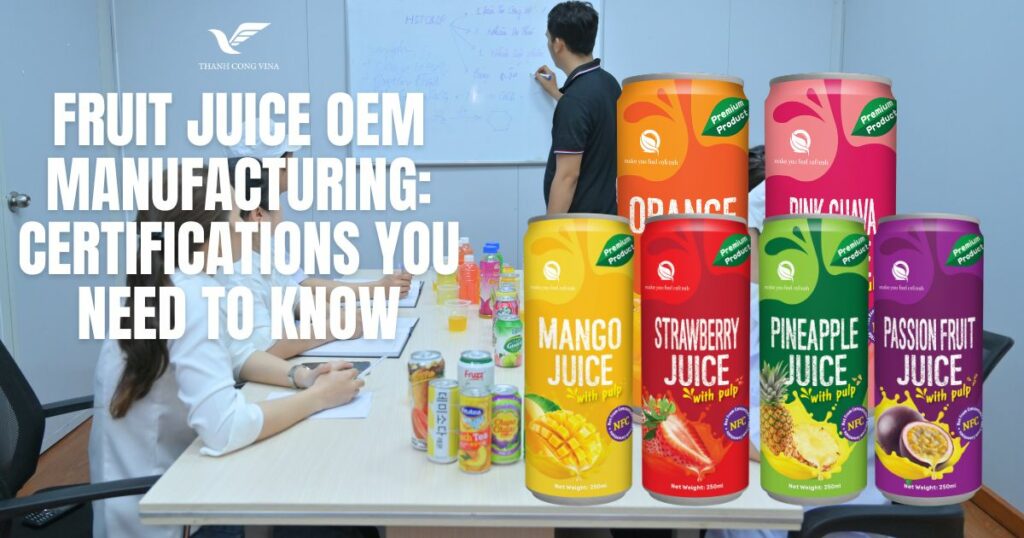
Fruit Juice OEM Manufacturing: Certifications You Need to Know
Feb
In the global beverage industry, certifications are no longer optional—they are a critical requirement for any brand involved in fruit juice OEM manufacturing. As consumers become more health-conscious and governments tighten food safety regulations, beverage brands must ensure that their manufacturing partners meet internationally recognized standards. For companies outsourcing production through Fruit Juice OEM models, certifications play a decisive role in product credibility, market access, and long-term scalability.
Fruit juice products, in particular, face strict scrutiny due to their perishable nature, complex supply chains, and direct impact on consumer health. From raw fruit sourcing to final packaging, every stage of production must comply with documented safety and quality systems. This article provides a comprehensive overview of the most important certifications in fruit juice OEM manufacturing, explains why they matter, and shows how certified OEM partners support brand growth in both domestic and international markets.
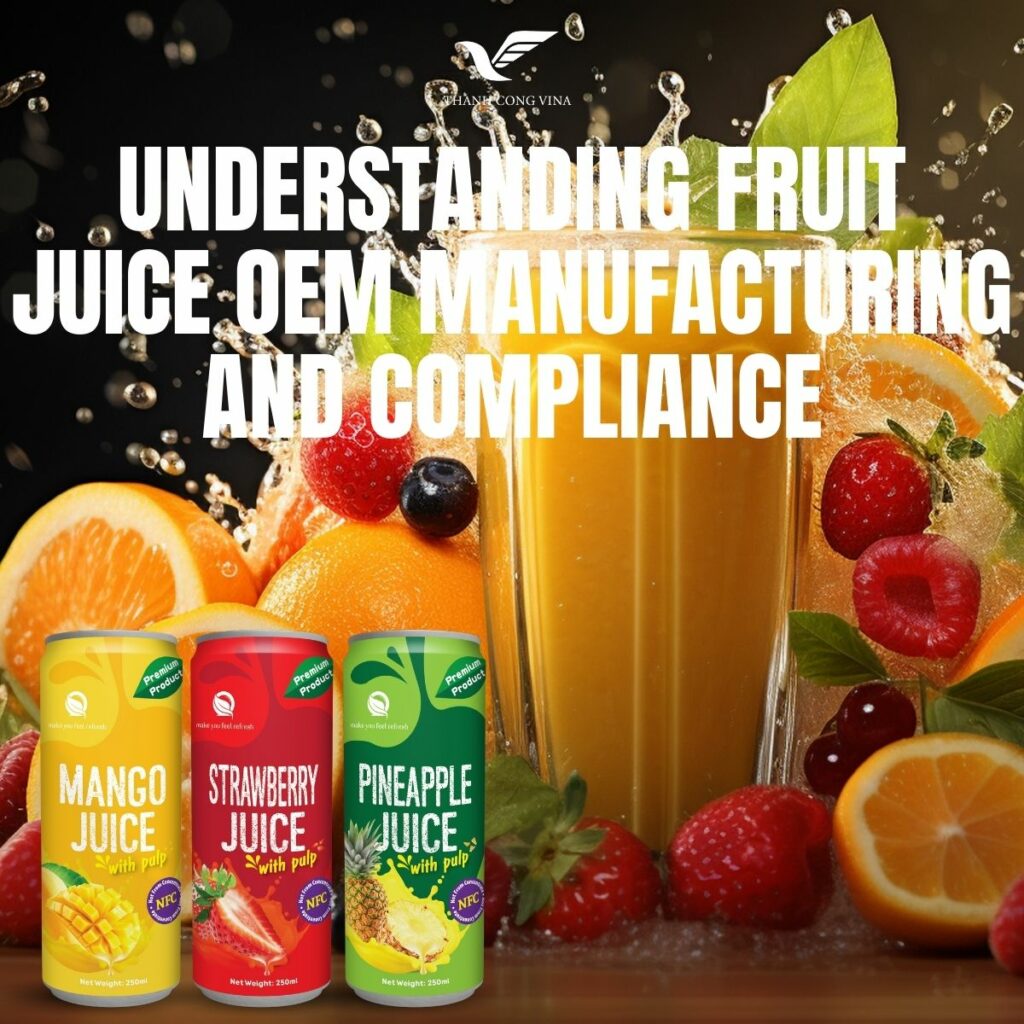
1. Understanding Fruit Juice OEM Manufacturing and Compliance
What Is Fruit Juice OEM Manufacturing?
Fruit Juice OEM manufacturing refers to a production model in which a manufacturer produces fruit juice products based on the specifications, formulas, and branding requirements of a client company. The brand owns the product concept and market positioning, while the OEM partner manages sourcing, processing, quality control, packaging, and regulatory compliance. This model allows beverage brands to scale efficiently without investing in production facilities.
Because the brand’s reputation is directly tied to product safety and consistency, compliance with food safety standards is essential. Any failure in quality control can result in recalls, regulatory penalties, or long-term brand damage.
Why Certifications Matter in OEM Partnerships
Certifications act as third-party validation that a fruit juice OEM manufacturer operates according to established safety and quality frameworks. They demonstrate that the manufacturer has documented processes, trained personnel, and monitoring systems in place to manage risks. For brands entering export markets, certifications are often a prerequisite for customs clearance, distributor agreements, and retail listings.
2. ISO Standards in Fruit Juice OEM Manufacturing
ISO 22000: Food Safety Management Systems
ISO 22000 is one of the most widely recognized standards in fruit juice OEM manufacturing. It defines requirements for a comprehensive food safety management system that covers the entire production chain. ISO 22000 integrates hazard analysis, prerequisite programs, and continuous improvement processes to ensure food safety from raw material sourcing to final delivery.
For fruit juice OEM partners, ISO 22000 certification confirms that critical risks such as microbial contamination, chemical residues, and cross-contamination are systematically identified and controlled. This certification is particularly important for brands exporting to markets with strict food safety regulations.
ISO 9001: Quality Management Systems
While ISO 22000 focuses on food safety, ISO 9001 emphasizes overall quality management. In fruit juice OEM manufacturing, ISO 9001 ensures consistency in production processes, documentation, and customer satisfaction. It supports standardized workflows, traceability, and corrective action procedures.
Brands working with ISO 9001-certified OEM manufacturers benefit from predictable product quality and reliable supply chain performance, which are essential for long-term brand trust.
3. HACCP Certification and Its Role in Juice Safety
Principles of HACCP in Fruit Juice Production
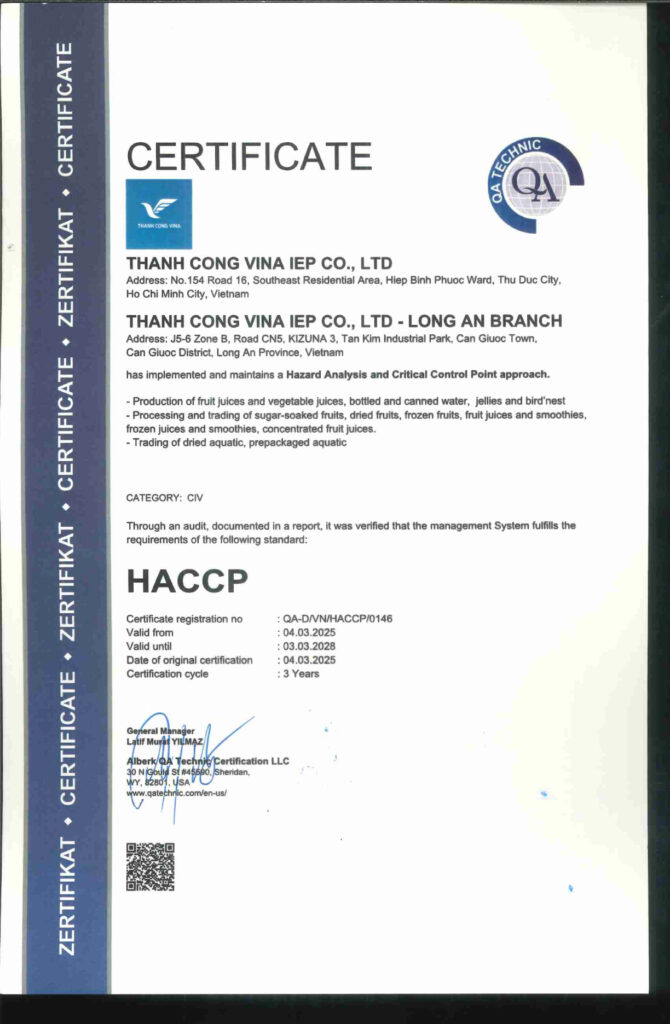
Hazard Analysis and Critical Control Points (HACCP) is a preventive food safety system designed to identify, evaluate, and control hazards throughout the production process. In fruit juice OEM manufacturing, HACCP focuses on critical stages such as fruit washing, juice extraction, pasteurization, and packaging.
By identifying critical control points, OEM manufacturers can monitor temperature, time, and sanitation parameters to prevent contamination. HACCP certification demonstrates that the manufacturer actively manages risks rather than reacting to problems after they occur.
Why HACCP Is Essential for Export Markets
Many countries require HACCP certification for imported food products, including fruit juices. Without HACCP compliance, brands may face delays, rejected shipments, or restricted market access. For OEM juice manufacturing, HACCP serves as a foundation for other certifications and reinforces confidence among distributors and regulators.
4. FDA Compliance for International Fruit Juice OEM
FDA Registration and Juice HACCP Regulations
For brands exporting to the United States, FDA compliance is mandatory. Fruit juice OEM manufacturers must be registered with the U.S. Food and Drug Administration and comply with Juice HACCP regulations outlined in 21 CFR Part 120. These regulations require documented hazard analysis, process controls, and recordkeeping specific to juice products.
FDA-compliant OEM manufacturers ensure that fruit juice products meet U.S. safety standards, including limits on microbial pathogens and chemical residues.
Importance of FDA Compliance for Global Brands
FDA compliance extends beyond the U.S. market. Many international buyers view FDA registration as a benchmark for manufacturing credibility. Working with an FDA-compliant fruit juice OEM manufacturer simplifies regulatory approvals and strengthens brand positioning in premium markets.
5. HALAL Certification in Fruit Juice OEM Manufacturing
What HALAL Certification Covers
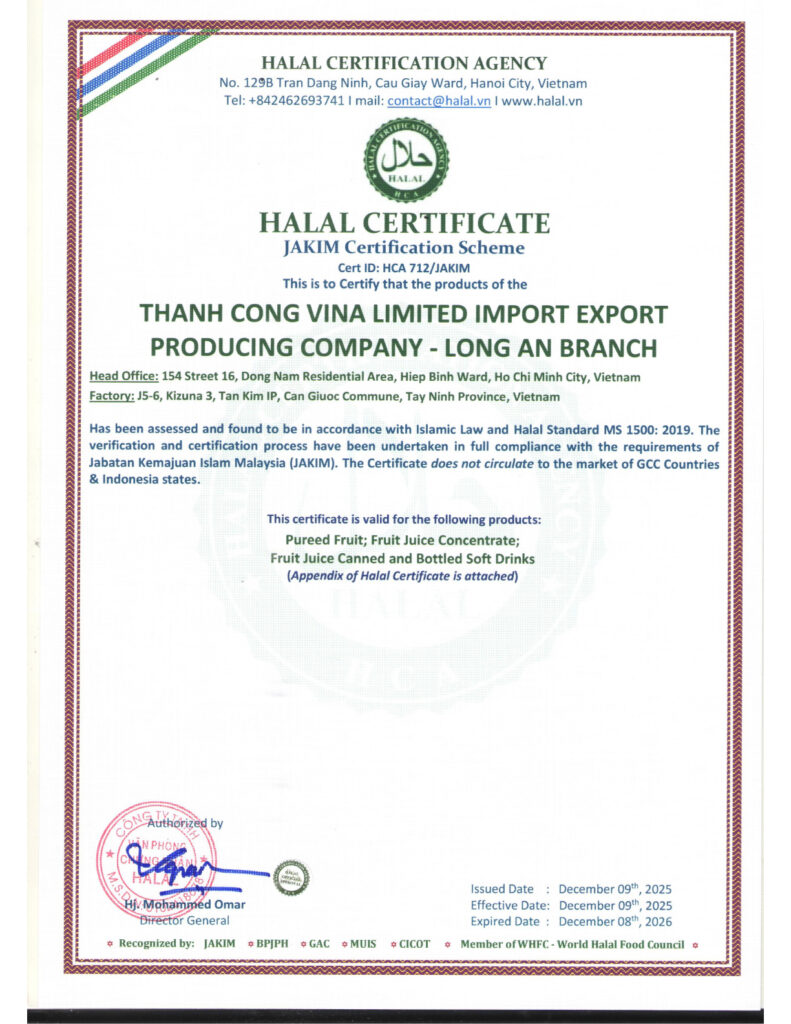
HALAL certification ensures that products comply with Islamic dietary laws. In fruit juice OEM manufacturing, HALAL certification verifies that ingredients, processing aids, and sanitation practices meet HALAL requirements. This includes ensuring that no alcohol-based solvents or non-compliant additives are used.
HALAL certification is particularly important for brands targeting markets in Southeast Asia, the Middle East, and Muslim-majority regions.
Expanding Market Access with HALAL Compliance
HALAL-certified fruit juice OEM manufacturers enable brands to access a broader consumer base. Many distributors and retailers require HALAL certification as a condition for listing products. For export-oriented brands, HALAL compliance enhances credibility and reduces market entry barriers.
6. Additional Certifications Supporting Fruit Juice OEM Brands
Organic Certification
Organic certification verifies that fruit juices are produced from organically grown fruits without synthetic pesticides or fertilizers. OEM manufacturers offering organic-certified production support brands targeting health-conscious consumers and premium segments.
Non-GMO and Sustainability Standards
Non-GMO certifications and sustainability standards further enhance brand value. These certifications address consumer concerns about genetic modification, environmental impact, and ethical sourcing. Fruit juice OEM manufacturers with these credentials help brands align with global sustainability trends.
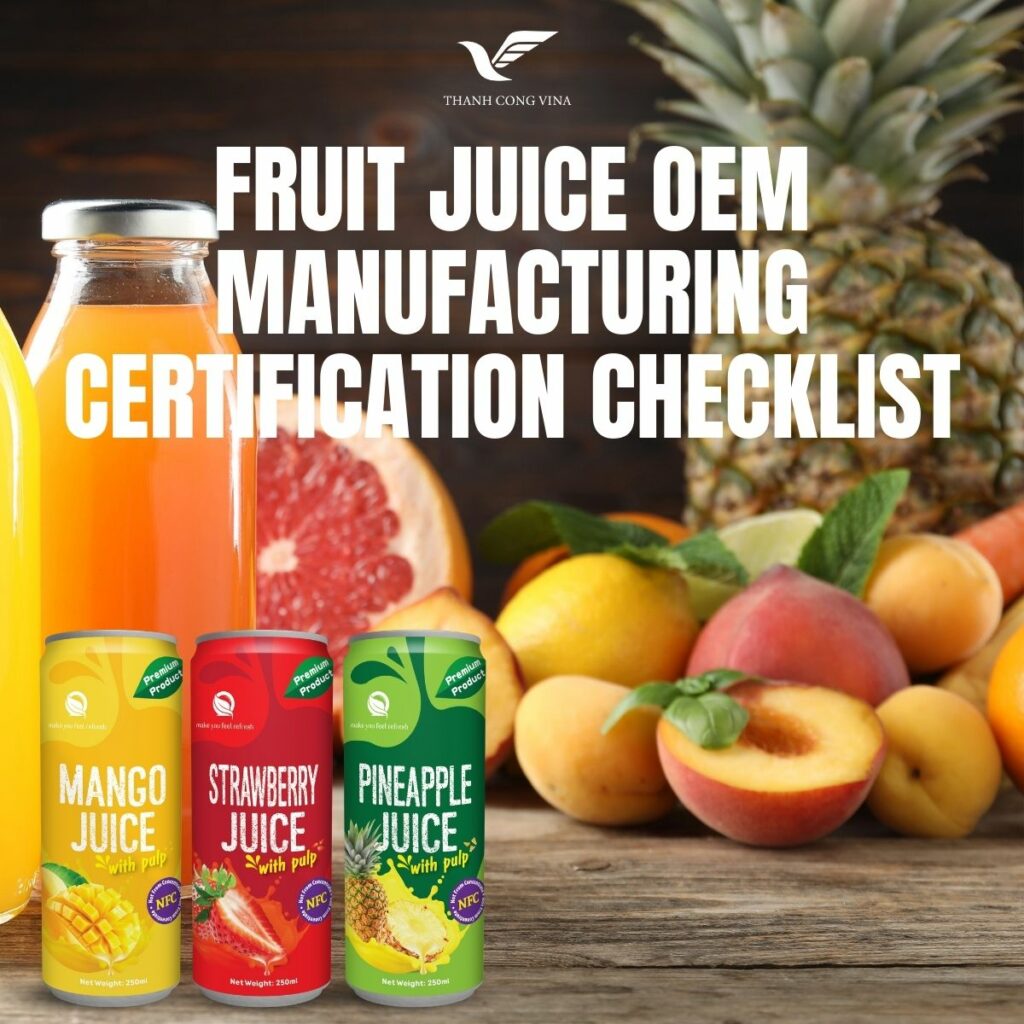
7. Fruit Juice OEM Manufacturing Certification Checklist
Key Certifications Brands Should Prioritize
When selecting a fruit juice OEM manufacturing partner, brands should prioritize certifications that align with their target markets. ISO 22000, HACCP, FDA, and HALAL certifications form the core compliance framework for most international juice brands.
Evaluating OEM Partners Beyond Certificates
While certifications are essential, brands should also assess audit transparency, traceability systems, and quality culture. A certified fruit juice OEM manufacturer with strong operational discipline provides greater long-term value than one that merely meets minimum requirements.
Conclusion
Certifications are the backbone of trust in fruit juice OEM manufacturing. They validate safety, quality, and compliance across every stage of production, enabling brands to compete confidently in global markets. Choosing a certified OEM partner reduces risk, enhances brand credibility, and supports sustainable growth. For beverage brands seeking a reliable and certified partner, Thanh Cong Vina offers comprehensive Fruit Juice OEM solutions built on international standards. With advanced facilities, strict quality control systems, and a commitment to regulatory compliance, Thanh Cong Vina supports brands from concept development to large-scale export. By partnering with Thanh Cong Vina, brands gain not only manufacturing expertise but also the assurance that their fruit juice products meet the highest global certification requirements.
