
Products Knowledge
Fruit Juice OEM Manufacturing Process Explained Step by Step
Dec
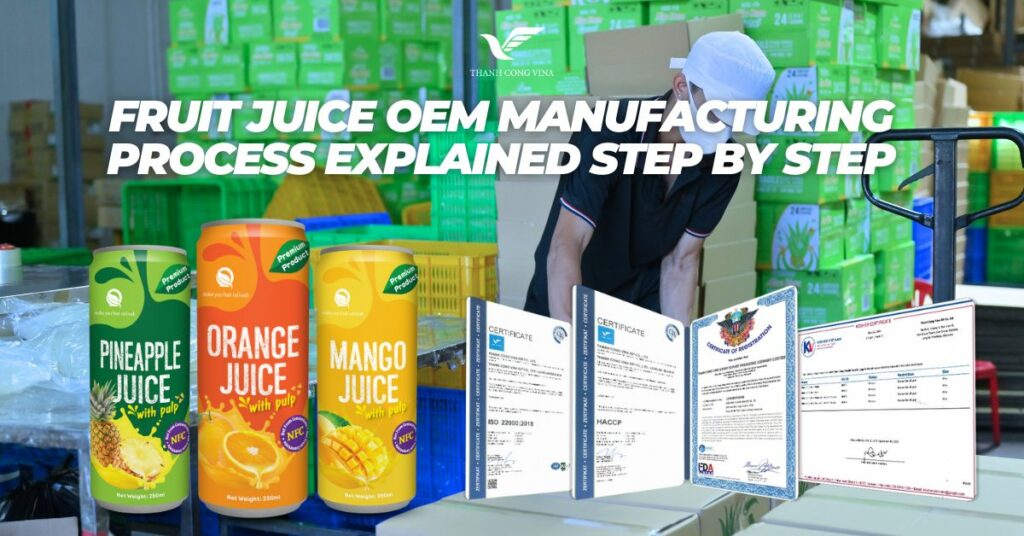
As global demand for ready-to-drink juices and healthy beverages continues to rise, many brands are turning to Fruit Juice OEM manufacturing to bring high-quality products to market efficiently. Instead of investing heavily in factories, equipment, and technical teams, brands partner with experienced OEM manufacturers to handle the entire production process. However, for many beverage companies—especially startups and fast-growing brands—the actual Fruit Juice OEM manufacturing process can feel complex and unclear.
Understanding each step is essential for ensuring quality, consistency, compliance, and scalability. From raw fruit selection to final packaging and shipment, every stage directly impacts taste, safety, shelf life, and brand reputation. This comprehensive guide explains the Fruit Juice OEM manufacturing process step by step, helping beverage brands make informed decisions and collaborate more effectively with OEM partners.
Step 1: Product Concept Development and Fruit Juice OEM Consultation
Defining Product Vision and Market Positioning
The Fruit Juice OEM process begins with a clear product concept. Brands work with OEM partners to define the juice type, target market, flavor profile, nutritional goals, and price positioning. This stage determines whether the product will be 100% juice, juice concentrate-based, functional juice, or blended beverage.
Technical Feasibility Assessment
OEM experts evaluate whether the concept is technically feasible and commercially viable. This includes assessing ingredient availability, processing methods, shelf-life expectations, and packaging compatibility. Early feasibility checks help prevent costly redesigns later.
Regulatory and Market Considerations
During consultation, Fruit Juice OEM manufacturers also advise on regulatory requirements for target markets. This includes sugar limits, additive restrictions, labeling rules, and certifications needed for domestic or export distribution.
Step 2: Raw Material Sourcing and Quality Control
Selecting High-Quality Fruits and Ingredients
Raw material quality is the foundation of any successful fruit juice product. Fruit Juice OEM manufacturers source fruits based on seasonality, origin, ripeness, and flavor consistency. Reliable sourcing ensures stable taste and nutritional value.
Supplier Audits and Ingredient Verification
OEM suppliers typically audit raw material suppliers and conduct strict inspections. This includes checking pesticide residues, microbial safety, and compliance with food safety standards. Only approved ingredients enter the production line.
Managing Consistency Across Batches
To maintain consistent flavor year-round, OEM manufacturers may use juice concentrates or standardized blends. This approach ensures product uniformity despite seasonal variations in fruit quality.
Step 3: Fruit Processing and Juice Extraction
Washing, Sorting, and Preparation
Once raw fruits arrive at the facility, they undergo washing, sorting, and trimming to remove impurities. Automated systems and trained staff ensure only suitable fruits proceed to processing.
Juice Extraction Techniques
Fruit Juice OEM manufacturers use different extraction methods depending on the fruit type. These include cold pressing, mechanical pressing, or reconstitution from concentrate. Each method affects flavor, texture, and nutrient retention.
Managing Oxidation and Nutrient Loss
Advanced processing techniques minimize oxidation and preserve vitamins, color, and aroma. Oxygen control and rapid processing are critical to maintaining juice quality.
Step 4: Formulation, Blending, and Standardization
Recipe Development and Flavor Adjustment
At this stage, the extracted juice is blended according to the agreed formulation. Sugar levels, acidity, and flavor balance are adjusted to match brand specifications and consumer preferences.
Functional and Nutritional Enhancements
For functional juices, OEM manufacturers may add vitamins, minerals, or botanical extracts. These additions require precise dosing and stability testing to ensure safety and effectiveness.
Batch Consistency and Quality Checks
Each batch undergoes testing to confirm it meets predefined standards for taste, color, Brix level, and pH. This step ensures consistency before moving to thermal processing.
Step 5: Pasteurization and Food Safety Treatment
Purpose of Pasteurization in Fruit Juice OEM
Pasteurization is a critical step to eliminate harmful microorganisms and extend shelf life. Fruit Juice OEM manufacturers select pasteurization methods based on product type and packaging.
Common Pasteurization Methods
Thermal pasteurization is widely used, while some OEMs offer advanced options such as high-pressure processing (HPP). Each method balances safety with nutrient preservation.
Ensuring Compliance with Food Safety Standards
OEM facilities operate under strict HACCP and GMP systems. Continuous monitoring ensures pasteurization parameters meet regulatory requirements for food safety.
Step 6: Packaging, Filling, and Labeling
Selecting the Right Packaging Format
Fruit Juice OEM manufacturers offer various packaging options, including bottles, cans, cartons, and aseptic packs. Packaging selection impacts shelf life, logistics, and consumer perception.
Aseptic Filling and Hygiene Control
Filling is conducted in controlled environments to prevent contamination. Automated filling lines ensure accuracy, efficiency, and hygiene throughout the process.
Labeling and Compliance Verification
Labels are checked for regulatory accuracy, nutritional information, and branding consistency. OEM partners ensure labels comply with destination market regulations.
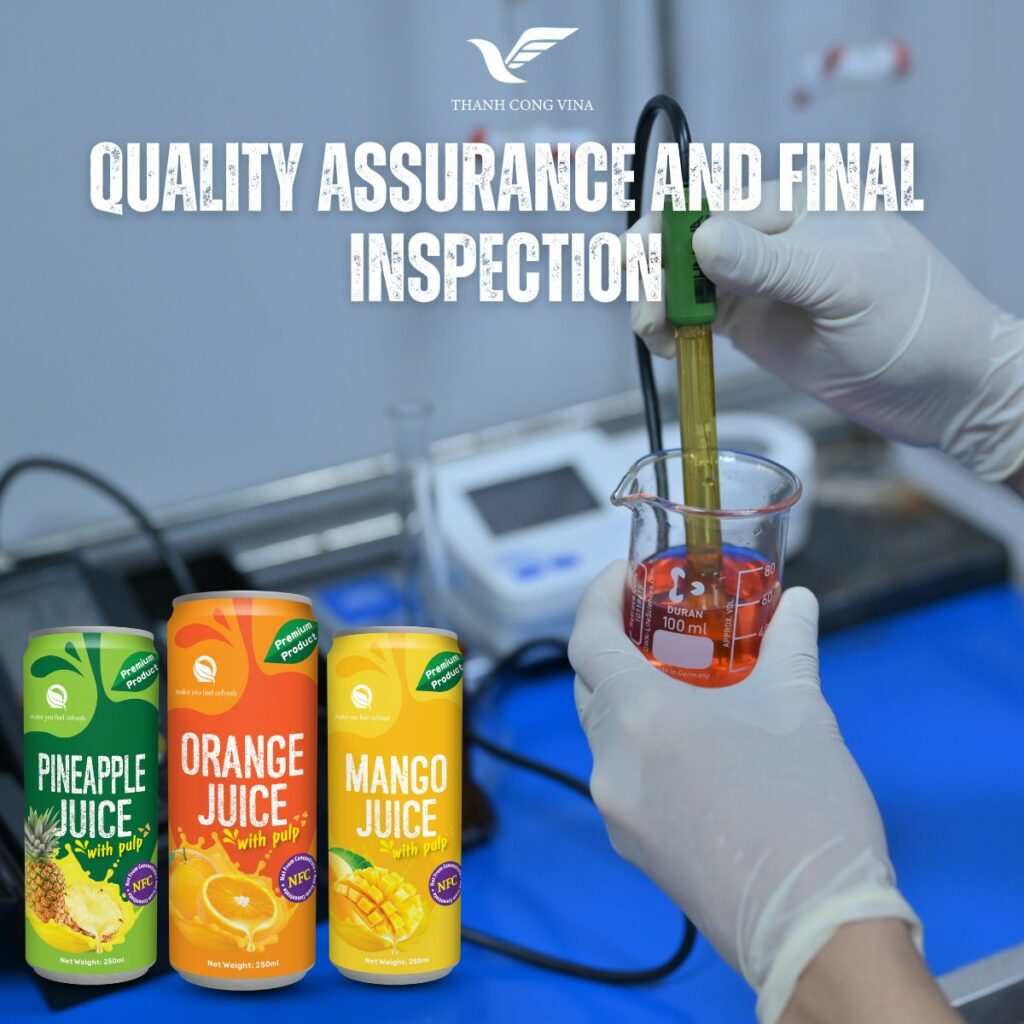
Step 7: Quality Assurance and Final Inspection
Laboratory Testing and Shelf-Life Validation
Finished products undergo laboratory testing for microbiological safety, chemical stability, and sensory quality. Shelf-life tests confirm product performance over time.
Batch Traceability and Documentation
Each production batch is fully documented for traceability. This allows quick response in case of quality issues or recalls.
Final Approval Before Release
Only products that pass all quality checks are approved for distribution. This final step protects brand integrity and consumer trust.
Step 8: Storage, Logistics, and Export Support
Proper Storage Conditions
OEM manufacturers store finished goods under controlled conditions to maintain quality before shipment. Temperature and humidity management are critical.
Logistics Coordination and Shipping
Fruit Juice OEM partners often support logistics planning, including palletization, container loading, and export documentation.
Supporting Global Distribution
Experienced OEM suppliers help brands navigate customs procedures and international shipping requirements, enabling smooth global expansion.
Conclusion
Understanding the Fruit Juice OEM manufacturing process step by step empowers beverage brands to make smarter decisions, reduce risks, and ensure consistent product quality. From concept development and raw material sourcing to processing, packaging, and logistics, every stage plays a vital role in shaping the final product. Choosing the right OEM partner means gaining access to technical expertise, certified facilities, and scalable production systems.
For brands seeking a reliable and experienced Fruit Juice OEM partner, TCVina delivers comprehensive solutions aligned with international standards. With strong quality control, flexible manufacturing capabilities, and export-ready operations, Thanh Cong Vina supports beverage brands at every stage of growth. By partnering with Thanh Cong Vina IEP CO., LTD, companies can confidently bring high-quality fruit juice products to market while focusing on brand building and long-term success.
