
Products Knowledge
Minimum Production Quantities in Fruit Juice OEM
Mar
In the competitive beverage industry, understanding Minimum Order Quantities (MOQs) is crucial when working with a Fruit Juice OEM partner. MOQs directly impact production costs, inventory planning, and overall business scalability. Whether you are a startup launching a new juice brand or an established company expanding your product line, knowing how MOQ works can help you make informed decisions and optimize your investment.
Fruit Juice OEM manufacturing allows brands to outsource production to specialized factories while focusing on marketing and distribution. However, each manufacturer sets specific MOQ requirements based on production efficiency, raw material sourcing, and packaging constraints. These requirements can vary significantly depending on the type of juice, packaging format, and level of customization.
This article explores everything you need to know about MOQ in Fruit Juice OEM manufacturing, including how it is determined, why it matters, and how businesses can manage it effectively to achieve long-term success.
1. Understanding Minimum Order Quantities in Fruit Juice OEM Manufacturing
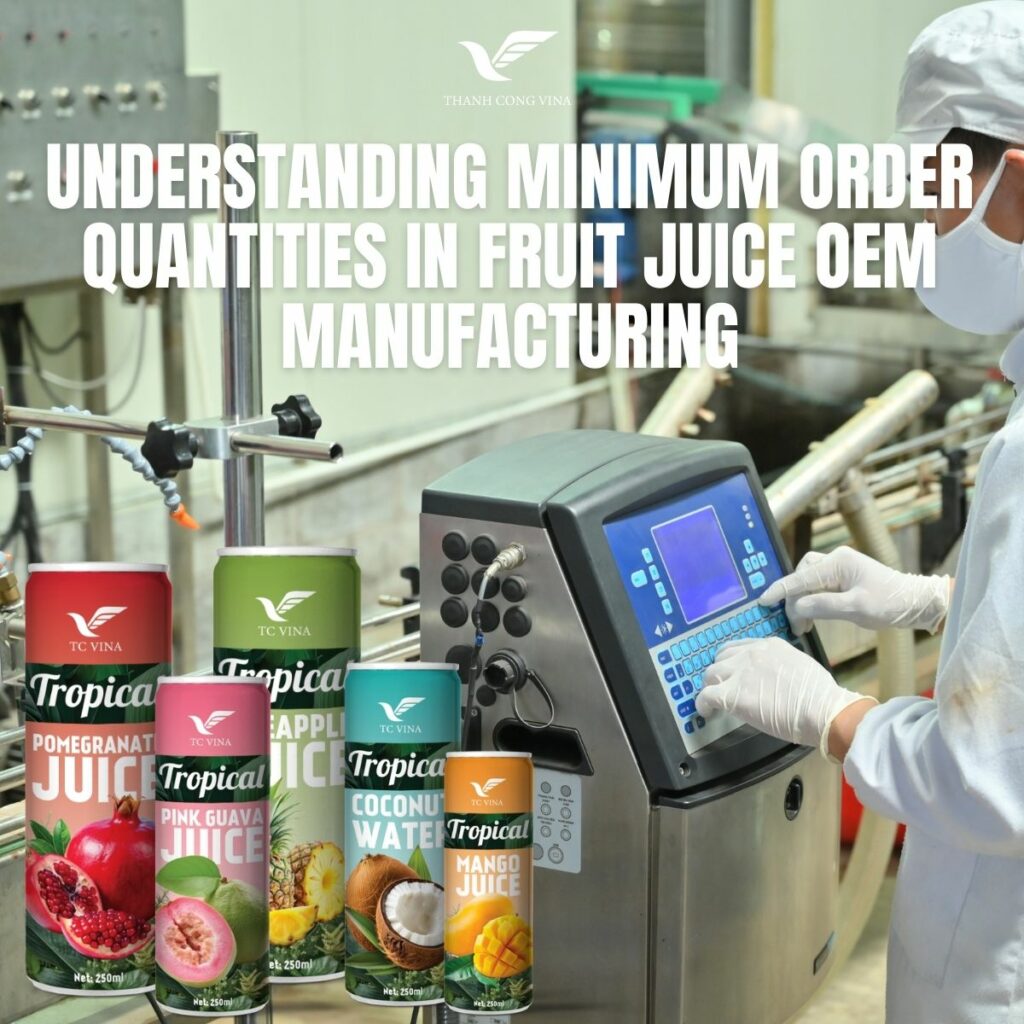
Minimum Order Quantity (MOQ) refers to the smallest number of units a manufacturer is willing to produce in a single production run. In Fruit Juice OEM manufacturing, MOQ is a fundamental factor that ensures production efficiency and cost-effectiveness.
What Determines MOQ in OEM Production
Several factors influence MOQ in the beverage industry. One of the primary elements is the production line setup. Manufacturers must allocate time and resources to prepare machinery, sterilize equipment, and configure packaging systems. These setup processes incur fixed costs, making small production runs inefficient.
Raw material sourcing is another key determinant. For example, producing fruit juice concentrate or NFC (Not From Concentrate) juice requires bulk procurement of fruits. Suppliers often impose their own minimum purchase requirements, which directly affect OEM MOQs.
Packaging also plays a major role. Custom bottles, cans, or cartons often require minimum print quantities from packaging suppliers. This means that even if a brand wants to produce a small batch, the packaging constraints may push the MOQ higher.
Why MOQ Exists in Fruit Juice OEM Manufacturing
MOQ exists primarily to balance cost and efficiency. Manufacturers aim to minimize waste, optimize labor, and ensure smooth production flow. Without MOQ, production lines would face frequent stops and changes, leading to higher operational costs.
For clients, MOQ ensures consistent product quality. Larger production runs allow manufacturers to maintain standardized processes, resulting in better taste consistency, shelf stability, and packaging uniformity.
Understanding MOQ helps businesses align their production strategy with market demand while maintaining profitability.
2. The Importance of MOQ for Brand Owners
MOQ is not just a manufacturing constraint; it is a strategic factor that directly impacts business operations and financial planning.
Cost Optimization and Profit Margins
One of the biggest advantages of meeting MOQ requirements is cost efficiency. Larger orders typically reduce the cost per unit, allowing brands to achieve better profit margins. This is especially important in the competitive beverage market, where pricing plays a crucial role in consumer decision-making.
When working with a Fruit Juice OEM partner, brands can negotiate pricing tiers based on volume. Higher order quantities often unlock better rates for ingredients, packaging, and production services.
Inventory Management and Cash Flow
However, higher MOQs also mean larger upfront investments. Businesses must carefully plan their inventory to avoid overstocking or product expiration. This is particularly important for fruit juice products, which have a limited shelf life.
Effective inventory management ensures that products are distributed efficiently without tying up too much capital. Brands should align their MOQ with realistic sales forecasts to maintain healthy cash flow.
Market Testing and Product Launch Strategy
For new brands, MOQ can be a challenge when testing new products. Producing large quantities without validated demand can lead to financial risks.
To address this, some Fruit Juice OEM manufacturers offer flexible MOQ options or pilot production runs. These smaller batches allow brands to test flavors, packaging, and market response before committing to full-scale production.
Understanding the strategic role of MOQ enables brand owners to make smarter decisions and reduce business risks.
3. Factors That Influence MOQ in Fruit Juice OEM Manufacturing
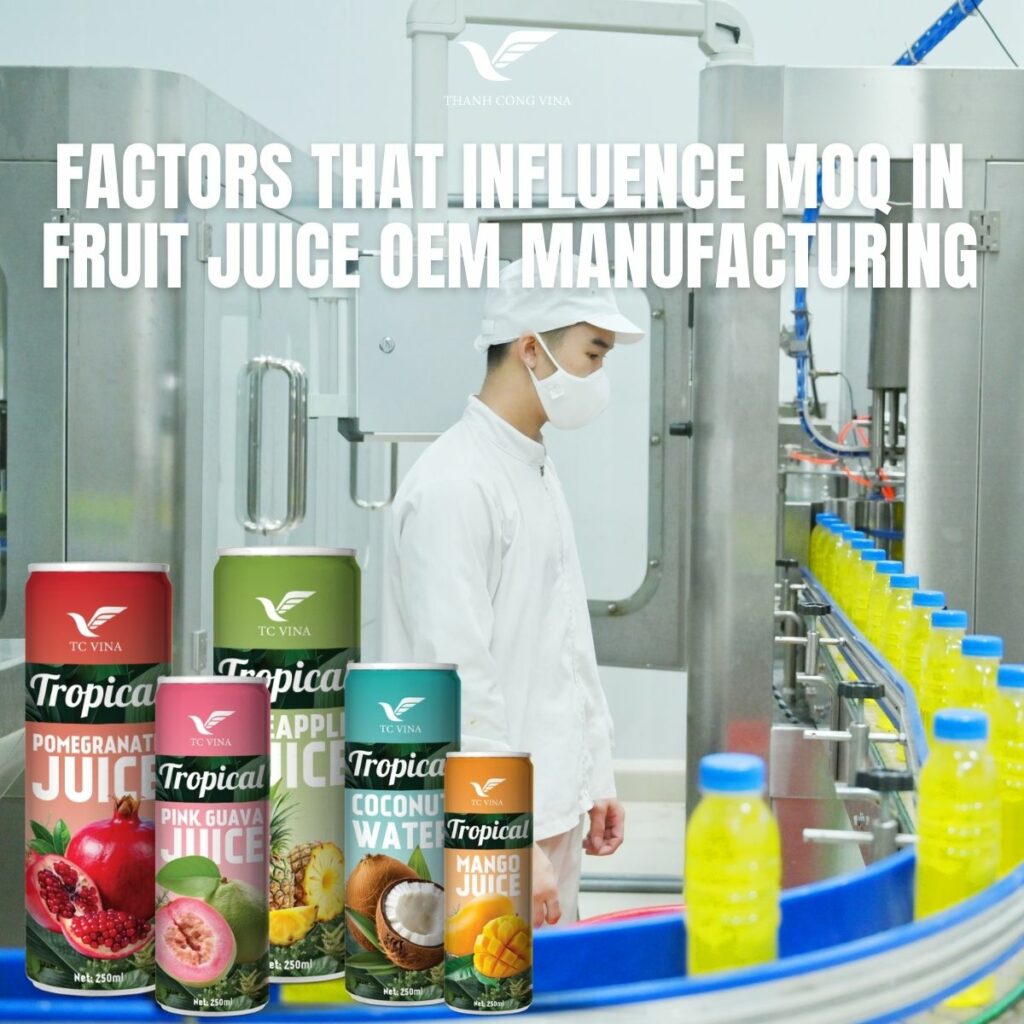
MOQ is not a fixed number; it varies depending on multiple production and business factors.
Type of Juice and Ingredients
Different types of juice require different production processes. For example, fresh cold-pressed juice may have higher production costs and stricter handling requirements compared to juice made from concentrate.
Exotic or seasonal fruits can also affect MOQ due to limited availability and higher procurement costs. Manufacturers may require larger orders to justify sourcing these ingredients.
Packaging Format and Customization
Packaging plays a significant role in determining MOQ. Standard packaging options, such as generic bottles or cartons, typically have lower MOQs. In contrast, fully customized packaging with unique shapes, labels, or branding elements often requires higher minimum quantities.
Brands that want premium packaging must be prepared to meet higher MOQs due to the complexity and cost of customization.
Production Technology and Facility Capacity
Advanced production facilities with high-capacity machinery often require larger MOQs to operate efficiently. These facilities are designed for mass production, making small orders less practical.
On the other hand, smaller or more flexible manufacturers may offer lower MOQs but at a higher cost per unit.
Understanding these factors helps businesses choose the right OEM partner based on their production needs and budget.
4. Strategies to Manage MOQ Effectively
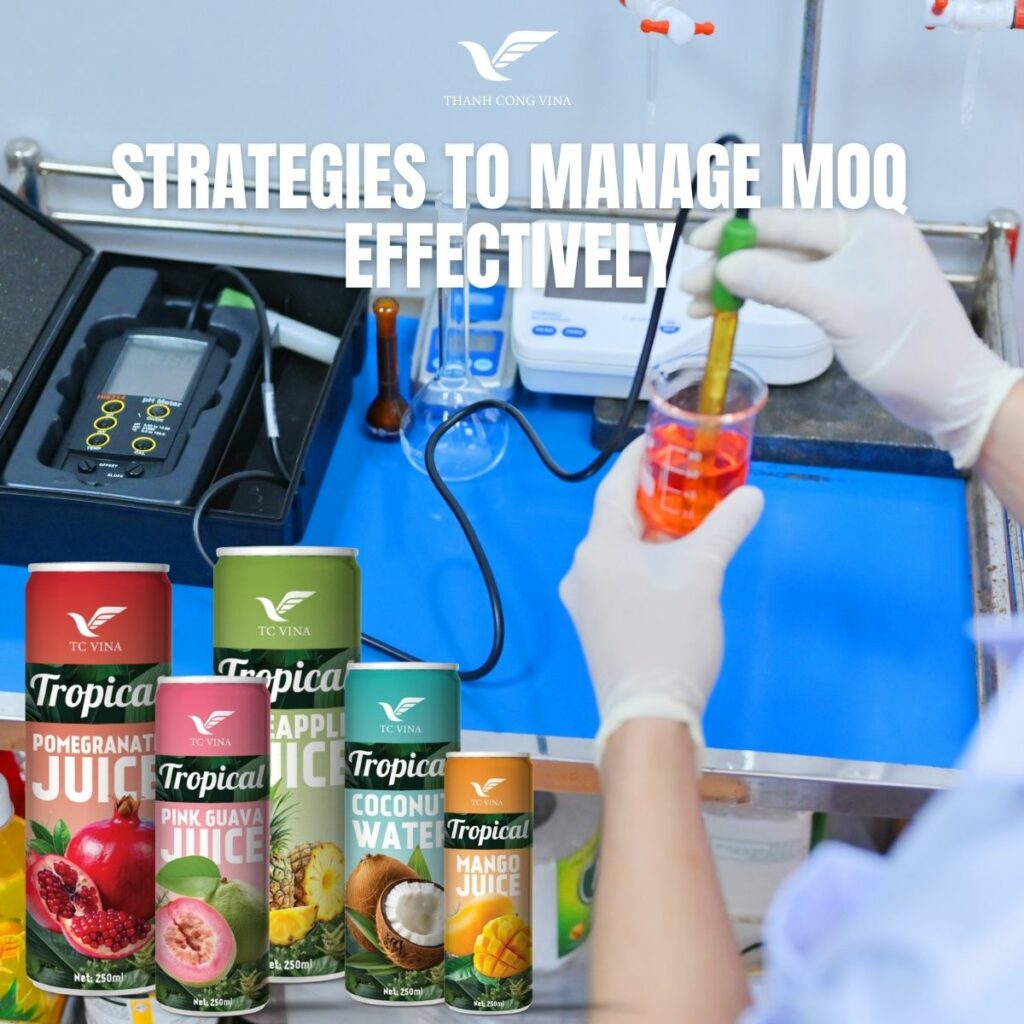
Managing MOQ is essential for maintaining profitability and minimizing risk in Fruit Juice OEM manufacturing.
Partnering with Flexible OEM Manufacturers
One of the most effective strategies is to work with manufacturers that offer flexible MOQ options. Some OEM providers specialize in supporting startups and small businesses by offering lower minimum order requirements.
These manufacturers may use modular production systems or shared production lines to accommodate smaller batches.
Product Line Optimization
Brands can also optimize their product lines to meet MOQ requirements more efficiently. For example, instead of launching multiple flavors at once, businesses can focus on a few core products to consolidate production volume.
This approach reduces complexity and ensures that each product meets the required MOQ without overextending resources.
Forecasting and Demand Planning
Accurate demand forecasting is crucial for managing MOQ. Businesses should analyze market trends, sales data, and distribution channels to estimate product demand.
By aligning production with demand, brands can avoid overproduction and reduce the risk of unsold inventory.
Negotiation and Long-Term Partnerships
Building strong relationships with OEM manufacturers can lead to more favorable MOQ terms. Long-term partnerships often result in better pricing, flexible production schedules, and customized solutions.
Negotiating MOQ based on projected growth can also help brands scale gradually without facing excessive initial requirements.
5. Challenges Associated with MOQ in Fruit Juice OEM
While MOQ offers benefits, it also presents several challenges that businesses must address.
High Initial Investment
One of the biggest challenges is the high upfront cost associated with large orders. This can be a barrier for startups or small businesses with limited capital.
To overcome this, companies may seek funding, partnerships, or phased production strategies.
Risk of Overstock and Waste
Fruit juice products have a limited shelf life, making overproduction a significant risk. Unsold inventory can lead to financial losses and waste.
Proper inventory management and distribution planning are essential to mitigate this risk.
Limited Flexibility in Product Changes
Once production begins, making changes to the product formulation or packaging can be difficult. Large MOQs reduce flexibility, making it important to finalize product details before production.
Despite these challenges, careful planning and strategic decision-making can help businesses navigate MOQ effectively.
6. How to Choose the Right Fruit Juice OEM Partner
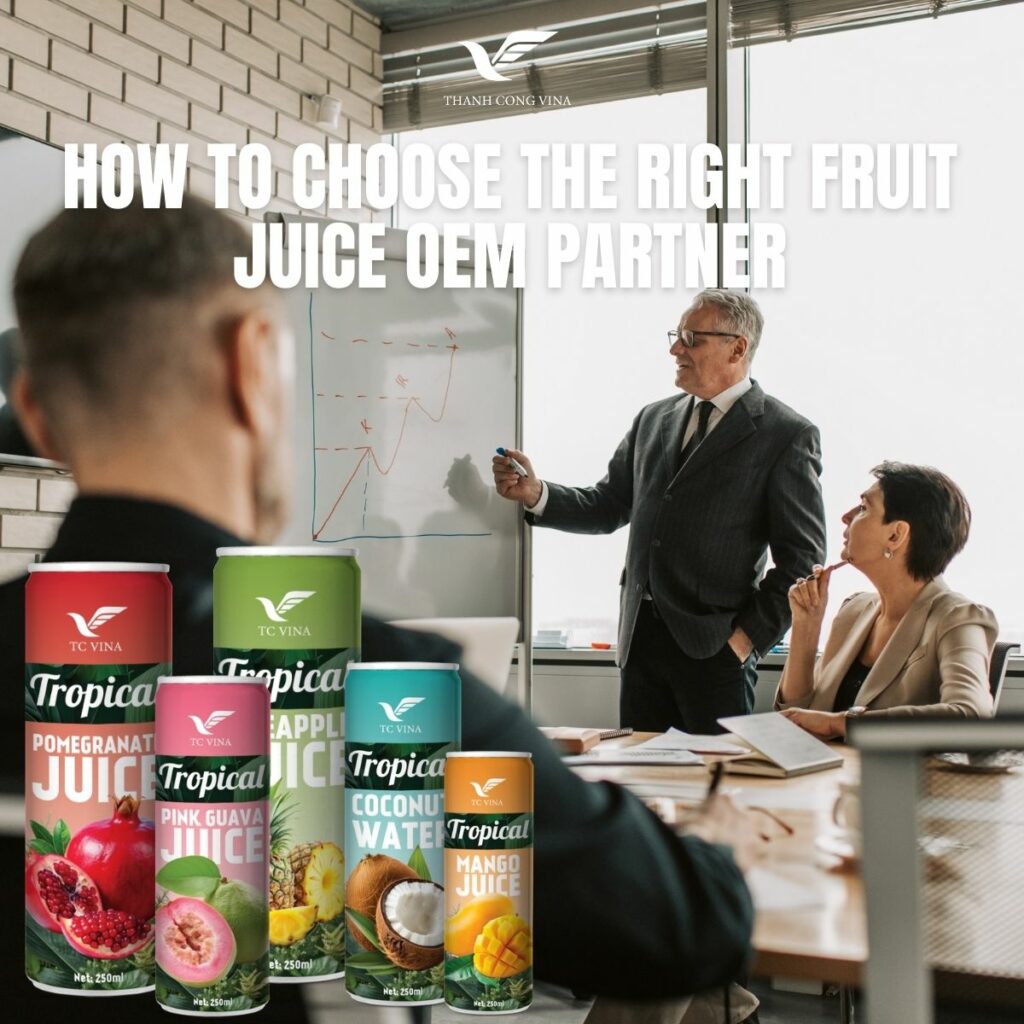
Selecting the right OEM partner is critical for managing MOQ and ensuring product success.
Evaluating Production Capabilities
Brands should assess the manufacturer’s production capacity, technology, and quality control processes. A reliable OEM partner should be able to meet MOQ requirements while maintaining consistent product quality.
Assessing Flexibility and Support
Flexibility is a key factor, especially for new brands. Manufacturers that offer support in product development, packaging design, and market testing can provide significant advantages.
Ensuring Compliance and Certifications
Compliance with international standards such as ISO, HACCP, and FDA is essential for ensuring product safety and market acceptance.
Choosing a trusted Fruit Juice OEM partner helps businesses streamline production and achieve long-term growth.
Conclusion
Minimum Order Quantities play a vital role in Fruit Juice OEM manufacturing, influencing production efficiency, cost management, and business strategy. While MOQ can present challenges such as high initial investment and inventory risks, it also offers opportunities for cost optimization and product consistency.
By understanding the factors that determine MOQ and implementing effective management strategies, businesses can navigate these challenges successfully. Partnering with the right manufacturer, optimizing product lines, and leveraging accurate demand forecasting are key to maximizing the benefits of OEM production.
Thanh Cong Vina is a trusted name in Fruit Juice OEM manufacturing, offering high-quality solutions tailored to global beverage brands. With advanced production technology, strict quality control, and flexible manufacturing capabilities, Thanh Cong Vina supports businesses in achieving their goals efficiently. Whether you are launching a new product or expanding your portfolio, Thanh Cong Vina provides reliable Fruit Juice OEM services designed to meet diverse market needs and ensure long-term success.
