
Products Knowledge
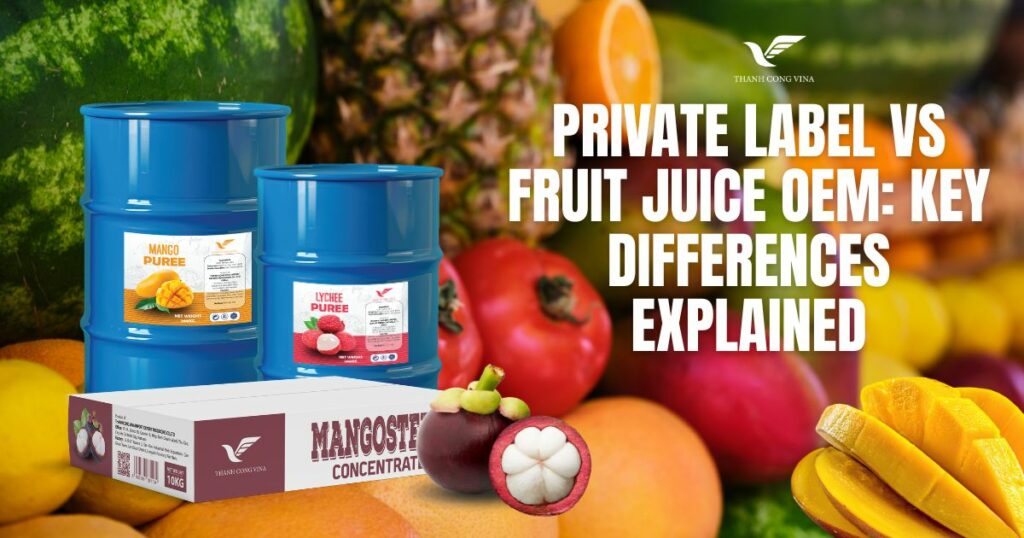
Private Label vs Fruit Juice OEM: Key Differences Explained
Feb
In today’s competitive beverage industry, companies are constantly searching for efficient ways to launch new juice products while minimizing financial risk and production complexity. Two popular business models dominate this space: private label production and Juice OEM Manufacturing. Although both approaches involve outsourcing manufacturing to specialized factories, they serve very different strategic purposes.
Private label products typically use existing formulations supplied by manufacturers, allowing brands to enter the market quickly with minimal development time. In contrast, OEM manufacturing focuses on customization, enabling companies to create unique juice formulas tailored to their brand identity and target consumers. Understanding the differences between these two models is essential for beverage businesses planning long-term growth. By choosing the right production approach, brands can optimize costs, maintain quality standards, and position themselves effectively in both domestic and international markets.
1. Understanding the Private Label Beverage Model
How Private Label Production Works
Private label production involves selecting ready-made formulations developed by manufacturers and applying a brand’s label and packaging design. This model allows companies to launch products quickly because formulation, stability testing, and process optimization are already complete.
Manufacturers usually offer a portfolio of flavors and packaging formats that brands can choose from. The client focuses on branding, marketing strategy, and distribution while the factory handles production logistics.
Advantages for Fast Market Entry
Private label is ideal for retailers, distributors, and new beverage entrepreneurs who want to test markets without committing to research and development costs. Since formulations are pre-approved and production systems are already established, private label projects typically have shorter lead times and lower initial investments.
However, the trade-off is limited differentiation. Because other brands may use the same base formula, private label products compete primarily on pricing, branding, and marketing execution rather than product uniqueness.
2. What Defines Fruit Juice OEM Manufacturing
Customization at the Core of OEM
Unlike private label production, OEM manufacturing focuses on creating customized products based on the brand’s specifications. Companies collaborate with manufacturers to design formulations that reflect their target consumer preferences, nutritional goals, and brand positioning.
OEM projects often involve research, ingredient sourcing, sensory testing, and shelf-life evaluation before mass production begins. This ensures the final product is both technically viable and commercially competitive.
Building Unique Product Identity
OEM manufacturing enables brands to control flavor profiles, ingredient composition, sugar levels, and functional benefits. This level of customization supports premium positioning and stronger brand differentiation.
While development timelines are longer than private label projects, OEM products often generate higher brand value because they cannot be easily replicated by competitors. For companies seeking long-term market positioning rather than quick entry, OEM manufacturing provides a more strategic approach.
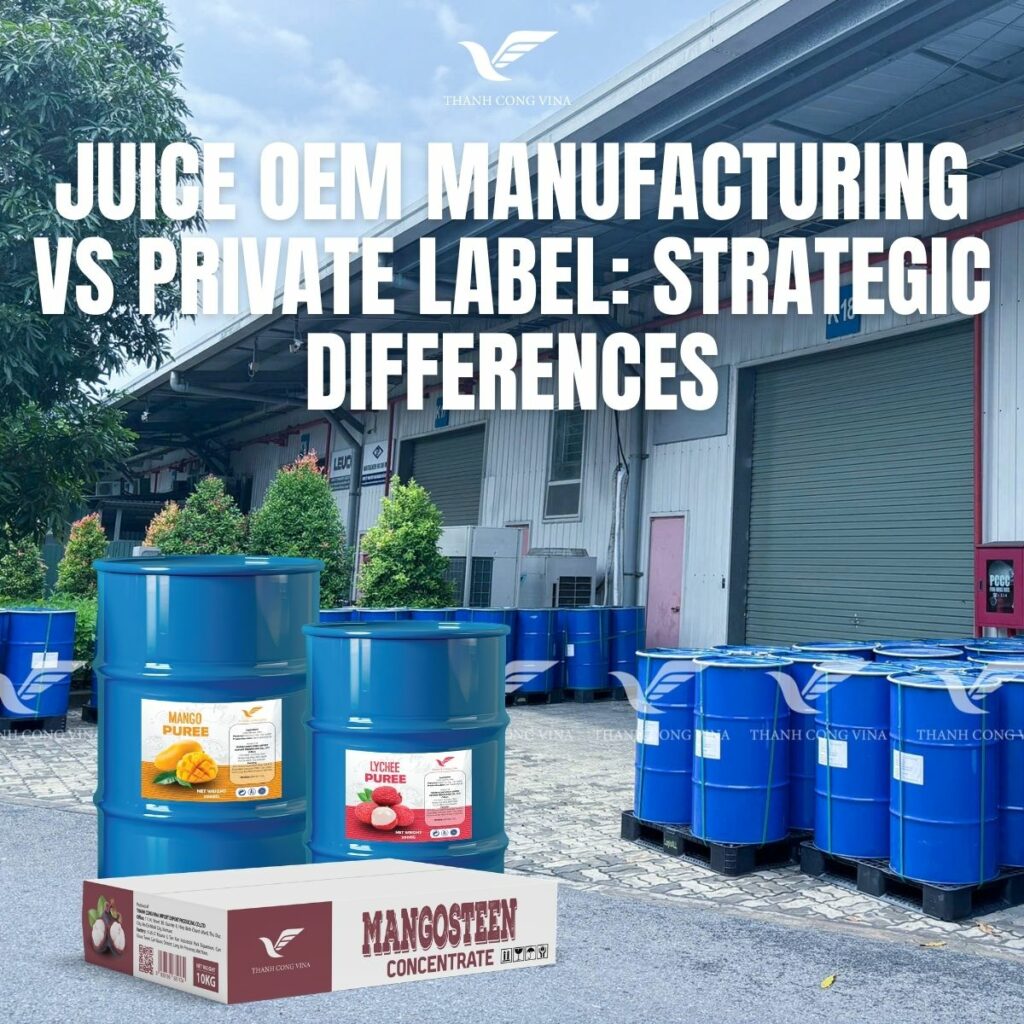
3. Juice OEM Manufacturing vs Private Label: Strategic Differences
Product Ownership and Intellectual Property
One of the most important distinctions between the two models is ownership of formulations. In private label production, the manufacturer owns the formula, and the brand only owns the packaging design and trademark.
In contrast, Juice OEM Manufacturing allows brands to retain intellectual property rights over the product formulation. This ensures exclusivity and protects the brand’s long-term competitive advantage.
Flexibility and Innovation Potential
Private label projects typically follow standardized production processes with limited room for modification. OEM manufacturing, however, encourages innovation. Brands can experiment with new fruit blends, functional ingredients, or natural sweeteners to create distinctive beverages.
This flexibility supports premium branding and helps companies respond to evolving consumer preferences in health, sustainability, and flavor diversity.
4. Cost Considerations and Investment Structure
Upfront Development Costs
Private label production generally involves lower initial costs because research, formulation, and testing are already completed. Brands mainly invest in packaging design, labeling, and marketing.
Fruit Juice OEM manufacturing requires higher upfront investment due to product development, testing, and ingredient sourcing. However, these costs contribute to long-term differentiation and brand value.
Long-Term Profitability and Brand Equity
Although OEM manufacturing may seem more expensive initially, it often provides stronger long-term profitability. Exclusive products allow brands to command higher margins and build customer loyalty.
Private label products, while cost-effective, can face intense competition due to lack of uniqueness. Over time, this can limit pricing flexibility and brand recognition.
5. Production Timeline and Market Speed
Launch Speed with Private Label
Private label projects can often move from concept to shelf within a few months. Because formulations are pre-developed, manufacturers only need to finalize packaging and schedule production.
This makes private label suitable for businesses testing new markets or responding quickly to seasonal trends.
Development Cycles in OEM Manufacturing
OEM manufacturing typically involves longer timelines due to formulation testing, regulatory approvals, and packaging integration. However, this extended process ensures the final product meets both brand expectations and technical requirements.
For companies focused on building premium beverage lines, the additional time invested in OEM development often results in stronger market performance.
6. Quality Control and Compliance Standards
Standardized Quality in Private Label
Private label products rely on established production protocols that ensure consistency across batches. Manufacturers maintain strict quality control systems to protect their product portfolio and reputation.
This approach provides reliable safety and stability, though customization opportunities remain limited.
Tailored Quality Systems in OEM Manufacturing
OEM manufacturing involves customized quality control procedures tailored to each product’s formulation. Testing may include ingredient verification, microbiological analysis, and packaging compatibility checks.
These additional controls ensure the product meets both regulatory requirements and brand-specific standards. As a result, OEM products often achieve higher perceived value and consumer trust.
7. Choosing the Right Model for Your Brand Strategy
When Private Label Is the Better Choice
Private label production suits companies that prioritize speed, simplicity, and low upfront costs. Retailers launching house brands or distributors entering new categories often benefit from this approach.
It provides a practical way to test consumer demand before committing to long-term product development.
When OEM Manufacturing Is the Better Investment
Fruit Juice OEM manufacturing is ideal for brands focused on differentiation, innovation, and long-term growth. Companies that want full control over flavor, ingredient sourcing, and product positioning typically benefit more from OEM partnerships.
This model supports premium branding and global expansion by enabling unique product offerings tailored to specific markets.
Conclusion
Choosing between private label production and Fruit Juice OEM Manufacturing depends on a company’s strategic goals, resources, and long-term vision. Private label offers speed and cost efficiency, making it suitable for businesses seeking quick market entry or low-risk product launches. However, it often limits differentiation and brand ownership.
OEM manufacturing, on the other hand, provides customization, intellectual property control, and stronger brand positioning. Although it requires greater upfront investment and development time, it enables beverage companies to build unique products that support sustainable growth and higher margins. Partnering with an experienced manufacturer such as Thanh Cong Vina ensures that brands receive technical expertise, reliable production systems, and international-quality standards. With comprehensive support in formulation, sourcing, and packaging, Thanh Cong Vina helps companies transform ideas into distinctive juice products while maximizing the strategic advantages of Fruit Juice OEM Manufacturing.
