
Products Knowledge
Passion Fruit Juice Supplier Vietnam for Private Label Brands
Nov
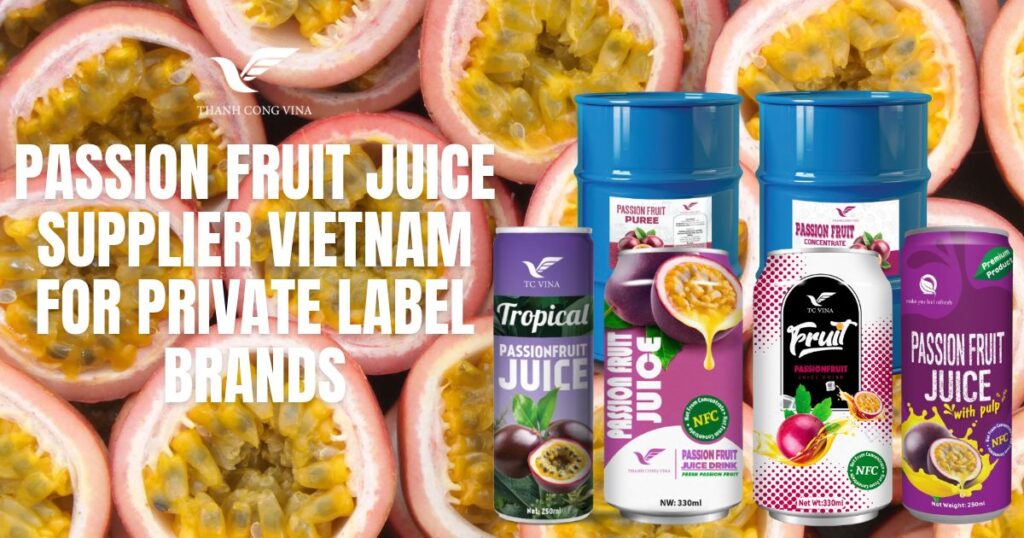
Vietnam, with its tropical fruit resources and developing beverage manufacturing industry, offers potential for businesses seeking a reliable Passion Fruit Juice Supplier Vietnam for their product portfolios. However, launching a successful passion fruit beverage requires more than selecting a fruit flavor. Brands must consider product formulation, sweetness balance, packaging, target consumers, production requirements, and market positioning. Whether developing a ready-to-drink juice range for supermarkets or creating a customized beverage concept for regional distribution, choosing the right manufacturing partner is essential. This article explores how private label businesses can approach passion fruit beverage development and evaluate supplier capabilities for long-term commercial cooperation.
1. Why Passion Fruit Is a Strategic Choice for Private Label Beverages
Passion fruit has a distinctive flavor identity that makes it suitable for different beverage concepts. Its naturally aromatic character and refreshing sweet-and-sour profile can help brands create products that stand out from conventional fruit drinks.
A Recognizable Tropical Flavor for International Consumers
Passion fruit is widely associated with tropical beverages. Its characteristic aroma and lively acidity provide a recognizable taste experience that can be adapted to different consumer preferences.
For private label brands, this familiarity can make product communication easier. Consumers can quickly understand the main flavor, while businesses can build marketing concepts around tropical refreshment, fruit inspiration, and everyday enjoyment.
Passion fruit beverages can be positioned for several consumption occasions, including:
- Everyday refreshment at home or in the workplace.
- Convenient drinks for travel and outdoor activities.
- Fruit-based beverage selections in supermarkets.
- Refreshing options for restaurants and cafés.
- Tropical-inspired products for international retail markets.
This flexibility makes passion fruit a useful option for businesses seeking to expand beyond traditional orange, apple, or grape beverages.
A Flavor Profile That Supports Product Differentiation
The balance between sweetness and acidity is one of passion fruit’s defining characteristics. This gives beverage developers opportunities to create different sensory profiles, from bright and tangy drinks to smoother, sweeter fruit beverages.
For brands, product differentiation can come from the overall formulation rather than the fruit name alone. Sweetness level, aroma intensity, juice content, and combinations with other fruit flavors can all influence how consumers perceive the finished beverage.
A well-developed passion fruit drink should maintain a recognizable fruit character while delivering a balanced and enjoyable drinking experience.
Opportunities for Different Beverage Categories
Passion fruit can be used in several product concepts, depending on the formulation and manufacturing capabilities available. These may include fruit juice drinks, blended fruit beverages, juice-based refreshments, and other ready-to-drink products.
The final product category should be determined by its actual composition and applicable food labeling regulations. Private label buyers should therefore clarify the product definition, ingredient specifications, and permitted claims before approving packaging or marketing materials.
2. Passion Fruit Juice Supplier Vietnam: What Private Label Brands Should Look For
Selecting a Passion Fruit Juice Supplier Vietnam is a key decision for businesses planning to introduce their own beverage products. The supplier must be evaluated according to the needs of the specific project rather than price or product availability alone.
Understanding the Supplier’s Product Capabilities
Before starting a private label project, buyers should understand which passion fruit beverage formats the manufacturer can support.
Important areas to review include:
- Available passion fruit beverage formulations.
- Possible juice content and ingredient specifications.
- Available packaging formats and sizes.
- Flavor customization options, where supported.
- Minimum order quantities.
- Production planning and lead times.
- Technical documents available for product evaluation.
These details help buyers determine whether the supplier’s capabilities match their commercial expectations.
A supplier may offer a standard product portfolio, customized development, or a combination of both. The actual scope should be confirmed directly before making purchasing commitments.
Evaluating Product Consistency
Consistency is essential for private label brands because consumers expect the same taste and quality every time they purchase a product.
For passion fruit beverages, important sensory characteristics include:
- Fruit aroma and flavor intensity.
- Sweetness and acidity balance.
- Color and overall appearance.
- Mouthfeel and beverage texture.
- Consistency between production batches.
Buyers should request product samples and relevant specifications to evaluate these characteristics. Where possible, samples should be assessed using a consistent internal evaluation process rather than relying on individual preferences alone.
Reviewing Commercial Flexibility
Different businesses have different purchasing requirements. A regional distributor may require larger recurring orders, while a new private label brand may need to test market demand before expanding its product range.
Before selecting a supplier, buyers should clarify whether the proposed manufacturing arrangement is commercially suitable for their expected order volume, launch schedule, and distribution model.
A transparent discussion about minimum order quantities, packaging availability, production timelines, and payment arrangements can help prevent misunderstandings during cooperation.
3. Developing a Competitive Passion Fruit Private Label Product
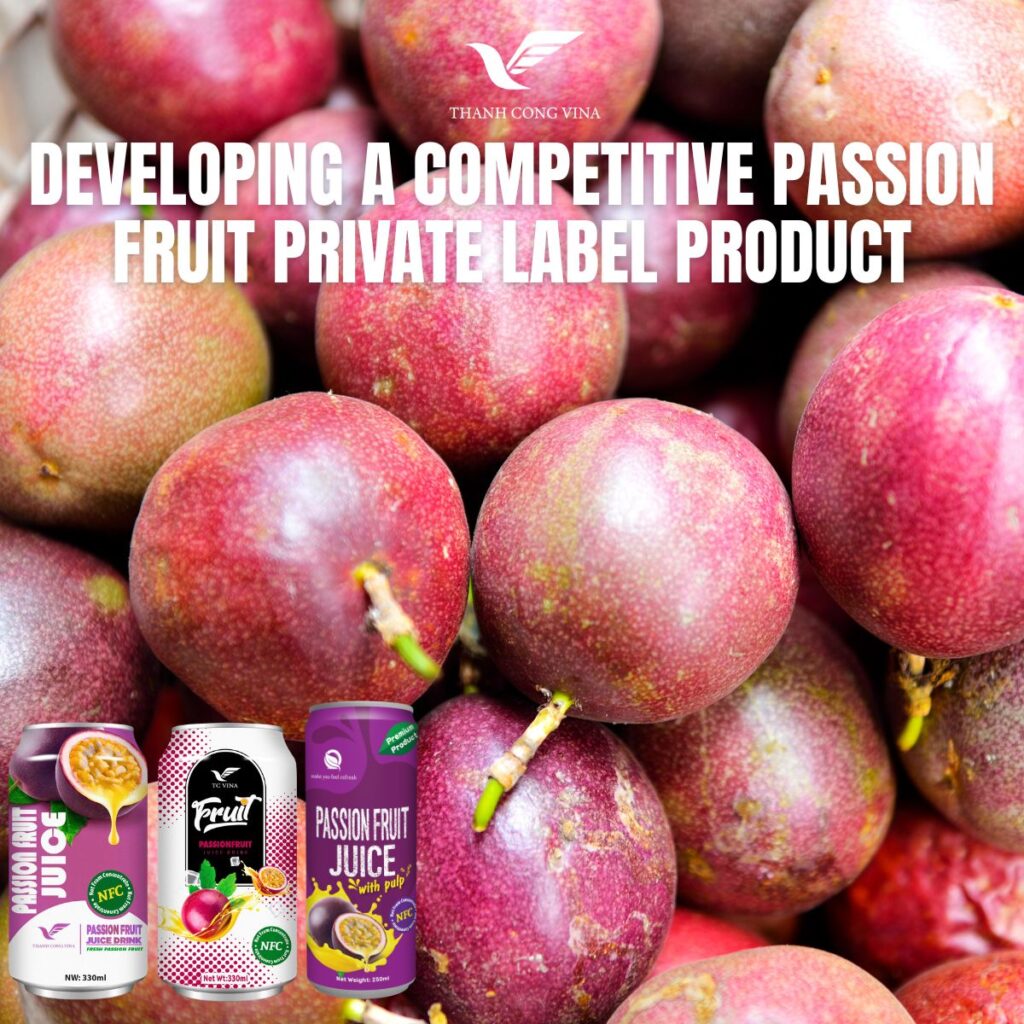
A private label beverage should reflect the identity and positioning of the brand selling it. This means product development must begin with a clear understanding of the target market.
Define the Target Consumer
The first step is identifying the consumers the product is designed to reach.
For example, a beverage intended for mainstream supermarket distribution may prioritize familiar flavor, accessible pricing, and convenient packaging. A product targeting premium retail channels may place greater emphasis on ingredient presentation, distinctive branding, and a carefully developed sensory profile.
Private label businesses should consider:
- Consumer age groups and purchasing habits.
- Preferred sweetness and acidity levels.
- Familiarity with tropical fruit flavors.
- Expected retail price.
- Main competitors in the category.
- Preferred packaging and serving size.
These considerations help establish a product concept that is relevant to the intended market.
Build a Distinctive Formulation
Passion fruit offers several formulation possibilities. Depending on the product concept, brands may explore different sweetness levels, fruit combinations, and juice-based formulations.
For instance, a more tangy profile may appeal to consumers who enjoy a pronounced passion fruit character. A sweeter formulation may be more suitable for consumers who prefer a smoother and milder fruit beverage.
However, formulation decisions should be based on product testing and target-market research. Claims such as 100% juice, no added sugar, or natural ingredients must only be used when supported by the actual formulation and applicable regulations.
Develop a Recognizable Brand Identity
Private label products compete not only through flavor but also through visual identity. Packaging should communicate the product’s category, flavor, and brand personality clearly.
A successful design may incorporate:
- A recognizable brand logo.
- Clear passion fruit flavor identification.
- Appropriate fruit imagery.
- Readable product information.
- Consistent colors and typography.
- Mandatory regulatory labeling.
The design should be attractive while remaining practical for printing, transportation, retail display, and consumer use.
4. Passion Fruit Flavor Combinations for a Broader Product Portfolio
One of the advantages of passion fruit is its ability to complement other fruit flavors. Private label brands can use this characteristic to create a broader beverage collection instead of relying on a single product.
Passion Fruit and Mango
Mango provides a familiar tropical sweetness that can complement passion fruit’s tangy character. This combination creates a fruit-forward concept with a recognizable tropical identity.
For brands, passion fruit and mango can be positioned as a refreshing option for consumers who enjoy blended tropical flavors.
Passion Fruit and Orange
Orange is a familiar citrus flavor in the global beverage market. Combined with passion fruit, it can create a lively fruit profile with a balance of citrus character and tropical aroma.
This combination may be suitable for brands seeking a recognizable flavor concept that can appeal to a broad consumer audience.
Passion Fruit and Pineapple
Pineapple introduces a sweet tropical character that works well with passion fruit’s acidity. Together, these fruits can create a vibrant flavor direction for ready-to-drink beverage collections.
The combination also provides opportunities for tropical-themed packaging and marketing campaigns.
Passion Fruit and Peach
Peach offers a softer fruit profile that can complement the stronger aromatic character of passion fruit. This combination may be considered by brands looking to develop a more approachable blended fruit beverage.
The final flavor balance should be assessed through sampling to ensure that neither fruit component overwhelms the overall product.
Planning a Cohesive Multi-Flavor Range
A multi-flavor portfolio should be developed with a clear commercial purpose. Instead of introducing many variants at once, private label brands can begin with a core product and gradually expand according to sales performance.
A possible portfolio structure may include:
| Product concept | Flavor positioning |
|---|---|
| Passion Fruit | Distinctive tropical and tangy |
| Passion Fruit Mango | Sweet tropical blend |
| Passion Fruit Orange | Bright citrus combination |
| Passion Fruit Pineapple | Refreshing tropical blend |
| Passion Fruit Peach | Smooth fruit combination |
These are product development concepts, not a confirmation of available manufacturing options. Buyers should verify formulation and production feasibility with the supplier.
5. Packaging and Labeling for Private Label Passion Fruit Juice
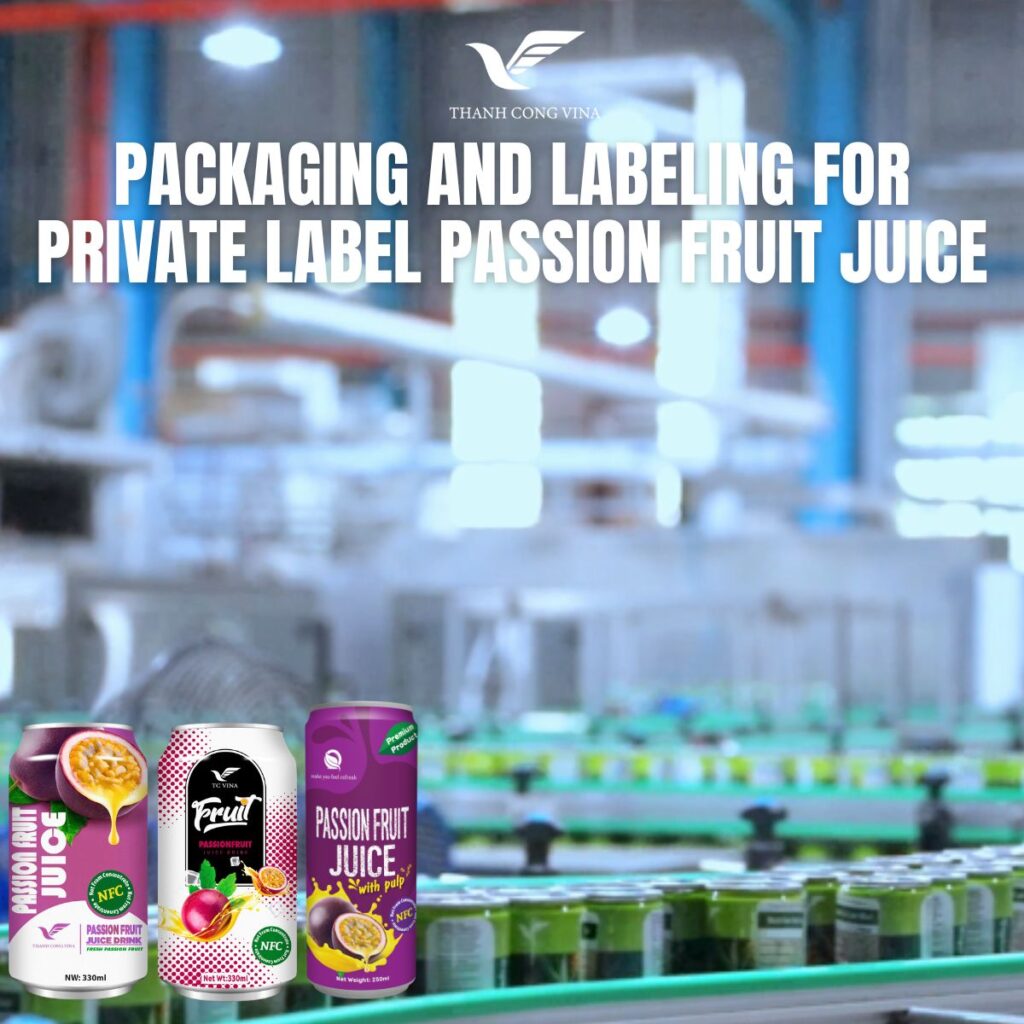
Packaging plays an important role in how consumers recognize and evaluate a beverage. For private label brands, it is also an opportunity to communicate brand identity and create consistency across the product range.
Selecting a Suitable Packaging Format
The right packaging format depends on the product formulation, distribution channel, target price, and available manufacturing capabilities.
Common beverage packaging formats to evaluate include:
- PET bottles: Convenient for everyday consumption and many retail environments.
- Aluminum cans: Suitable for portable beverage concepts and compact shelf presentation.
- Glass bottles: Can support a premium visual identity.
- Carton packaging: May suit specific juice beverage concepts and distribution requirements.
Each format has different considerations involving product compatibility, filling technology, storage, transportation, and packaging costs.
Buyers should confirm available formats and technical specifications before finalizing their product design.
Creating Effective Private Label Packaging
A strong passion fruit beverage design should make the product easy to identify. Consumers should be able to recognize the flavor quickly and understand the product category without confusion.
Important design elements include the brand logo, product name, fruit imagery, net volume, ingredient information, nutrition declaration, and required regulatory statements.
For international markets, labels may need to comply with local language, nutrition, ingredient declaration, allergen, and import requirements. These details should be reviewed before packaging materials are printed.
Considering Transportation and Distribution
Export-oriented packaging must also be suitable for handling throughout the supply chain.
Private label buyers should discuss carton specifications, palletization, loading arrangements, shipping conditions, and product storage requirements with the manufacturer.
Packaging decisions should balance appearance, product protection, logistics efficiency, and total landed cost.
6. Quality Assurance and Export Considerations
For international beverage businesses, quality and regulatory compliance are essential parts of supplier evaluation. A product that performs well in sampling must also meet the relevant requirements for commercial production and importation.
Ingredient and Finished Product Assessment
Buyers should request information about the ingredients used in the passion fruit beverage and review the applicable product specifications.
Depending on the product, relevant assessment areas may include:
- Ingredient composition and declarations.
- Fruit content and formulation details.
- Physical and chemical specifications.
- Microbiological criteria.
- Sensory characteristics.
- Packaging integrity.
- Shelf-life and storage conditions.
The specific tests and acceptance criteria should be established according to the product type, manufacturing process, and importing market.
Reviewing Manufacturing Quality Systems
A supplier’s quality management approach should be assessed through relevant documents and facility information.
Buyers may request details about manufacturing controls, food safety procedures, traceability, quality inspection, and applicable certifications.
Any certification should be checked for its issuing organization, validity period, covered facility, and scope. Regulatory registrations and certifications should not be treated as interchangeable.
Preparing Export Documentation
Export documentation requirements vary depending on the destination country, product classification, and importer requirements.
Depending on the transaction, documents may include:
- Commercial invoice.
- Packing list.
- Bill of lading.
- Certificate of Origin, where applicable.
- Product specification sheet.
- Certificate of Analysis, where required.
- Health or free-sale documentation, where applicable.
- Other documents requested by the importing authority.
Importers should confirm the required documents with their customs broker and relevant authorities before shipment. Early preparation can help reduce delays and avoid unnecessary documentation revisions.
7. Building Long-Term Private Label Cooperation with Thanh Cong Vina
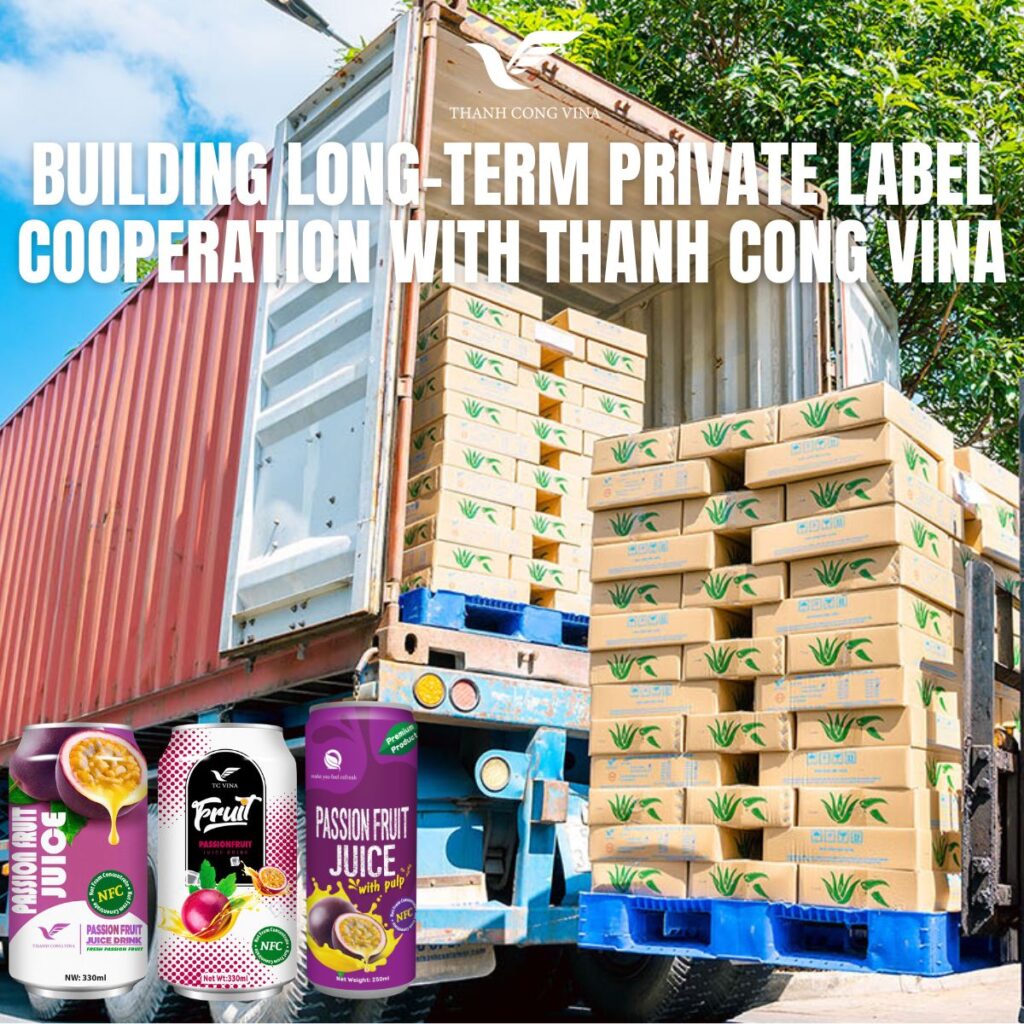
Choosing a beverage manufacturer should be viewed as a long-term business decision rather than a one-time purchasing transaction. For private label brands, cooperation involves product discussions, sample evaluation, specification approval, packaging coordination, and commercial planning.
Start with a Clear Product Brief
A detailed product brief helps the supplier understand the buyer’s expectations. It should include the intended beverage category, flavor direction, packaging preference, target market, estimated order quantity, and expected launch schedule.
Buyers should also share any specific ingredient, labeling, quality, or documentation requirements that may affect product development.
Evaluate Samples and Confirm Specifications
Before moving toward commercial production, businesses should review product samples and confirm the final specifications.
The approved product should have clearly documented characteristics, including formulation details, packaging information, quality requirements, and applicable shelf-life conditions.
This process helps establish a shared reference for both the buyer and manufacturer.
Plan for Sustainable Business Growth
After launching a passion fruit beverage, private label brands can evaluate market feedback and sales performance to identify opportunities for improvement.
Potential development directions include introducing additional fruit combinations, adjusting packaging formats, expanding distribution channels, or building a broader fruit beverage portfolio.
Thanh Cong Vina can discuss beverage product inquiries and potential cooperation based on project specifications and available manufacturing capabilities. Clear communication and realistic planning are important foundations for building a sustainable business relationship.
Conclusion
Developing a successful private label passion fruit beverage requires a combination of product quality, market understanding, distinctive branding, and reliable manufacturing cooperation. From selecting the right flavor profile to reviewing packaging, technical specifications, and export documentation, every decision can influence the product’s commercial performance. Working with a suitable Passion Fruit Juice Supplier Vietnam gives importers and distributors an opportunity to explore Vietnam’s tropical beverage sector and evaluate products for their target markets. For businesses planning to introduce passion fruit juice or expand an existing fruit beverage portfolio, Thanh Cong Vina welcomes inquiries about potential product cooperation. By discussing product concepts, packaging preferences, market requirements, and order expectations from the beginning, buyers can establish a clearer development process. Thanh Cong Vina aims to build professional business relationships with international partners through transparent communication and project-based cooperation.
