
Products Knowledge
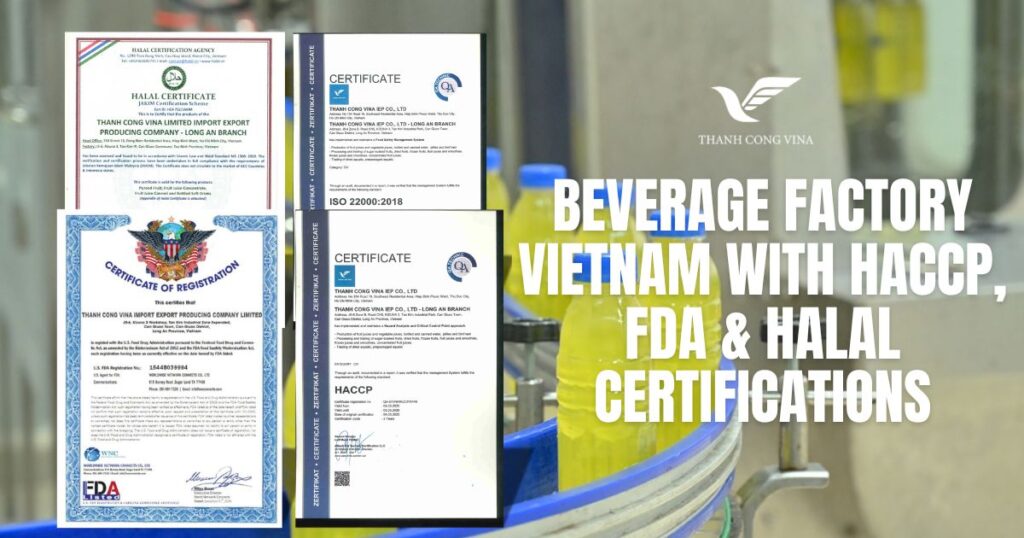
Beverage Factory Vietnam with HACCP, FDA & HALAL Certifications
Oct
A reliable Beverage Factory Vietnam can provide OEM, ODM, and private label production while supporting international customers with structured quality control and food safety systems. Vietnam has developed a strong food and beverage manufacturing sector supported by agricultural resources, modern processing capabilities, and an expanding export network. For importers, distributors, retailers, and beverage brands, working with a qualified Vietnamese manufacturer can provide access to customized fruit drinks, coconut water, aloe vera beverages, ready-to-drink coffee, energy drinks, juice concentrates, and other beverage categories.
Certifications and food safety standards also play an important role in international sourcing. HACCP supports systematic hazard control, FDA requirements are relevant to businesses exporting food and beverages to the United States, while HALAL certification can help products access Muslim consumer markets. For international customers, Thanh Cong Vina combines beverage manufacturing capabilities with an export-oriented approach designed to support customized beverage production.
1. Why Choose a Beverage Factory Vietnam for International Beverage Production?
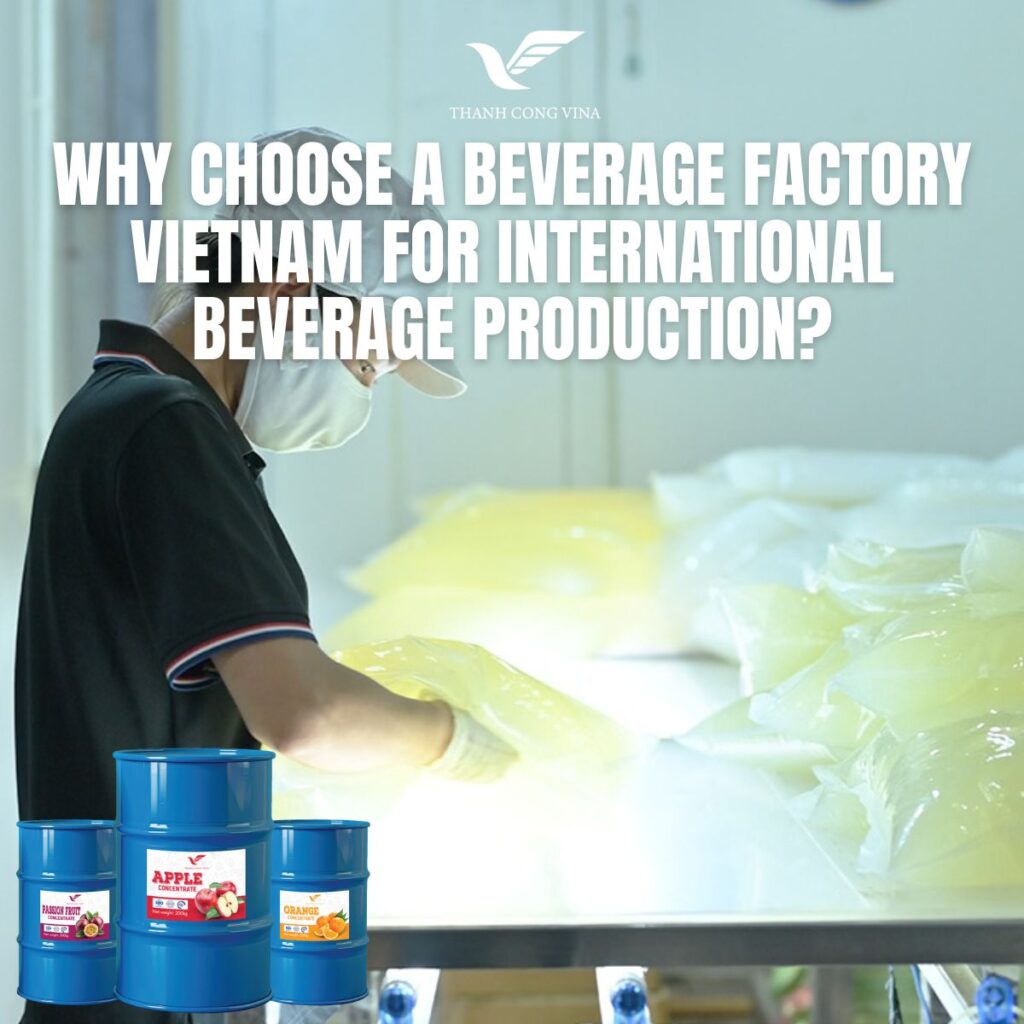
Vietnam has become an important manufacturing destination for businesses looking to source food and beverages from Asia. Several factors contribute to its attractiveness for international beverage production.
Access to Tropical Agricultural Resources
Vietnam has a diverse agricultural sector with access to numerous fruits and plant-based ingredients. Mango, pineapple, passion fruit, orange, strawberry, lychee, guava, coconut, aloe vera, and other ingredients can be used in beverage development.
This agricultural diversity gives beverage manufacturers greater flexibility when developing fruit-based products. International brands can select individual fruit flavors or develop combinations designed for specific consumer markets.
For example, a distributor may request mango and passion fruit beverages for one market, while another buyer may prefer strawberry, lychee, or mixed-fruit products.
Developed Beverage Processing Capabilities
The Vietnamese beverage sector covers a wide range of product categories, including fruit drinks, coconut water, aloe vera drinks, coffee beverages, energy drinks, juice concentrates, and other ready-to-drink products.
A professional manufacturing facility can provide the infrastructure needed for commercial beverage production, including processing systems, filling equipment, packaging lines, quality control procedures, and warehouse operations.
For international brands, outsourcing production can eliminate the need to establish their own factory and allows them to concentrate on product marketing, sales, distribution, and brand development.
Export-Oriented Manufacturing Environment
International beverage manufacturing requires coordination between production and logistics. The product must meet the agreed specifications while packaging and documentation need to be prepared for the destination market.
An export-oriented Beverage Factory Vietnam can help international customers coordinate product development, production planning, quality control, packaging, and shipment preparation through a structured workflow.
2. HACCP and Food Safety Management in Beverage Manufacturing
Food safety is one of the most important considerations when sourcing beverages internationally. HACCP is widely recognized as a systematic approach to identifying and controlling potential food safety hazards.
Understanding HACCP in Beverage Production
HACCP stands for Hazard Analysis and Critical Control Points. The system focuses on identifying potential hazards throughout the production process and establishing controls at relevant stages.
For beverage manufacturing, food safety management can involve multiple areas, including raw material handling, ingredient preparation, processing, filling, packaging, storage, and transportation.
A structured HACCP-based system helps manufacturers establish procedures for monitoring potential risks rather than relying only on final product inspection.
HACCP and Raw Material Control
Raw materials can have a significant impact on beverage quality and food safety. Ingredients should be received, stored, and handled according to established specifications.
A controlled raw material process can include supplier management, ingredient specifications, storage conditions, traceability, and inspection procedures.
These controls help establish consistency before ingredients enter the production process.
HACCP and Production Monitoring
During beverage manufacturing, different stages can require monitoring according to the product and process.
Processing parameters, equipment conditions, filling operations, sealing, packaging, and storage can all be included within the manufacturer’s food safety management system.
For international buyers, a structured food safety system provides a clearer framework for managing production risks.
3. FDA Requirements for Beverage Export to the United States
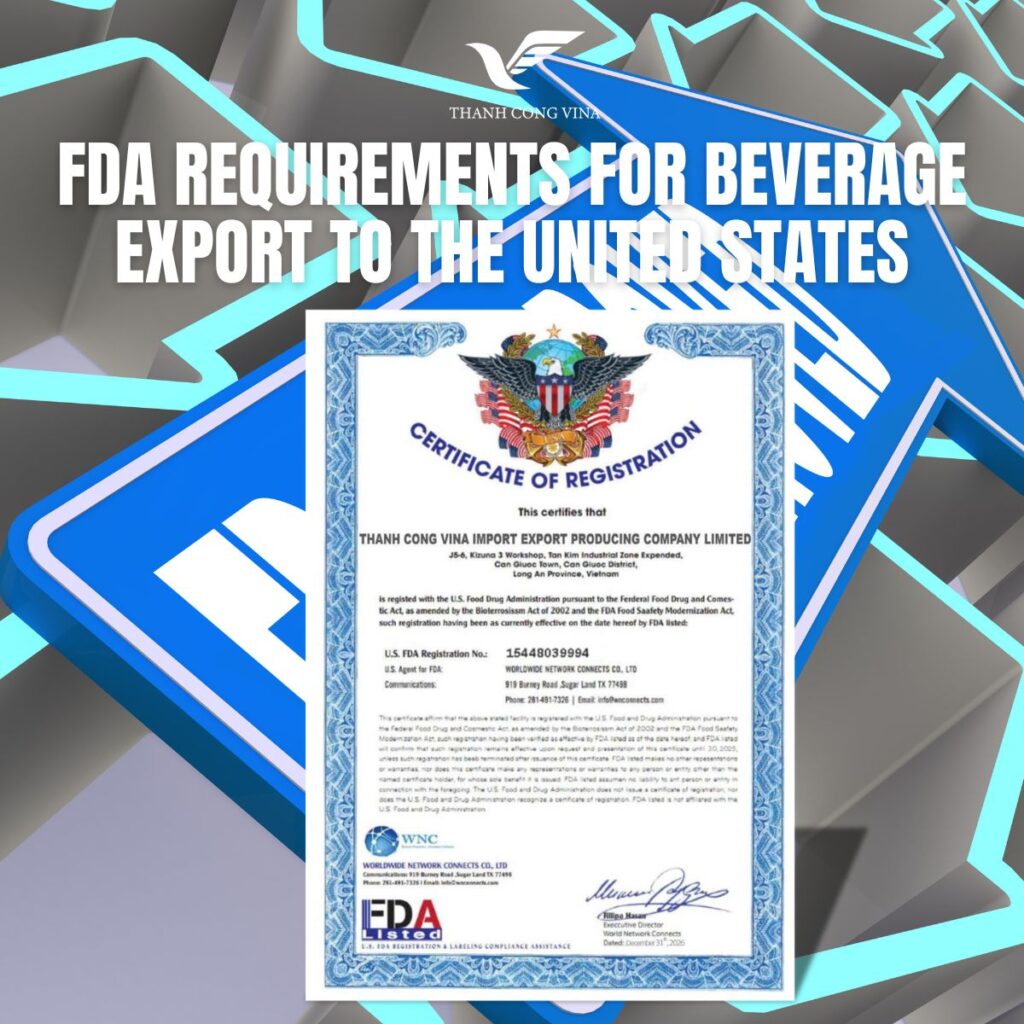
For companies planning to distribute beverages in the United States, understanding FDA-related requirements is an important part of export preparation.
FDA and Food and Beverage Imports
The U.S. Food and Drug Administration regulates many aspects of food and beverage products entering the United States. Manufacturers and exporters need to consider applicable requirements related to food safety, facility registration, product information, labeling, and import procedures.
The specific requirements can vary depending on the product and circumstances of the shipment. Therefore, international buyers should review the applicable U.S. requirements for their particular beverage category.
Product and Labeling Considerations
Beverage labels intended for the U.S. market may need to include specific product and nutritional information. Ingredient declarations, net quantity information, manufacturer or distributor details, and other applicable labeling elements may need to be reviewed before production.
Early coordination between the brand, importer, and manufacturer can reduce the possibility of packaging adjustments after production.
Export Documentation
International beverage shipments may involve commercial documents, product specifications, certificates, packing information, and other documents requested by buyers or authorities.
An export-oriented beverage manufacturer can help customers prepare production-related information and coordinate documentation according to the agreed requirements.
4. HALAL Certification for Global Beverage Markets
HALAL certification can be an important consideration for businesses targeting Muslim-majority markets or consumers seeking HALAL-certified products.
Why HALAL Matters for Beverage Brands
HALAL requirements cover more than the finished beverage. Depending on the certification system and product, ingredients, processing methods, handling, storage, and production practices may all need to be considered.
For international brands, HALAL certification can support access to markets where HALAL compliance is commercially important.
HALAL Product Development
When developing a beverage for HALAL markets, manufacturers and buyers should consider the origin and specifications of ingredients used in the formulation.
This can include flavors, additives, processing aids, sweeteners, and other components.
Early consideration of HALAL requirements allows the manufacturer and buyer to organize the formulation and production process accordingly.
HALAL and Export Market Expansion
HALAL certification can be relevant for customers targeting markets in Southeast Asia, the Middle East, Africa, and other regions with significant Muslim consumer populations.
For distributors, having appropriately certified products can simplify product positioning and support retail and distribution strategies in relevant markets.
5. Beverage Factory Vietnam for OEM, ODM and Private Label Production
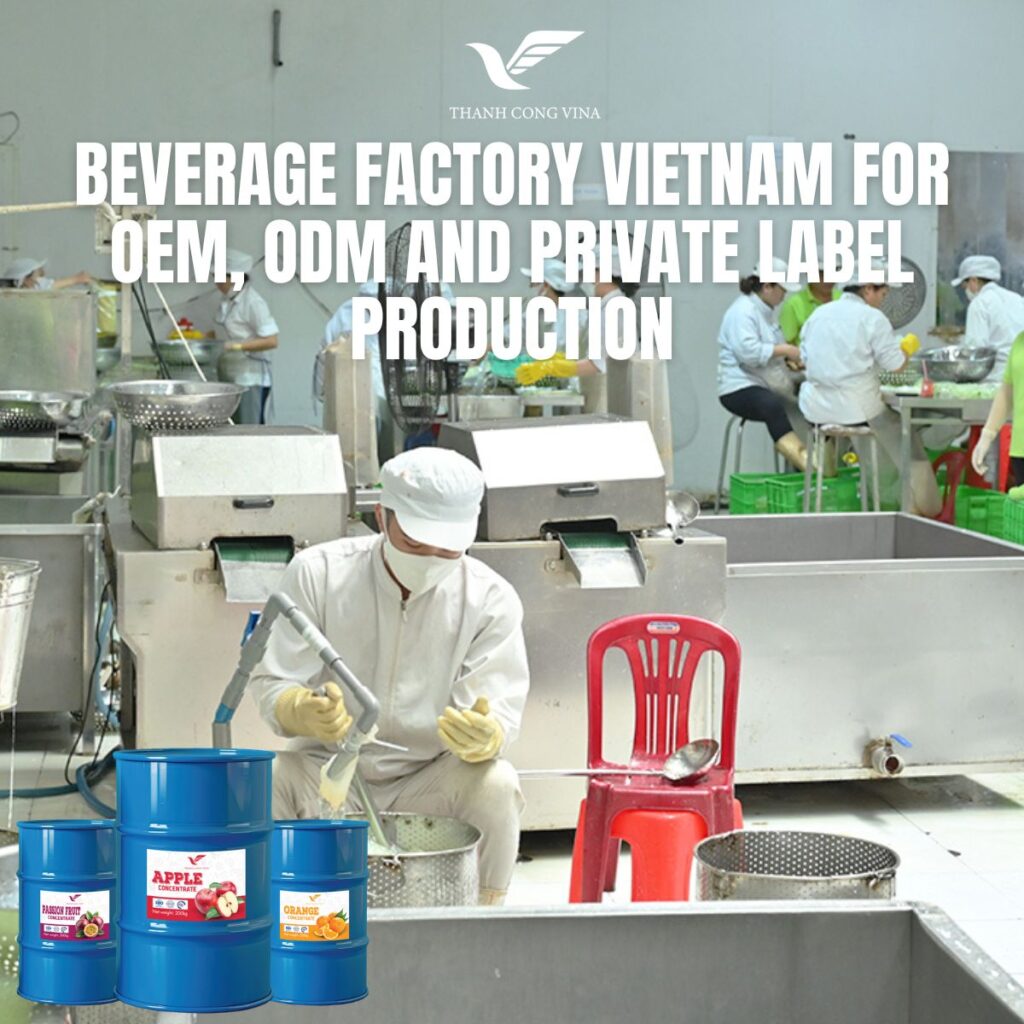
A certified manufacturing environment can support different business models, including OEM, ODM, and private label beverage production.
OEM Beverage Manufacturing
OEM manufacturing is suitable for brands that already have their own product specifications. The manufacturer produces the beverage according to the customer’s approved formula, flavor, packaging, and technical requirements.
OEM services can cover:
- Ingredient preparation
- Beverage processing
- Filling and sealing
- Quality inspection
- Packaging
- Batch coding
- Carton packing
- Export preparation
This model allows brands to outsource manufacturing while maintaining control over their product specifications.
ODM Beverage Development
ODM services provide more extensive support for companies that have a product concept but do not yet have a finalized formula.
The manufacturer may assist with flavor selection, formula development, sample preparation, packaging recommendations, and commercial production.
ODM can be particularly useful for startups, retailers, distributors, and companies entering the beverage industry.
Private Label Beverage Production
Private label production allows businesses to sell beverages under their own brand name while using the manufacturing infrastructure of an established beverage producer.
Products can be customized through flavor selection, formulation, packaging size, label artwork, and other specifications.
This model allows importers and retailers to develop exclusive beverage products without investing in their own factory.
6. Beverage Categories Manufactured for International Markets
A professional Beverage Factory Vietnam should be capable of supporting multiple beverage categories to meet the different requirements of international buyers.
Fruit Juice and Fruit-Based Drinks
Fruit drinks are suitable for a wide range of markets and consumer groups. Product concepts can include mango, orange, strawberry, lychee, red grape, pineapple, passion fruit, peach, guava, and other fruit combinations.
Packaging can be developed in different formats and serving sizes depending on the target distribution channel.
Coconut Water and Coconut-Based Beverages
Vietnam’s tropical environment provides access to coconut resources, making coconut water an important beverage category for international buyers.
Products can include 100% coconut water as well as coconut water combined with fruit juice. Flavors can be customized depending on the brand’s concept.
Aloe Vera Drinks
Aloe vera beverages offer another product category for brands seeking differentiated fruit-based drinks.
Potential flavor concepts include mango, blueberry, lychee, peach, and original aloe vera beverages.
Ready-to-Drink Coffee
Vietnam is also strongly associated with coffee production and consumption, creating opportunities for ready-to-drink coffee manufacturing.
Commercial concepts can include black coffee, cappuccino, latte, and milk coffee, depending on the target market.
Energy and Functional Beverages
Energy drinks and functional beverage concepts can also be developed through customized OEM and ODM manufacturing.
Brands can specify flavor, packaging, serving size, and product positioning based on their target consumer segment.
7. Quality Control and Certification Support
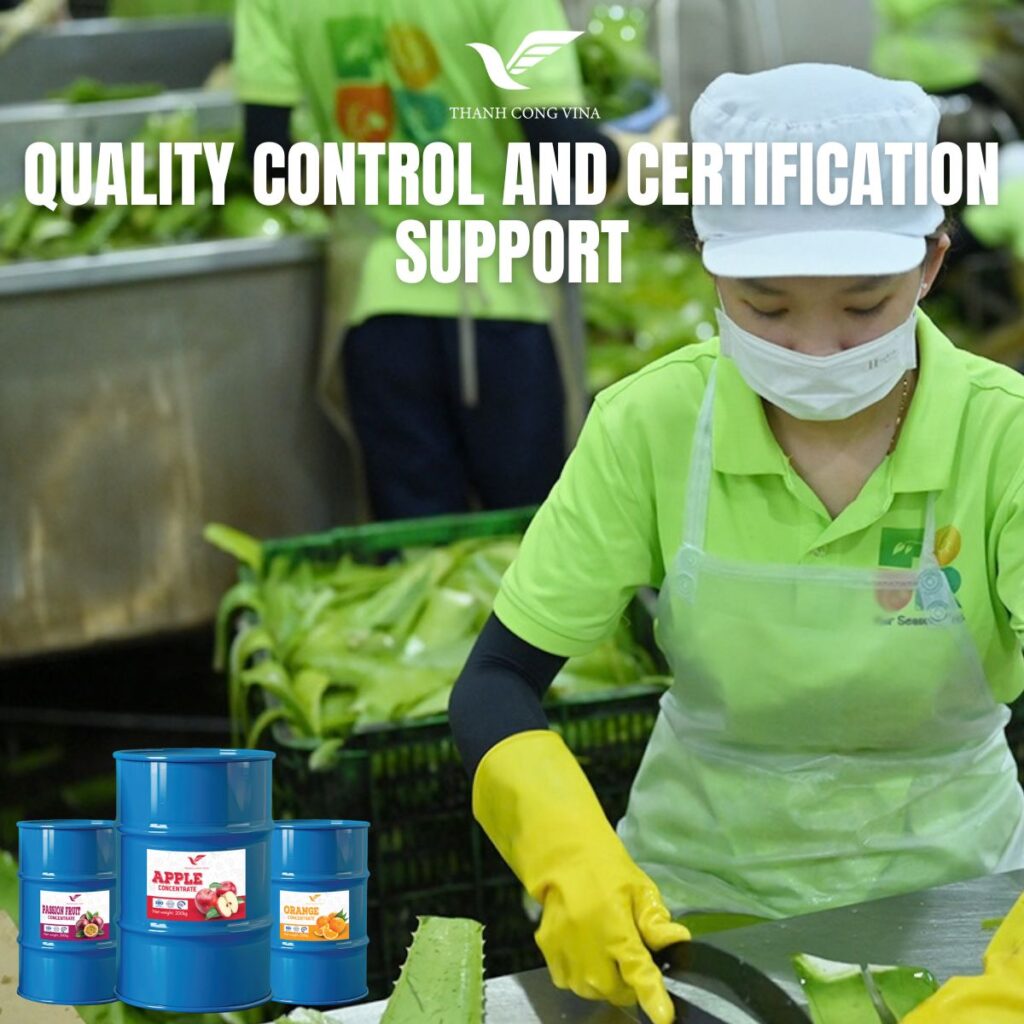
Certifications provide an important framework, but effective manufacturing also depends on consistent implementation of quality management procedures.
Incoming Material Inspection
Raw materials and packaging components should be reviewed according to established specifications before entering production.
This helps maintain consistency and reduces the risk of unsuitable materials entering the manufacturing process.
In-Process Quality Control
Quality checks can be performed throughout production. Depending on the product, these may involve processing parameters, filling operations, packaging integrity, coding, and other production characteristics.
Continuous monitoring helps identify potential issues earlier in the manufacturing process.
Finished Product Inspection
Before shipment, finished beverages can be reviewed against the approved specifications.
Inspection can include product appearance, packaging condition, labeling, coding, and other relevant parameters.
For export orders, product documentation and shipment information can also be organized according to customer requirements.
8. Why Choose Thanh Cong Vina as a Beverage Manufacturing Partner?
Thanh Cong Vina provides OEM, ODM, and private label beverage manufacturing solutions for international customers seeking production from Vietnam.
The company supports multiple beverage categories, including fruit juice drinks, coconut water, coconut water with fruit juice, aloe vera beverages, juice concentrates, NFC juice, ready-to-drink coffee, energy drinks, and other customized beverage products.
For international buyers, the manufacturing process can be structured around product specifications, target markets, packaging formats, production quantities, and export requirements.
Thanh Cong Vina’s approach focuses on supporting customers across the beverage development process, from product concept and formulation to sampling, packaging, commercial production, quality control, and export preparation.
For brands targeting different international regions, certification and food safety considerations can be integrated into the product development discussion from the beginning. This is particularly relevant when customers need to prepare products for markets with specific regulatory or certification requirements.
By working with an experienced manufacturing partner, international customers can coordinate multiple aspects of beverage production through one supply relationship.
Conclusion
Selecting the right manufacturing partner is an important decision for international beverage brands, importers, distributors, and retailers. A Beverage Factory Vietnam with structured food safety management and relevant certifications can provide a foundation for producing customized beverages for different international markets. HACCP supports systematic food safety control, while FDA-related requirements are important for products entering the United States, and HALAL certification can support access to relevant Muslim consumer markets.
Beyond certification, successful beverage manufacturing requires consistent raw material control, production monitoring, quality inspection, packaging management, and export coordination. With OEM, ODM, and private label capabilities, Thanh Cong Vina provides customized beverage manufacturing solutions for international customers. From fruit juice and coconut water to aloe vera drinks, coffee, energy beverages, and concentrates, Thanh Cong Vina supports businesses seeking an experienced Beverage Factory Vietnam for customized production and international distribution.
