
Products Knowledge
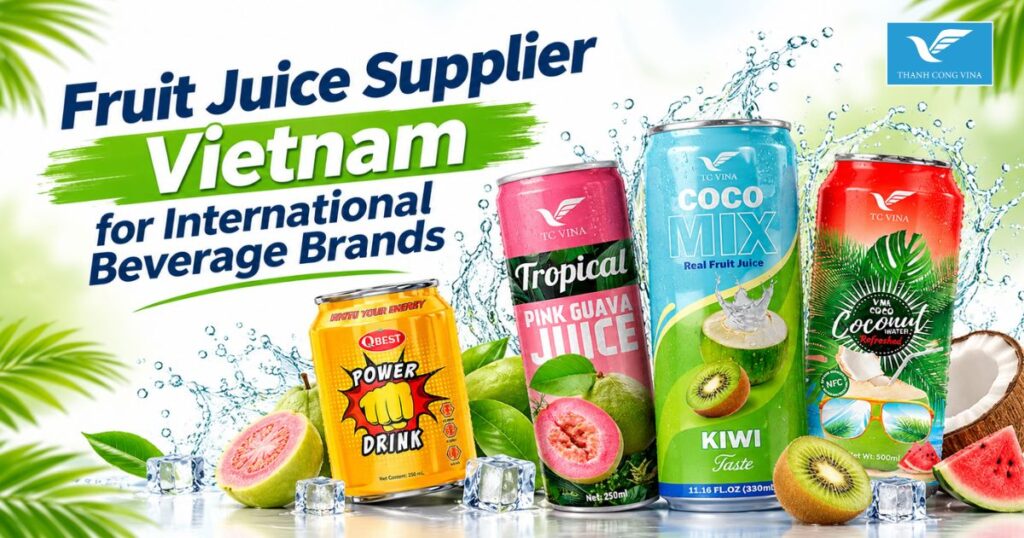
Fruit Juice Supplier Vietnam for International Beverage Brands
Nov
International beverage brands are constantly exploring new sourcing destinations to diversify their product portfolios, respond to consumer preferences, and strengthen their supply chains. As demand for fruit-based beverages continues to create opportunities across retail, foodservice, and distribution channels, Vietnam has become an interesting market for businesses seeking tropical fruit products and beverage manufacturing cooperation. Choosing a reliable Fruit Juice Supplier Vietnam is therefore an important consideration for importers, distributors, supermarket chains, and private label brands planning to expand their international beverage business.
However, successful sourcing involves more than finding a manufacturer that offers competitive prices. Buyers must evaluate product variety, flavor suitability, ingredient specifications, quality management, packaging options, and export coordination. Each factor can influence the commercial performance of a beverage after it enters a new market.
A strong supplier relationship should connect the buyer’s brand strategy with practical manufacturing and supply chain requirements. By defining product expectations and evaluating suppliers systematically, international businesses can build a more reliable sourcing foundation. Thanh Cong Vina supports beverage manufacturing and export cooperation for business customers exploring fruit-based beverage opportunities.
1. Why International Brands Choose a Fruit Juice Supplier Vietnam
Vietnam offers opportunities for international beverage businesses interested in tropical fruit products and a diverse range of fruit-based drinks. For brands looking to diversify their portfolios, working with a Vietnamese supplier can provide access to product concepts that suit different consumer groups and distribution channels.
Access to Tropical Fruit Beverage Opportunities
Tropical fruit flavors are an important part of Vietnam’s beverage product landscape. Depending on ingredient availability and manufacturing capabilities, buyers may explore beverages featuring mango, pineapple, passion fruit, lychee, guava, orange, and other fruit ingredients.
These flavors can support different product strategies. Familiar fruit options may appeal to mainstream retail consumers, while combinations of several fruits can help brands introduce more distinctive beverage concepts.
International buyers should consider the relationship between flavor selection and their target market. A product that performs well in one country may require adjustments in sweetness, acidity, aroma, or fruit intensity before being introduced elsewhere.
A supplier that understands the buyer’s product objectives can help identify suitable directions for further evaluation and sample development.
Opportunities to Diversify Beverage Portfolios
For established beverage brands, introducing additional fruit juice products can help expand category coverage and provide more choices for existing distribution networks.
A portfolio may include single-fruit beverages, mixed-fruit combinations, tropical juice drinks, coconut water blends, or other fruit-based products, depending on the manufacturer’s available capabilities.
Diversification should be planned around commercial objectives rather than simply increasing the number of products. Buyers need to consider consumer demand, production feasibility, packaging requirements, and the expected retail price of each product.
A structured product portfolio also helps businesses organize purchasing, inventory management, marketing, and distribution activities more efficiently.
Supporting Different International Business Models
Different buyers have different sourcing requirements. Importers may prioritize product availability and export documentation, while distributors may focus on price structure, packaging configurations, and reliable order fulfillment.
Retail chains and private label brands may require customized product specifications, label artwork, and packaging arrangements. Foodservice businesses may have different expectations regarding serving formats and commercial order quantities.
A professional supplier relationship begins with understanding these differences. Buyers should explain their business model and target market early so that product discussions can focus on realistic requirements.
2. Building a Fruit Juice Portfolio for Different Consumer Markets
A successful fruit juice portfolio should reflect consumer preferences, retail positioning, and the commercial objectives of the brand. Product selection is not simply a matter of choosing popular flavors; it requires an understanding of how each beverage fits into the overall brand strategy.
Selecting Flavors Based on Regional Preferences
Flavor preferences can vary across countries and consumer groups. Some markets may favor familiar citrus and tropical fruit profiles, while others may show stronger interest in mixed-fruit combinations or distinctive flavor concepts.
When developing a product range, buyers should consider:
- Flavor familiarity: Whether the target consumers already recognize and accept the selected fruit.
- Sweetness preference: The expected balance between natural fruit sweetness and added sweetness, where applicable.
- Acidity: How refreshing or intense the beverage should taste.
- Aroma: Whether the fruit character matches the intended product positioning.
- Color and appearance: Whether the finished beverage meets consumer and brand expectations.
- Consumption occasion: Whether the product is intended for everyday refreshment, convenience retail, or another specific occasion.
These factors should be evaluated through samples and market research. A clear sensory brief can help the manufacturer understand the desired product direction.
Developing Single-Fruit and Mixed-Fruit Concepts
Single-fruit beverages offer straightforward flavor identification and can support brands seeking familiar product choices. Mixed-fruit beverages, on the other hand, create opportunities to combine complementary ingredients and develop more distinctive taste profiles.
For example, mango and passion fruit may create a tropical flavor direction, while orange and pineapple can offer a familiar citrus-inspired combination. Other blends may incorporate lychee, guava, peach, or grape, depending on formulation feasibility.
The objective is to create a balanced beverage rather than combining ingredients simply to increase complexity. Each fruit component should contribute to the intended flavor profile, and the final formulation should be reviewed for sweetness, acidity, aroma, and appearance.
Positioning Products for Different Sales Channels
Product positioning should influence both formulation and packaging decisions.
Supermarkets may prioritize recognizable flavors, competitive pricing, and clear product information. Convenience stores may focus on practical serving sizes and easy-to-carry packaging. Foodservice distributors may require formats that fit their storage, handling, and serving requirements.
Private label brands may place greater emphasis on packaging design and product differentiation. Their sourcing process may also involve additional artwork approvals and customized specifications.
By identifying the primary sales channel before product development, buyers can make more informed decisions about the beverage concept and commercial requirements.
3. Product Specifications and Customization with a Fruit Juice Supplier Vietnam
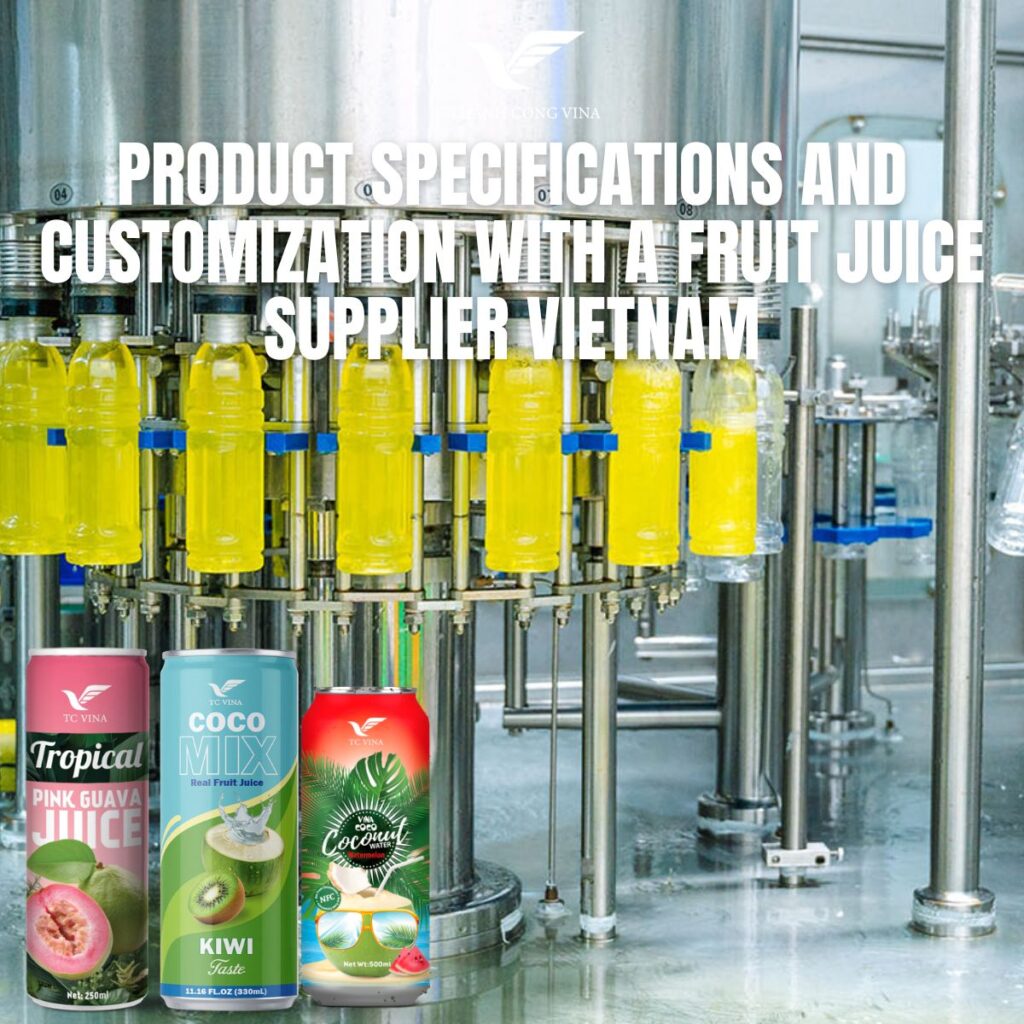
Product specifications provide the foundation for effective cooperation between international buyers and manufacturers. They translate a brand concept into technical and commercial requirements that can be reviewed, approved, and maintained throughout production.
Defining the Product Composition
Fruit juice beverages may contain different combinations of fruit juice, fruit concentrate, fruit preparations, water, sweeteners, acidity regulators, and other permitted ingredients, depending on the product category.
Buyers should clarify the intended product type and ingredient expectations before requesting samples. It is important to distinguish between fruit juice, fruit juice drinks, and other fruit-based beverages because their composition, naming, and labeling requirements may differ.
The product brief should identify the expected fruit ingredients, desired flavor intensity, sweetness, acidity, color, and any ingredient restrictions. Where specific fruit content or formulation claims are required, the buyer should establish how these will be verified and reflected in the final product documentation.
Adjusting Formulations for Target Markets
A formulation developed for one market may not automatically suit another. Differences in consumer preferences, ingredient regulations, labeling requirements, and product positioning can influence the final beverage.
Some buyers may prefer a sweeter taste, while others may request a lighter profile with more noticeable fruit acidity. Certain markets may also impose specific requirements on additives, ingredient declarations, or nutritional information.
A supplier should evaluate proposed adjustments according to technical feasibility and applicable regulations. Sample testing allows buyers to compare alternatives and select a formulation that best matches their objectives.
Maintaining an Approved Product Reference
Once a formulation has been selected, buyers should request clear product specifications and retain an approved reference sample where appropriate.
The reference should help define the expected flavor, aroma, color, and other relevant characteristics. Packaging information, ingredient declarations, and applicable quality parameters should also be documented.
If the manufacturer proposes a change to ingredients, processing conditions, or packaging materials, the potential impact should be reviewed before implementation.
This approach helps protect product consistency and provides a clearer basis for evaluating repeat orders.
4. Quality Management and Reliability in Fruit Juice Manufacturing
Quality management is a critical consideration for international beverage brands because the finished product must meet both commercial expectations and applicable food safety requirements. Buyers should assess how the supplier manages ingredients, production controls, testing, and product documentation.
Ingredient Selection and Supply Transparency
The quality of fruit ingredients can influence the flavor, color, aroma, and consistency of a finished beverage. Buyers should understand the ingredient specifications used in the proposed formulation and request relevant documentation where available.
Depending on the project, information may include ingredient identity, grade, origin documentation, storage conditions, and supplier records.
For products containing several fruit ingredients, consistency across different components is particularly important. Changes in ingredient characteristics may affect the finished beverage and should be evaluated through appropriate quality procedures.
A transparent supplier should explain which ingredient details can be documented and how changes are managed.
Production Controls and Finished Product Evaluation
Production controls should be appropriate for the product formulation and manufacturing process. Depending on the beverage, production may involve ingredient preparation, blending, suitable preservation treatment, filling, sealing, and packaging.
The specific processing conditions must be determined by qualified technical personnel. Buyers should request relevant information about the controls used to ensure that the finished product meets the agreed specifications.
Finished product evaluation may include sensory characteristics, physicochemical parameters, net content, packaging integrity, and other applicable quality criteria.
The testing scope should be agreed in advance, including the relevant methods, frequency, and supporting records available to the buyer.
Food Safety Documentation and Certification Verification
International buyers should review the supplier’s relevant food safety documentation as part of the sourcing process.
Where certifications are presented, buyers should verify the issuing organization, facility covered, certification scope, and validity period. A certificate should not be assumed to apply to every product or production location associated with a business.
Depending on the destination market, additional product documentation may be required. Buyers should identify these requirements early and coordinate with the supplier, importer, and relevant regulatory specialists.
A structured approach to documentation helps reduce uncertainty and supports a more transparent commercial relationship.
5. Packaging and Brand Presentation for International Distribution
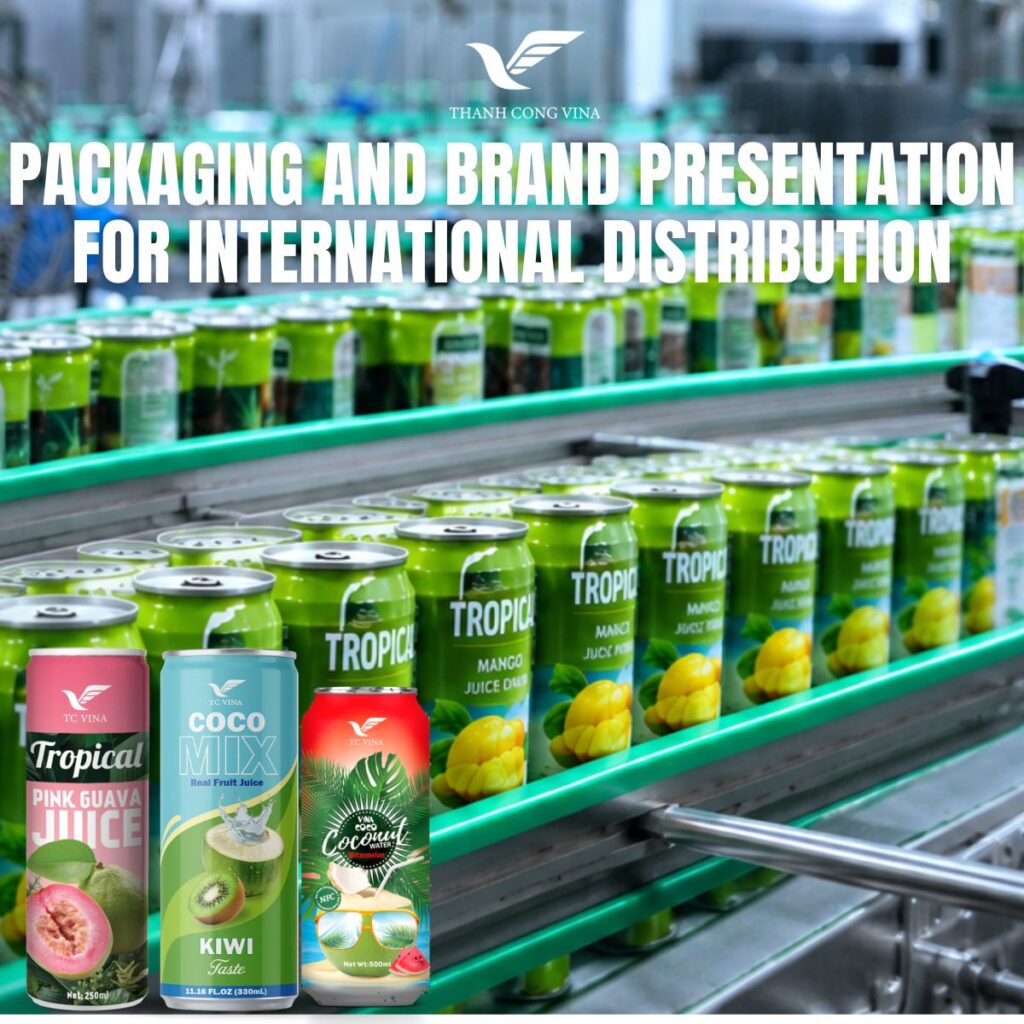
Packaging influences product protection, transportation, retail presentation, and consumer convenience. For international beverage brands, selecting the right format requires a balance between technical suitability and commercial positioning.
Choosing Suitable Beverage Packaging
Fruit juice beverages may be offered in different formats depending on the formulation, processing method, manufacturing capabilities, and project requirements.
Common packaging options may include:
- PET bottles: Suitable for many convenient ready-to-drink beverage concepts.
- Aluminum cans: An option for selected retail and convenience beverage categories.
- Glass bottles: May support particular brand positioning and serving occasions.
Buyers should confirm available filling volumes, closure types, carton configurations, and minimum order quantities with the manufacturer.
Packaging compatibility must also be evaluated against the beverage’s processing and storage requirements. The selected package should support product integrity throughout the intended distribution journey.
Developing Packaging for Brand Recognition
Packaging is one of the first elements consumers notice when evaluating a beverage. A clear visual identity can help a product stand out and communicate its flavor, category, and intended positioning.
For fruit juice products, design elements may include fruit illustrations, flavor-specific colors, product descriptions, and brand graphics. The visual presentation should remain consistent across the portfolio while allowing consumers to distinguish individual flavors easily.
Buyers should ensure that packaging claims are accurate and supported by the product formulation. Label information must also comply with the applicable regulations of each destination market.
Preparing Packaging for Export Logistics
Packaging must be suitable not only for retail display but also for handling, warehousing, and international transportation.
Buyers should review carton strength, pallet configuration, loading arrangements, and storage requirements. The final configuration should be discussed with the supplier and logistics partners before shipment planning is confirmed.
A well-coordinated packaging plan can help reduce handling issues and support more predictable inventory management after products arrive at the destination.
6. Export Planning and Supply Chain Coordination
For international beverage brands, successful sourcing depends on coordination beyond manufacturing. Product approval, purchase orders, production scheduling, documentation, freight arrangements, and customs procedures must work together.
Establishing Realistic Production Timelines
Production lead times may depend on ingredient availability, packaging procurement, formulation approval, production scheduling, testing, and document preparation.
Buyers should request realistic estimates and clarify which milestones must be completed before production can begin. Customized products may require additional time for sample revisions or artwork approval.
A clear schedule helps importers coordinate product launches, promotional campaigns, and inventory planning. However, estimated dates should be distinguished from confirmed production and shipment commitments.
Preparing Export Documents
Export documentation depends on the product, destination market, commercial terms, and shipping arrangement.
Common shipping and commercial documents may include a commercial invoice, packing list, and transport document. Other certificates or product-related documents may be required depending on the importing country’s regulations.
Buyers should confirm document requirements before the order reaches the shipping stage. They should also ensure that product descriptions, quantities, packaging details, and other relevant information are consistent across the documents.
Early coordination between the supplier, importer, customs broker, and freight forwarder can help reduce avoidable administrative delays.
Improving Supply Chain Visibility
A predictable supply chain requires both parties to understand the order status and their respective responsibilities.
For repeat orders, importers can share demand forecasts to help suppliers assess ingredient and packaging requirements. Forecasts should be separated from confirmed purchase orders to maintain clear commercial expectations.
Regular communication is also important when changes occur. If an ingredient, package component, or production schedule is affected, both parties should discuss the impact and agree on appropriate next steps.
7. How to Select the Right Fruit Juice Manufacturing Partner
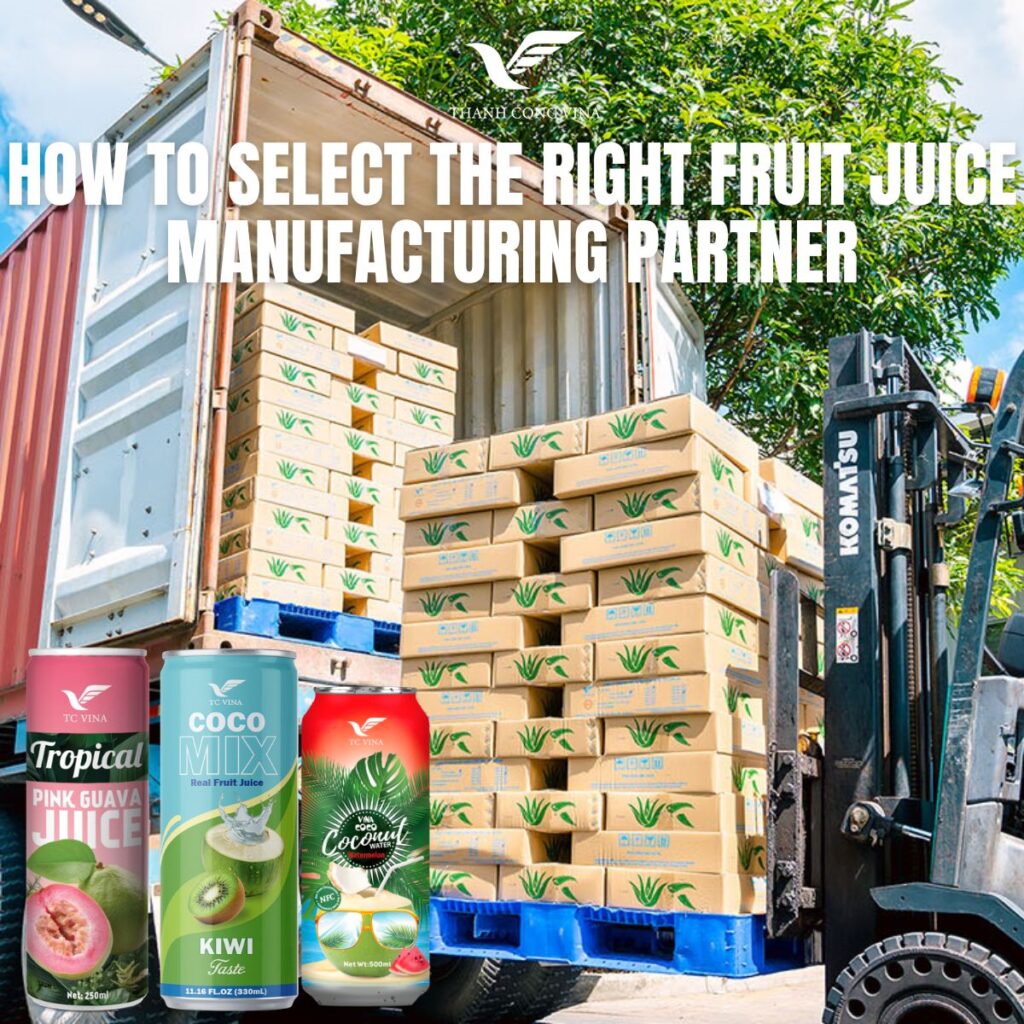
Choosing a manufacturing partner is a long-term business decision. International buyers should evaluate product suitability, quality management, commercial transparency, and communication rather than relying exclusively on price or promotional claims.
Evaluate Technical and Product Capabilities
Buyers should confirm whether the supplier can support the intended beverage category and provide the necessary product information.
Discussions should cover available fruit ingredients, existing formulations, customization possibilities, packaging formats, order quantities, and production lead times.
It is also useful to clarify whether a requested product is already available or requires additional development. This distinction helps establish realistic expectations for sampling, technical review, and commercial planning.
Compare Total Sourcing Costs
The total cost of a fruit juice sourcing project may include ingredients, formulation development, processing, packaging, printing, testing, documentation, freight, and import-related expenses.
Buyers should request quotations based on clearly defined assumptions. Comparing suppliers is more meaningful when product specifications, order quantities, packaging configurations, and delivery terms are equivalent.
A total landed cost assessment provides a more realistic view of commercial feasibility and helps importers evaluate potential margins.
Establish a Partnership for Long-Term Growth
A suitable supplier should be able to communicate clearly, document agreed requirements, and discuss technical or commercial limitations transparently.
For international brands, this relationship can support more consistent product planning, repeat-order coordination, and future portfolio development.
Thanh Cong Vina Beverage works with business customers interested in fruit-based beverage manufacturing and export cooperation. Potential partners can begin discussions by sharing their product concept, target market, preferred packaging, estimated order volume, and relevant technical requirements.
Conclusion:
Expanding a fruit juice portfolio into international markets requires careful coordination between product strategy, formulation, quality management, packaging, and export planning. Choosing a reliable Fruit Juice Supplier Vietnam helps importers and beverage brands evaluate these factors and establish a sourcing arrangement that supports their commercial objectives.
From selecting suitable fruit flavors to defining product specifications and preparing export documentation, every stage should be based on clear requirements and transparent communication. Buyers should also consider total sourcing costs, regulatory obligations, and long-term supply needs before confirming a manufacturing partnership.
Thanh Cong Vina welcomes discussions with international importers, distributors, retailers, and beverage brands seeking fruit-based beverage manufacturing and export cooperation. By reviewing each project’s requirements carefully, Thanh Cong Vina aims to support business customers in exploring suitable product opportunities and building sustainable partnerships in the global beverage market.
