
Products Knowledge
How to Choose the Right Beverage Factory Vietnam for Your Brand
Sep
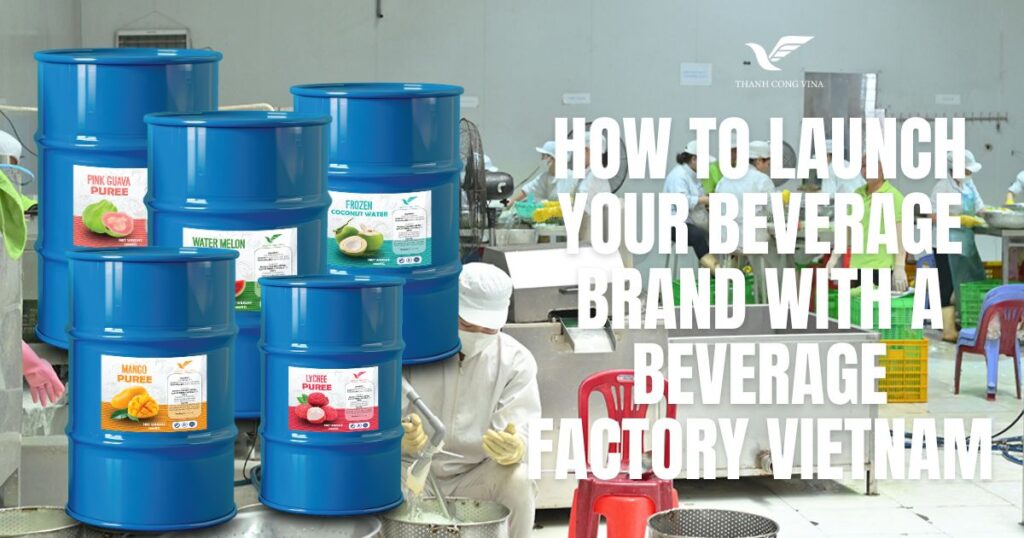
For entrepreneurs, importers, distributors, retailers, and established F&B companies, partnering with the right Beverage Factory Vietnam can significantly simplify the journey from an initial product concept to a market-ready beverage. Vietnam has become an increasingly attractive destination for beverage sourcing thanks to its agricultural resources, manufacturing capabilities, competitive production costs, and growing expertise in international food and beverage standards. A professional manufacturing partner can support everything from recipe development and ingredient sourcing to production, packaging, quality control, and export preparation.
However, selecting the right factory is only one part of launching a beverage brand. Brands also need a clear product strategy, suitable packaging, reliable quality management, competitive pricing, and a production partner capable of scaling with future demand. This guide explains the essential steps for building a beverage brand with a professional Vietnamese manufacturing partner and how businesses can turn an idea into a scalable commercial product.
Beverage Factory Vietnam: The Foundation of a Successful Beverage Brand
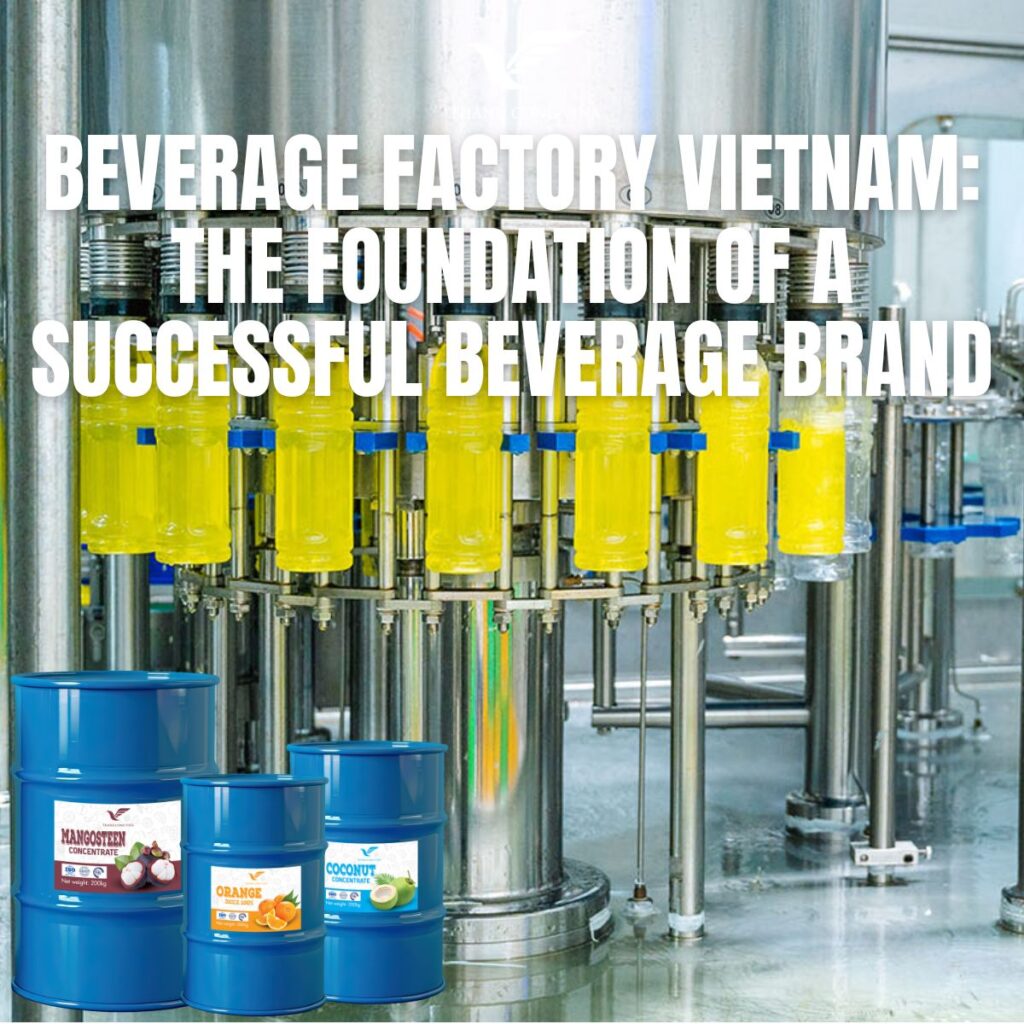
A beverage manufacturing partner plays a central role in transforming a business concept into a finished product. Instead of investing heavily in production facilities, machinery, laboratories, storage systems, and technical teams, brands can work with an experienced factory that already has the necessary infrastructure.
Why Work with a Beverage Manufacturer in Vietnam?
Vietnam offers several advantages for beverage brands seeking an efficient manufacturing location. The country has abundant agricultural resources, including tropical fruits, coconuts, coffee, aloe vera, and other ingredients suitable for beverage production.
This local availability can help manufacturers develop products around recognizable Vietnamese ingredients while maintaining efficient sourcing. At the same time, Vietnam’s manufacturing sector has developed extensive experience serving international markets.
For new brands, outsourcing production can also reduce operational complexity. Rather than managing every stage internally, the brand owner can focus on marketing, sales, distribution, and customer relationships while the manufacturing partner manages production.
From Concept to Finished Product
A professional factory can potentially support multiple stages of development, including:
- Beverage formulation and product development
- Ingredient sourcing
- Prototype and sample development
- Production planning
- Packaging selection
- Filling and processing
- Quality control
- Product testing
- Packaging and labeling
- Carton packing
- Warehousing and export preparation
This integrated approach allows a beverage brand to move through the development process more efficiently.
Step 1: Define Your Beverage Brand Concept
Before approaching a manufacturer, establish a clear concept for the product. The factory can provide technical guidance, but the brand should have a strong understanding of its intended market.
Identify Your Target Consumer
Start by defining who will purchase the beverage. Your target audience could include health-conscious consumers, young professionals, families, athletes, travelers, children, or premium lifestyle customers.
Understanding the consumer influences almost every aspect of development, from flavor selection and sweetness level to bottle size, packaging design, price positioning, and marketing communication.
For example, a beverage targeting convenience-store consumers may require a compact package and competitive price point. A premium functional beverage may require sophisticated packaging, specialized ingredients, and a stronger focus on product positioning.
Determine Your Product Category
The next step is choosing the beverage category. Depending on your target market, possibilities may include:
- Fruit juice drinks
- Coconut water
- Coconut water with fruit juice
- Aloe vera beverages
- Nata de coco drinks
- Coffee beverages
- Energy drinks
- Functional beverages
- Juice concentrates
- NFC juice
- Private-label beverages
A focused product concept makes communication with the manufacturer much easier. Instead of simply asking for a “fruit drink,” provide details about the desired fruit, flavor profile, packaging format, serving size, target market, and positioning.
Establish Your Unique Selling Proposition
Competition in the beverage industry is intense. Your product therefore needs a clear reason for consumers to choose it.
Your USP might focus on:
- Tropical fruit ingredients
- Coconut water
- Natural flavor
- Convenient packaging
- Premium positioning
- Low-sugar formulation
- Functional benefits
- Vietnamese agricultural ingredients
- Innovative flavor combinations
- Competitive pricing
The stronger your product positioning, the easier it becomes for the manufacturer and marketing team to develop a consistent product concept.
Step 2: Select the Right Beverage Factory Vietnam Partner
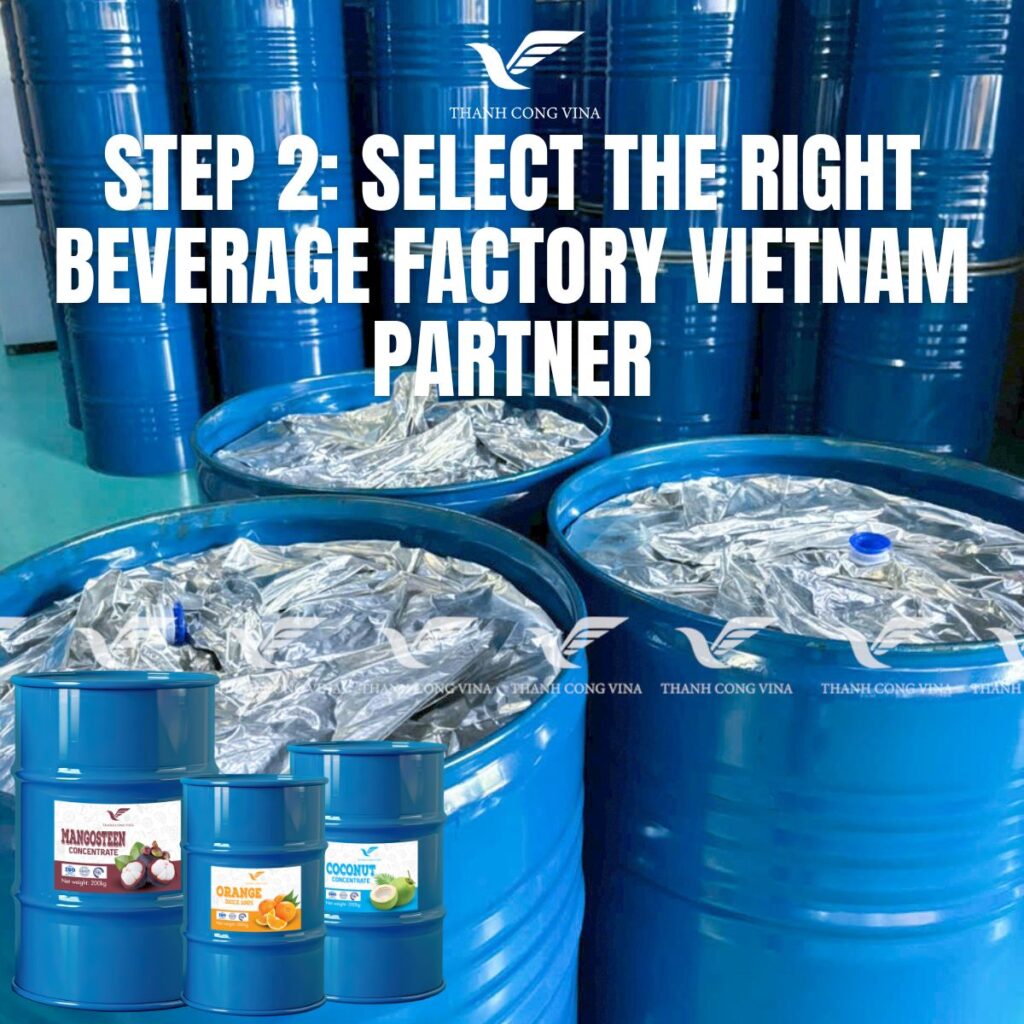
Choosing a manufacturing partner is one of the most important decisions in the entire process. A factory may offer competitive pricing, but that does not automatically mean it is the right long-term partner.
Evaluate Manufacturing Capabilities
First, determine whether the factory has experience producing your specific beverage category.
Ask about:
- Production lines
- Available packaging formats
- Bottle and can options
- Filling technology
- Processing methods
- Minimum order quantities
- Production capacity
- Product development capabilities
- Storage facilities
- Export experience
A factory capable of producing multiple beverage categories can provide greater flexibility when your brand expands its product portfolio.
Check Quality and Food Safety Systems
International buyers should pay close attention to food safety and quality management. Depending on the target market, manufacturers may need appropriate certifications and compliance systems.
Common certifications or standards relevant to beverage manufacturing can include HACCP, ISO systems, HALAL, FDA-related requirements, and other market-specific regulations.
Certification alone, however, should not be the only consideration. Brands should also evaluate quality-control procedures, traceability, laboratory testing, raw-material inspection, production monitoring, and finished-product testing.
Consider Export Experience
If your objective is to sell internationally, choose a manufacturer familiar with export-oriented production.
An experienced export manufacturer should understand that different markets may have different requirements for:
- Ingredient declarations
- Nutrition information
- Product claims
- Labeling
- Packaging
- Shelf-life documentation
- Certificates
- Shipping cartons
- Pallet configurations
- Import documentation
This experience can reduce potential complications when your products enter overseas markets.
Step 3: Develop and Test Your Beverage Formula
Once you have selected a suitable manufacturer, the next stage is product development.
Creating the Right Flavor Profile
Taste is one of the most important factors determining repeat purchases. A formula should therefore be developed around the preferences of the target market rather than simply following a generic recipe.
For fruit beverages, factors such as fruit content, sweetness, acidity, aroma, mouthfeel, and color can significantly affect consumer perception.
A professional manufacturer can help adjust the formula through multiple rounds of sampling.
For example, a mango beverage may need to balance sweetness and acidity to create a refreshing profile. A coconut water beverage may require careful attention to coconut flavor, clarity, and overall mouthfeel.
Sample Development and Feedback
Sampling should be treated as a structured process.
A practical workflow may include:
- Initial product brief
- First formulation
- Sample production
- Internal tasting
- Customer feedback
- Formula adjustment
- Second sample
- Final approval
- Stability and quality testing
- Commercial production
Do not rush this stage. A small formulation adjustment can significantly affect consumer acceptance once the product reaches a larger market.
Shelf-Life and Stability
Shelf-life is another critical consideration. Beverage products must remain safe and maintain acceptable quality throughout their intended shelf life.
Manufacturers may evaluate factors such as microbiological stability, flavor, appearance, texture, pH, packaging compatibility, and storage conditions.
The appropriate processing and packaging method should therefore be determined according to the product formulation and target market requirements.
Step 4: Choose Packaging That Builds Your Brand
Packaging is more than a container. It is one of the most visible components of your brand identity.
Select the Right Packaging Format
Depending on the product, beverage brands may consider:
- PET bottles
- Glass bottles
- Aluminum cans
- Aseptic cartons
- Other specialized formats
Package size is equally important. Formats such as 250ml, 320ml, 330ml, 500ml, and larger sizes can serve different consumption occasions.
For example, a 250ml bottle may work well for an individual serving, while a 500ml package can be positioned as a larger refreshment option.
Create a Strong Visual Identity
Your packaging should communicate the brand’s positioning within seconds.
Premium beverages may use minimalist designs, sophisticated typography, and refined color combinations. Tropical fruit products can use vibrant fruit imagery, while functional beverages may emphasize clean and modern visual communication.
Consistency is particularly important if you plan to launch multiple SKUs. Different flavors should be visually distinct while still clearly belonging to the same brand family.
Packaging for International Markets
Export packaging requires additional consideration. The label may need to accommodate different languages, nutrition formats, regulatory information, importer details, barcodes, batch codes, and other market-specific requirements.
Working with an experienced Beverage Factory Vietnam can make this process more manageable because the manufacturer can coordinate packaging specifications with production requirements.
Step 5: Calculate Costs and Build a Scalable Business Model
A beverage brand needs more than a good product. It needs sustainable economics.
Understand Your Production Cost
Request a detailed quotation that clarifies the main cost components, such as:
- Ingredients
- Packaging materials
- Bottles or cans
- Labels
- Cartons
- Production
- Testing
- Storage
- Logistics
- Tooling or setup costs where applicable
Understanding these components helps you identify opportunities to optimize the product without compromising quality.
Consider Minimum Order Quantity
Minimum order quantity, or MOQ, can significantly affect startup planning.
A lower MOQ may be useful for a new brand testing the market. Larger production volumes can potentially provide better unit economics once demand becomes predictable.
The ideal strategy is to balance initial inventory risk with production efficiency.
Plan for Future Growth
Your manufacturing partner should be able to support your business beyond the first shipment.
Consider whether the factory can increase production volumes as sales grow and whether it can manufacture additional flavors, formats, or product categories.
A scalable partnership can prevent the need to change manufacturers when your brand begins entering new markets.
Step 6: Prepare Your Beverage for Market Launch
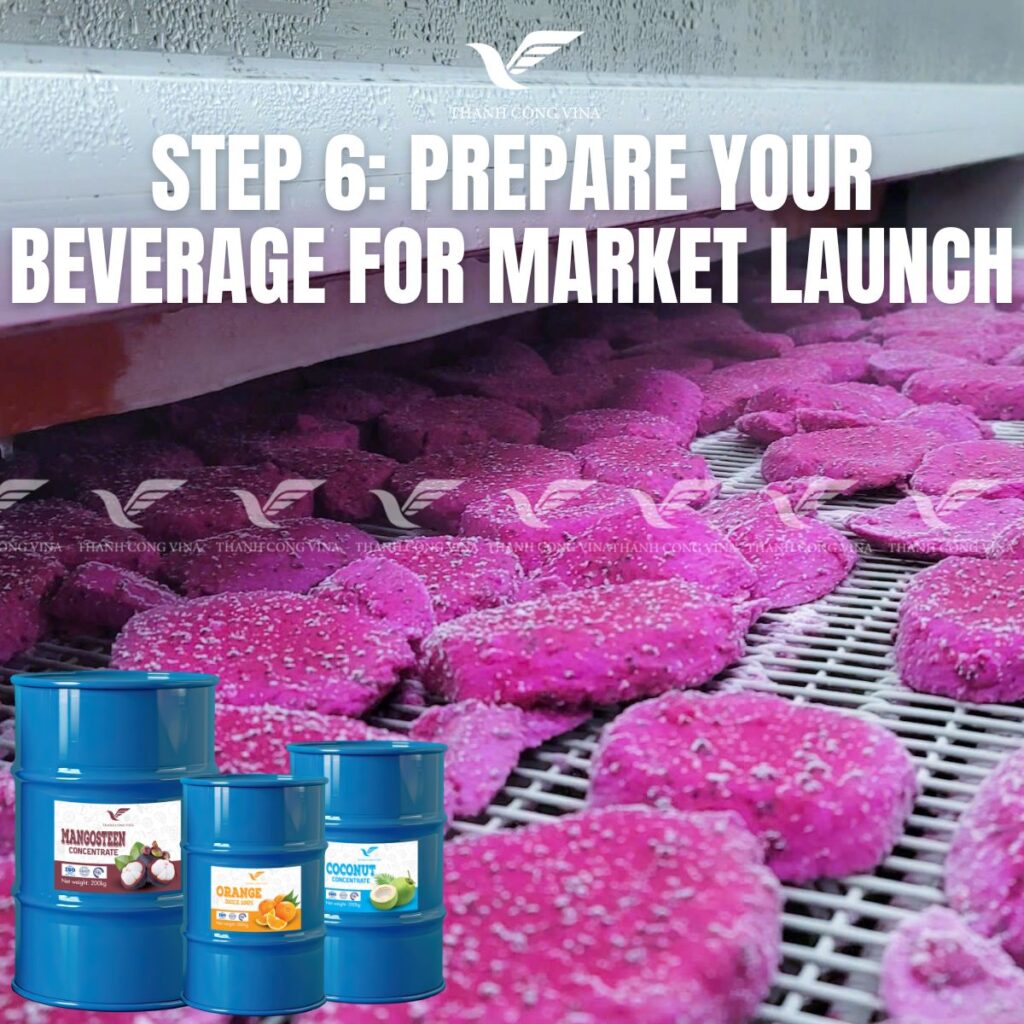
Once formulation, packaging, and production specifications are finalized, your attention should shift toward market entry.
Build Your Sales Strategy
Determine where your beverage will be sold. Potential channels include:
- Supermarkets
- Convenience stores
- E-commerce
- Foodservice
- Cafés
- Restaurants
- Hotels
- Specialty retailers
- Importers and distributors
For international brands, distributors and import partners can be especially important because they provide local market knowledge and established sales networks.
Develop Marketing Materials
Before production is completed, prepare your marketing assets.
These may include:
- Product photography
- Website content
- Product catalogs
- Sales presentations
- Social media content
- Distributor materials
- Product specifications
- Trade-show materials
Your marketing message should communicate the same product advantages established during development.
Start with a Focused Product Portfolio
Launching too many SKUs at once can increase inventory complexity and marketing costs.
A better approach may be to begin with a focused range of high-potential flavors. After identifying the strongest-performing products, the brand can expand strategically.
For example, a tropical beverage brand could initially launch mango, strawberry, orange, lychee, and red grape variants before introducing additional flavors based on market demand.
Building a Long-Term Partnership with Your Beverage Manufacturer
Launching the first product is only the beginning. Long-term success depends on maintaining a productive relationship with the manufacturing partner.
Communication and Production Planning
Clear communication helps minimize mistakes involving formulations, packaging, labeling, production quantities, and shipping schedules.
Provide the factory with finalized specifications and maintain clear approval procedures for product changes.
Quality Consistency
Every production batch should meet the agreed specifications. Consistency is particularly important for brands selling across multiple countries because consumers expect the same experience every time they purchase the product.
Innovation and Product Expansion
Consumer preferences change continuously. A strong manufacturer can become more than a production supplier by supporting new product development.
Future opportunities may include new fruit combinations, reduced-sugar products, functional beverages, coconut-based products, coffee drinks, concentrates, and other innovative categories.
Conclusion
Launching a beverage brand successfully requires a combination of strong product development, strategic positioning, attractive packaging, reliable manufacturing, and effective market execution. Working with the right manufacturing partner can significantly reduce the complexity of transforming an idea into a commercial beverage product.
Vietnam provides an attractive manufacturing environment for businesses seeking competitive production, agricultural ingredients, export capabilities, and private-label beverage solutions. However, the most important factor is not simply choosing a factory based on price. Brands should evaluate product development expertise, quality systems, production capacity, packaging capabilities, certifications, communication, and long-term scalability.
For businesses seeking a reliable partner, Thanh Cong Vina offers beverage manufacturing solutions designed to support brands from product development through commercial production. With Thanh Cong Vina experience across fruit beverages, coconut water, aloe vera drinks, coffee beverages, juice concentrates, and other categories, the company can help international buyers develop products aligned with their target markets.
Whether you are launching your first beverage product or expanding an established portfolio, choosing the right Beverage Factory Vietnam can create a strong foundation for sustainable growth, consistent quality, and successful international market expansion.
