
Products Knowledge
Best Beverage Factory Vietnam for Coconut Water Manufacturing
Aug
For importers, distributors, retailers, and international beverage brands, choosing the right Beverage Factory Vietnam can provide access to Vietnam’s coconut resources, professional beverage processing, customized packaging, and export-oriented manufacturing capabilities. Vietnam is particularly suitable for coconut water production because coconuts are widely cultivated in several regions, creating opportunities for manufacturers to develop products for both domestic and international markets.
However, successful coconut water sourcing requires more than finding a factory with filling equipment. Buyers need to evaluate raw material sourcing, processing technology, product consistency, packaging options, quality control, certifications, minimum order quantities, production capacity, and export support. A reliable manufacturer should also understand how to maintain product quality throughout production, packaging, storage, and international transportation.
For private label and OEM customers, the manufacturing partner should be able to support the complete product journey, from initial specifications and sampling to commercial production and export preparation. This article explains how to evaluate the Beverage Factory Vietnam best suited for coconut water manufacturing and what international buyers should consider before starting a project.
1. Why Choose a Beverage Factory Vietnam for Coconut Water Manufacturing?
Vietnam offers several advantages for companies looking to source coconut water from Southeast Asia.
Strong Coconut Supply
Vietnam has established coconut-growing regions that provide access to raw coconuts for food and beverage processing.
Coconut-based products can include:
- Coconut water
- Coconut milk
- Coconut cream
- Coconut pulp
- Coconut-based beverages
For beverage manufacturers, access to a stable agricultural supply is an important factor in maintaining production continuity.
A professional Beverage Factory Vietnam can work with suitable raw material suppliers and establish specifications for incoming coconuts to support consistent product quality.
Tropical Product Positioning
Coconut water naturally fits the growing global interest in tropical and fruit-based beverages.
International brands can position coconut water around concepts such as:
- Tropical refreshment
- Convenient hydration
- Everyday wellness
- Natural tropical origin
- On-the-go consumption
The exact product claims used on packaging should always comply with the regulations of the destination market.
Competitive Manufacturing Environment
Working with an established Vietnamese manufacturer allows international customers to access existing production infrastructure.
Depending on the factory, this can include:
- Beverage processing systems
- Mixing and treatment equipment
- Filling lines
- Packaging machinery
- Quality-control facilities
- Warehouses
- Export preparation systems
This reduces the need for international brands to invest directly in their own manufacturing facilities.
2. Beverage Factory Vietnam: Coconut Water Product Development
Developing a successful coconut water product requires careful consideration of the product specifications and target market.
Defining the Coconut Water Product
Before manufacturing begins, the buyer should establish a clear product brief.
Important specifications may include:
- Product type
- Coconut source
- Flavor profile
- Product size
- Packaging format
- Target market
- Shelf-life requirements
- Target price
- Expected order quantity
The product brief provides the foundation for the R&D and production teams.
Coconut Water Quality and Sensory Characteristics
Coconut water naturally has a distinctive taste and aroma.
The finished beverage should be evaluated for:
- Appearance
- Color
- Aroma
- Sweetness
- Flavor
- Mouthfeel
- Overall drinking experience
Natural agricultural ingredients can vary from season to season, which makes raw material control and standardized manufacturing processes particularly important.
A reliable manufacturer should establish specifications to maintain consistent finished-product characteristics.
Product Sampling
Before commercial manufacturing, buyers can request samples for evaluation.
The sampling process allows customers to assess whether the product meets their expectations.
Feedback may relate to:
- Taste
- Sweetness
- Aroma
- Color
- Packaging
- Overall product positioning
Once the product specification is approved, the manufacturer can prepare for commercial production.
3. Coconut Water Packaging Solutions for Global Brands
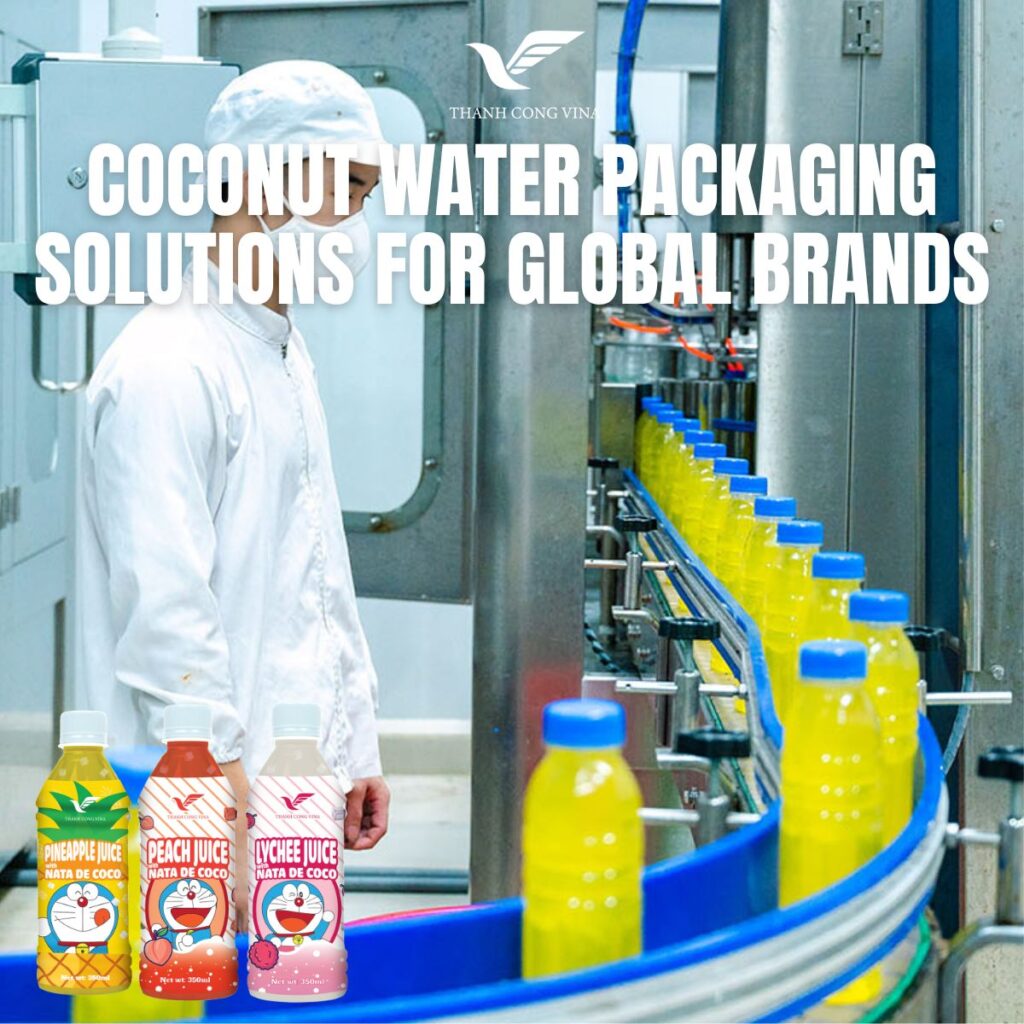
Packaging has a major influence on coconut water’s retail positioning and international logistics.
Popular Coconut Water Packaging Formats
Depending on the target market, coconut water may be offered in:
- Aluminum cans
- Slim cans
- PET bottles
- Glass bottles
- Cartons
Common sizes may include:
- 250ml
- 330ml
- 500ml
The right format depends on the intended consumer and sales channel.
A smaller size may be appropriate for convenience stores and on-the-go consumption, while a larger format may be more suitable for supermarkets and household consumption.
Private Label Coconut Water Packaging
International brands can create their own packaging identity.
A customized package may include:
- Brand logo
- Product name
- Coconut imagery
- Product description
- Ingredients
- Nutrition information
- Barcode
- Product claims
- Manufacturer information
For global retail markets, packaging should be designed with the regulations of the destination country in mind.
Export Packaging Considerations
Coconut water may travel long distances before reaching its final market.
Therefore, secondary packaging should be suitable for:
- Stacking
- Warehouse handling
- Container loading
- Vibration
- Long-distance transportation
Carton dimensions and loading configurations should also be considered to optimize container utilization.
4. Quality Control in Coconut Water Manufacturing
Quality management is essential because coconut water is an agricultural beverage and the final product represents the customer’s brand.
Raw Coconut Inspection
Quality control begins with the raw material.
Incoming coconuts and related ingredients can be evaluated according to established specifications.
Potential criteria include:
- Appearance
- Maturity
- Aroma
- Taste
- Physical characteristics
- Supplier documentation
- Food safety requirements
Consistent raw material standards help reduce variations in finished products.
Production Process Control
A professional Beverage Factory Vietnam should have established procedures for monitoring production.
Typical stages can include:
- Raw material preparation
- Ingredient processing
- Formulation or blending
- Processing
- Filling
- Sealing
- Packaging
- Finished product inspection
Production parameters should be monitored according to the approved product specification.
Finished Product Testing
Before shipment, finished coconut water can be evaluated for relevant quality characteristics.
Testing and inspection may include:
- Appearance
- Taste
- Aroma
- Product characteristics
- Packaging integrity
- Microbiological parameters
- Label information
The objective is to ensure consistency between batches and compliance with agreed specifications.
5. Certifications and Food Safety Requirements
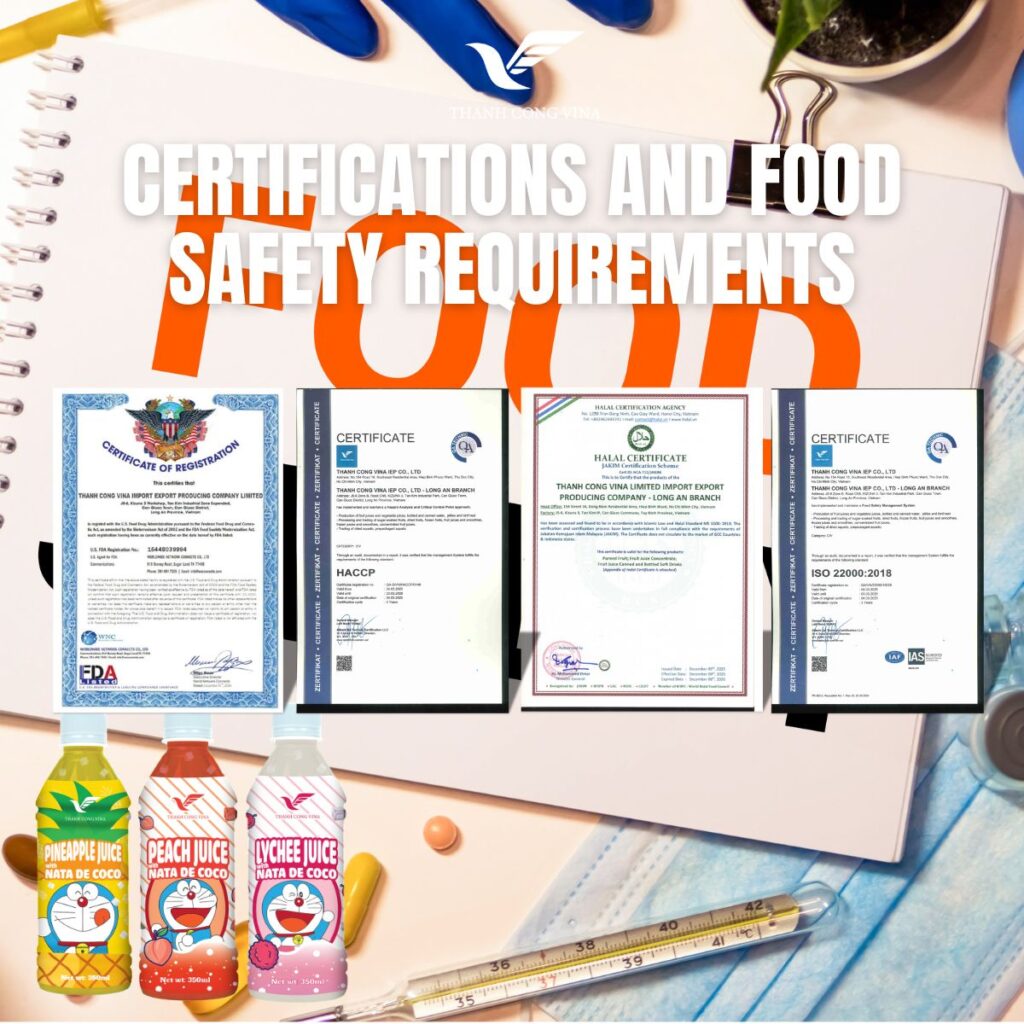
For international beverage buyers, food safety standards are an important part of supplier evaluation.
Common Food Safety Standards
Depending on the product and destination market, buyers may look for standards or certifications such as:
- HACCP
- ISO
- HALAL
- FDA-related requirements
The exact requirements depend on the country where the coconut water will be imported and sold.
Why Certifications Matter
Certifications can help demonstrate that the manufacturer has established systems for:
- Food safety
- Hygiene
- Production control
- Quality management
- Traceability
- Risk management
International buyers should verify the current certification scope and validity directly with the manufacturer before making a sourcing decision.
Documentation for Export
Depending on the destination, buyers may require:
- Product Specification
- Certificate of Analysis
- Certificate of Origin
- Commercial Invoice
- Packing List
- Food safety documentation
- Shipping documents
Discussing documentation requirements early can help prevent delays during export.
6. MOQ, Pricing and Production Capacity
Commercial conditions are another important factor when selecting a coconut water manufacturer.
Minimum Order Quantity
MOQ can vary according to:
- Packaging format
- Product size
- Formula
- Packaging materials
- Production line
- Order volume
- Customization requirements
For new brands, a manageable MOQ can help minimize inventory risk.
For established distributors and retailers, larger production runs may provide greater manufacturing efficiency.
Factors Affecting Coconut Water Pricing
The final manufacturing cost may depend on:
- Coconut raw material
- Product specifications
- Packaging
- Product size
- Packaging artwork
- Cartons
- Order quantity
- Production requirements
International buyers should compare total landed costs rather than focusing only on the factory’s unit price.
Additional costs may include:
- International freight
- Import duties
- Insurance
- Warehousing
- Distribution
- Customs-related costs
A manufacturer offering consistent quality and reliable delivery can provide greater long-term value than a supplier selected solely for the lowest quotation.
Production Capacity and Scalability
A manufacturing partner should ideally be capable of supporting future growth.
A coconut water brand may initially order a limited quantity but later require:
- Larger production volumes
- Additional package sizes
- New packaging formats
- Additional SKUs
- New export destinations
Evaluating scalability at the beginning can help prevent supply problems when demand increases.
7. Export Logistics for Coconut Water
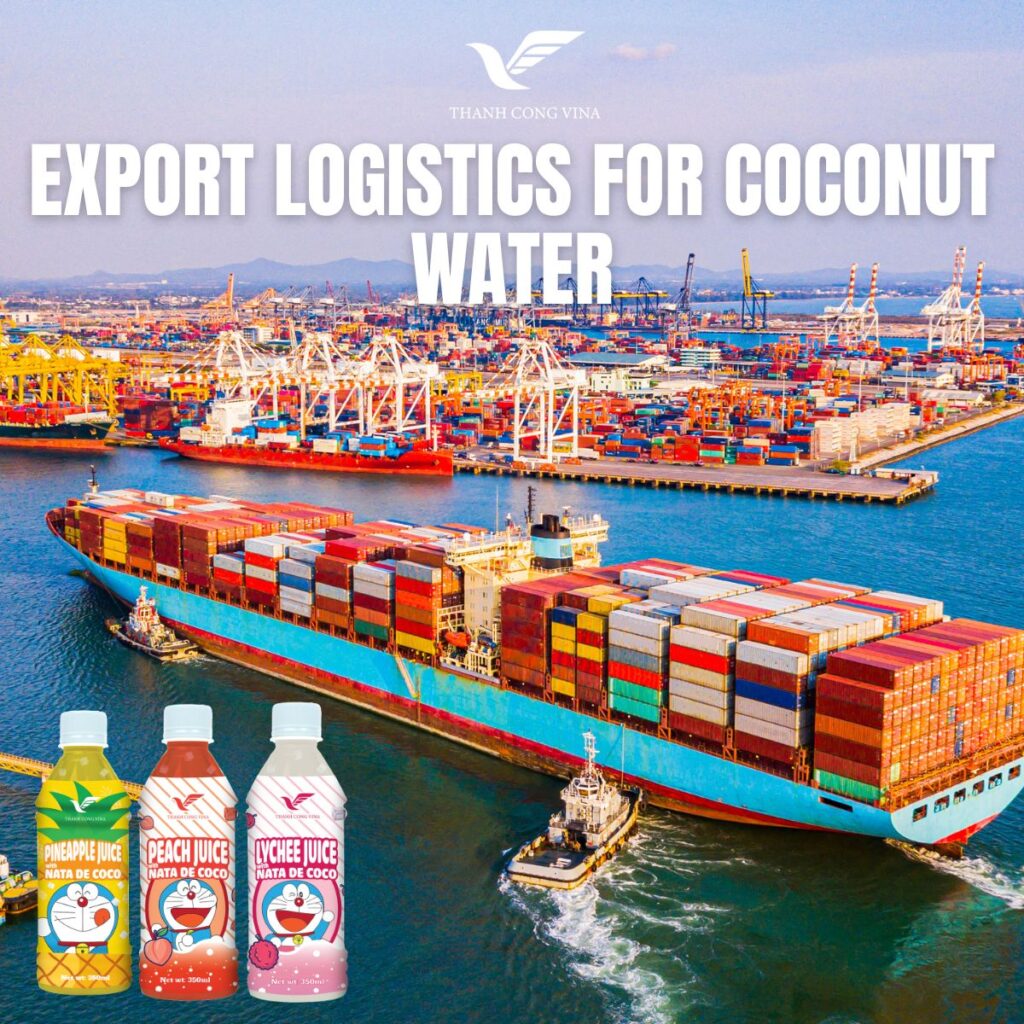
International coconut water sourcing requires close coordination between manufacturing and logistics.
Container Loading
Coconut water is relatively heavy compared with many dry food products, making efficient container loading important.
Manufacturers should consider:
- Carton dimensions
- Product weight
- Pallet configuration
- Container capacity
- Weight distribution
- Stacking limitations
Proper loading can improve shipping efficiency while protecting products during transportation.
Shipping and Delivery Planning
Production schedules should be coordinated with shipping schedules.
Important factors include:
- Manufacturing lead time
- Packaging availability
- Quality inspection
- Documentation
- Container booking
- Port schedules
- Destination requirements
Clear planning allows importers to coordinate inventory and retail launches more effectively.
International Market Requirements
Different markets may have specific requirements for coconut water regarding:
- Ingredients
- Labeling
- Nutrition information
- Product claims
- Shelf life
- Packaging language
- Food safety documentation
These requirements should be reviewed before packaging production begins.
8. How to Choose the Best Beverage Factory Vietnam for Coconut Water
Selecting the right factory requires evaluating both technical capabilities and long-term commercial suitability.
Evaluate Coconut Water Manufacturing Experience
Buyers should ask about:
- Coconut sourcing
- Production capacity
- Processing technology
- Packaging formats
- Quality systems
- Product development
- Export experience
A manufacturer experienced in coconut-based beverages may be better positioned to address the specific requirements of the category.
Evaluate R&D Capabilities
If the product requires customization, R&D capability becomes particularly important.
The manufacturer should ideally be able to support:
- Product specification development
- Sample production
- Formula adjustment
- Sensory evaluation
- Technical documentation
- Commercial scaling
A strong development process helps ensure that the approved product can be reproduced consistently.
Evaluate Quality Systems
Buyers should review:
- Quality-control procedures
- Food safety systems
- Raw material controls
- Finished product testing
- Certifications
- Traceability procedures
Quality systems should be evaluated according to the specific requirements of the buyer’s target market.
Evaluate Communication
International sourcing involves numerous details, from product specifications to shipping documents.
A reliable supplier should communicate clearly about:
- Product development
- MOQ
- Pricing
- Packaging
- Production schedules
- Quality requirements
- Export documentation
Responsive communication can significantly improve project efficiency.
Conclusion
Selecting the best coconut water manufacturing partner requires careful evaluation of raw material sourcing, production capabilities, product development, packaging, quality control, certifications, MOQ, pricing, scalability, and export support. A factory that can manage these elements effectively can help international brands build a more reliable beverage supply chain.
Vietnam provides an attractive sourcing environment for coconut water because of its coconut-growing resources, tropical agricultural sector, beverage manufacturing capabilities, skilled workforce, and established export infrastructure. For international importers, distributors, retailers, and private label brands, this combination can create opportunities to develop competitive coconut water products for different global markets.
Thanh Cong Vina IEP CO., LTD supports international beverage companies with OEM, ODM, and private label manufacturing solutions. Thanh Cong Vina can assist customers throughout the beverage development process, from product consultation and specifications to sampling, packaging, commercial production, quality control, and export preparation. This end-to-end approach helps customers simplify sourcing while maintaining control over product quality, packaging, specifications, and commercial requirements. With experience across coconut water and other tropical beverage categories, Thanh Cong Vina can support businesses looking to expand their beverage portfolios and establish reliable international supply chains. For importers, distributors, retailers, and global beverage brands seeking a trusted Beverage Factory Vietnam for coconut water manufacturing, Thanh Cong Vina provides the manufacturing capabilities, product development support, quality focus, and export-oriented service required to develop market-ready products for international markets.
