
Products Knowledge
How Beverage Factory Vietnam Supports International Export
Sep
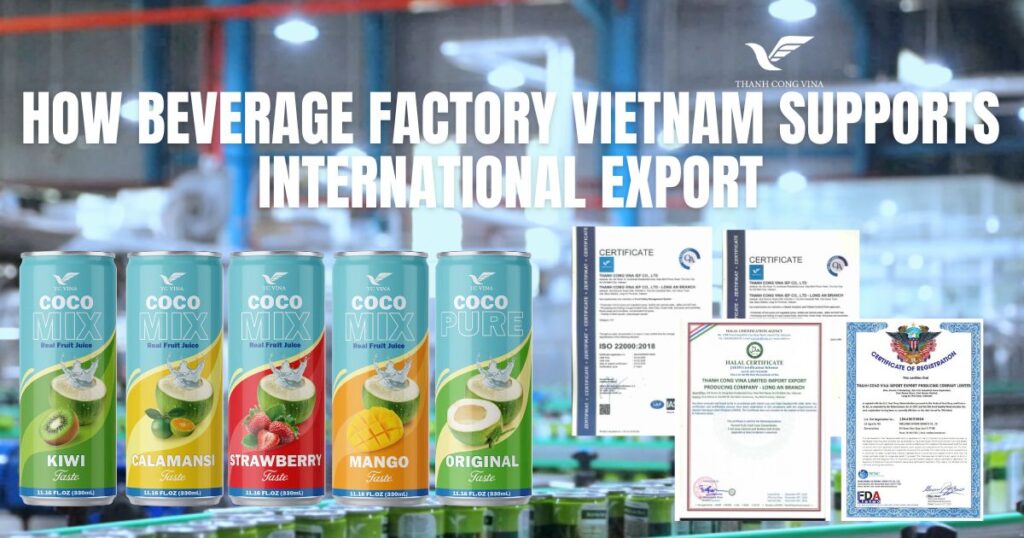
A professional Beverage Factory Vietnam can provide much more than basic production. It can become an important partner throughout the entire export process, from product development and ingredient sourcing to packaging, quality control, documentation, and shipment preparation. For businesses entering international markets, selecting the right manufacturing partner is essential. Export markets often require strict specifications, consistent quality, appropriate certifications, compliant packaging, and reliable production schedules. Working with an experienced Vietnamese beverage manufacturer allows brands to access established production infrastructure while maintaining greater flexibility in product development. This article explores how a Beverage Factory Vietnam supports international export and why Vietnam is increasingly considered a strategic manufacturing destination for global beverage businesses.
1. Beverage Factory Vietnam: A Strategic Partner for International Export
International beverage export requires coordination across multiple stages. A manufacturer must understand not only how to produce a beverage but also how to prepare products for different markets and commercial requirements.
Understanding International Buyer Requirements
Every export project begins with a clear understanding of the buyer’s specifications. Different importers may request different formulations, packaging formats, product sizes, labeling requirements, or quality standards.
A professional Beverage Factory Vietnam can work directly with international buyers to establish technical specifications before production begins. This may include product category, ingredients, flavor profile, packaging material, serving size, shelf life, carton configuration, and target market.
This collaborative process helps minimize misunderstandings and ensures that the finished product is aligned with the buyer’s expectations.
Supporting Private Label and OEM Projects
Private-label beverage production has become an important business model for international retailers, distributors, and beverage brands. Instead of building their own manufacturing facilities, companies can outsource production to an experienced factory.
A Beverage Factory Vietnam can manufacture products according to a customer’s specifications while allowing the buyer to develop its own brand identity. This approach is suitable for companies that want to launch fruit juice, coconut water, aloe vera drinks, coffee beverages, functional drinks, or other beverage categories without making major investments in production infrastructure.
OEM and private-label manufacturing can also provide greater flexibility when expanding into multiple markets.
2. Product Development for Global Markets
A successful export product must satisfy consumers in its target market. Manufacturing therefore begins long before the commercial production line starts.
Beverage Formulation and Flavor Development
Product development is one of the most important services offered by a professional beverage manufacturer. International buyers may arrive with a complete formulation, a basic product concept, or simply an idea for a new beverage.
The manufacturing partner can help transform that concept into a practical commercial formula. Depending on the product, development may involve fruit content, sweetness, acidity, aroma, texture, color, and processing requirements.
For example, tropical products such as mango juice, coconut water, strawberry beverages, lychee drinks, and aloe vera beverages can be adapted to different consumer preferences.
Sample Production and Product Approval
Before large-scale manufacturing, product samples allow buyers to evaluate the beverage carefully.
A typical development process may include:
- Initial product brief
- Formula development
- Prototype production
- Taste evaluation
- Technical adjustment
- Packaging evaluation
- Final sample approval
- Commercial production
This process provides international buyers with greater confidence before placing a large production order.
Developing Products for Different Consumption Trends
Global beverage consumption continues to diversify. Consumers are increasingly interested in natural ingredients, tropical flavors, convenient packaging, functional positioning, and new taste experiences.
An experienced Beverage Factory Vietnam can help brands explore different product concepts according to market demand. This allows companies to create a portfolio that is not limited to a single beverage category.
3. Quality Control and Food Safety for Export
Quality consistency is fundamental to international trade. A beverage that performs well in one production batch must deliver the same quality in subsequent shipments.
Quality Management Throughout Production
Professional beverage factories implement quality-control procedures at multiple stages of production. Raw materials can be evaluated before entering manufacturing, while finished products can be checked against established specifications.
Depending on the product, quality-control activities may cover:
- Raw material inspection
- Ingredient verification
- Production monitoring
- Microbiological testing
- Physical and chemical parameters
- Packaging inspection
- Finished-product testing
- Batch traceability
This systematic approach helps maintain product consistency and supports long-term relationships with international buyers.
Certifications and International Standards
Export buyers often require manufacturers to demonstrate appropriate food-safety and quality systems.
Depending on the destination market and product category, relevant certifications and compliance requirements may include HACCP, ISO-related systems, HALAL certification, FDA-related requirements, and other market-specific standards.
A qualified Beverage Factory Vietnam should be able to explain which certifications are available and which requirements are applicable to the intended export market.
Certification is particularly important for importers because it can support supplier qualification, product registration, and internal compliance procedures.
Traceability and Production Documentation
Traceability allows manufacturers and buyers to identify production batches and follow the movement of ingredients and finished products throughout the supply chain.
Proper documentation also helps businesses manage quality issues more efficiently and maintain transparency between manufacturers, exporters, importers, and distributors.
4. Packaging and Labeling for Export Markets
Packaging has both commercial and regulatory importance. It protects the product during transportation while also communicating essential information to consumers.
Selecting Suitable Beverage Packaging
International beverage brands can choose packaging based on product characteristics, target customers, distribution channels, and positioning.
Common formats include PET bottles, cans, glass bottles, and other beverage packaging solutions.
Different serving sizes can also target different consumption occasions. Smaller formats may be suitable for convenience and individual consumption, while larger packages can target family or foodservice channels.
A Beverage Factory Vietnam with flexible packaging capabilities can help buyers select a practical format that matches their commercial strategy.
Export-Ready Labeling
Labels for exported beverages may need to contain specific information required by the destination market.
Depending on the country, this may include:
- Product name
- Ingredient declaration
- Nutrition information
- Net volume
- Manufacturer information
- Importer information
- Country of origin
- Production or batch information
- Expiration date
- Storage instructions
- Barcode
- Required certification marks
Because regulations vary between countries, brands should confirm requirements with their importer or regulatory consultant before finalizing artwork.
Packaging Designed for Transportation
Export products often travel long distances and may pass through multiple logistics stages. Packaging therefore needs to be suitable for handling, storage, container loading, and transportation.
Manufacturers can coordinate bottle specifications, cartons, pallet configurations, and packing methods to help protect products during international shipment.
5. Production Capacity and Supply Chain Support
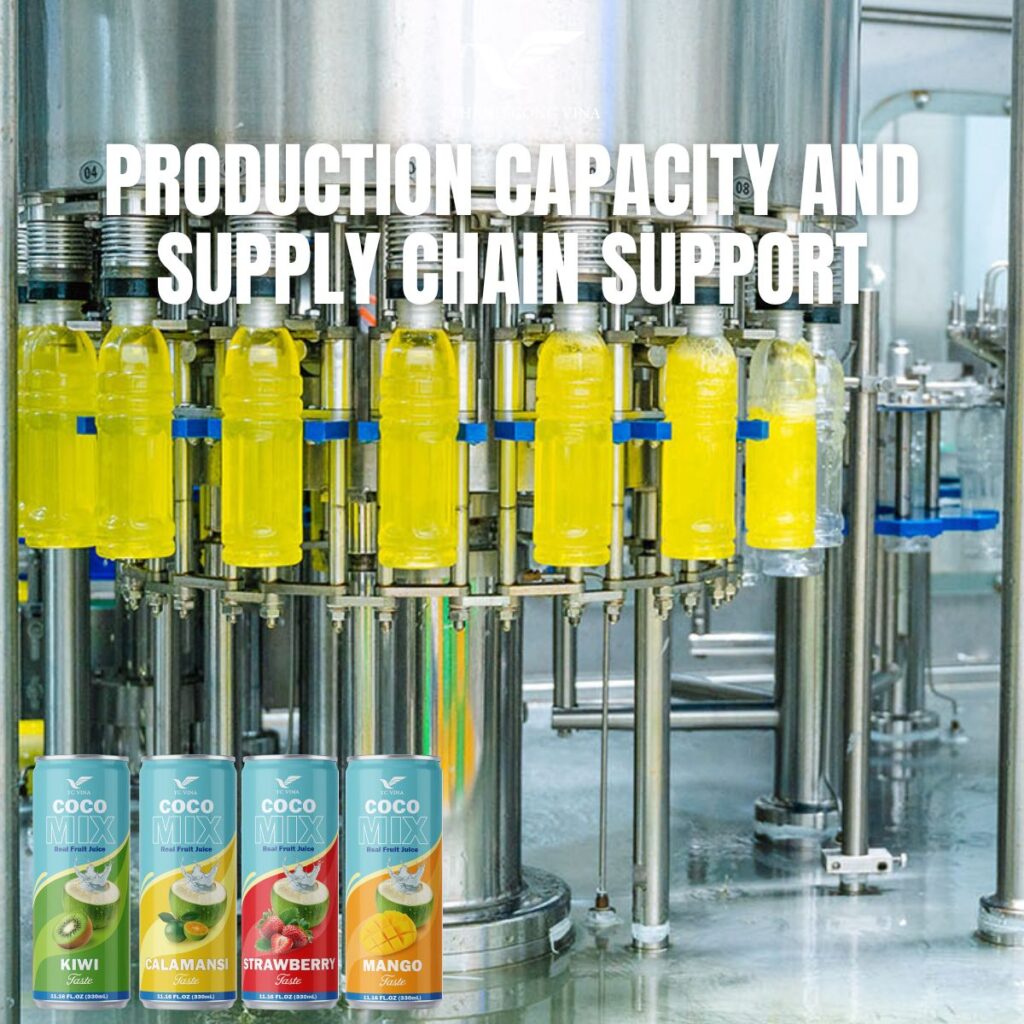
International buyers need more than a manufacturer capable of producing a sample. They need a supplier capable of delivering commercial volumes consistently.
Scalable Production
A brand may begin with a small market test and later experience significant growth. If the manufacturing partner has sufficient production capacity, the brand can scale without immediately changing suppliers.
A scalable Beverage Factory Vietnam can support businesses at different stages, from initial private-label orders to larger export programs.
Production planning should consider order volume, lead time, raw material availability, packaging procurement, manufacturing schedules, and shipping deadlines.
Raw Material and Ingredient Sourcing
Vietnam has access to a wide range of agricultural resources, particularly tropical fruits and coconut products.
Local sourcing can provide manufacturers with access to ingredients such as mango, pineapple, coconut, strawberry, lychee, aloe vera, dragon fruit, and other agricultural products.
For international buyers, working with a manufacturer that understands local sourcing can simplify procurement and improve coordination between raw materials and production planning.
Reliable Production Scheduling
Export businesses often operate according to strict shipping schedules. Delays in production can affect vessel bookings, warehouse planning, distributor commitments, and product launches.
Manufacturers should therefore coordinate production timelines with buyers well in advance. Clear communication regarding packaging approvals, purchase orders, raw materials, production slots, and shipment dates can reduce avoidable delays.
6. Export Documentation and International Logistics
Manufacturing is only one component of successful international export. Products must also be prepared for shipment and supported by appropriate documentation.
Preparing Export Documentation
Depending on the trade arrangement, export shipments may require commercial and product-related documents such as:
- Commercial invoice
- Packing list
- Certificate of origin
- Health or food-related certificates where applicable
- Product specifications
- Certificate of analysis where required
- Shipping documentation
- Other market-specific documents
The exact documentation depends on the destination country, buyer requirements, product category, and applicable regulations.
An experienced Beverage Factory Vietnam can coordinate with exporters, freight forwarders, and buyers to ensure that production information is consistent with shipping documentation.
Supporting International Supply Chains
International beverage distribution requires careful coordination between the factory, exporter, freight forwarder, shipping company, importer, and distributor.
Production schedules should therefore be connected with shipping plans. Finished goods must be packed appropriately, stored under suitable conditions, and prepared according to the agreed loading plan.
Efficient coordination can help reduce unnecessary delays and improve supply-chain visibility.
Container Loading and Shipment Preparation
Container loading is another important part of export preparation. Products should be arranged efficiently while maintaining appropriate protection during transportation.
Carton dimensions, pallet configurations, product weight, and container capacity can influence the overall logistics cost.
A manufacturer with export experience can help buyers consider these factors when planning commercial shipments.
7. Building a Long-Term Export Partnership
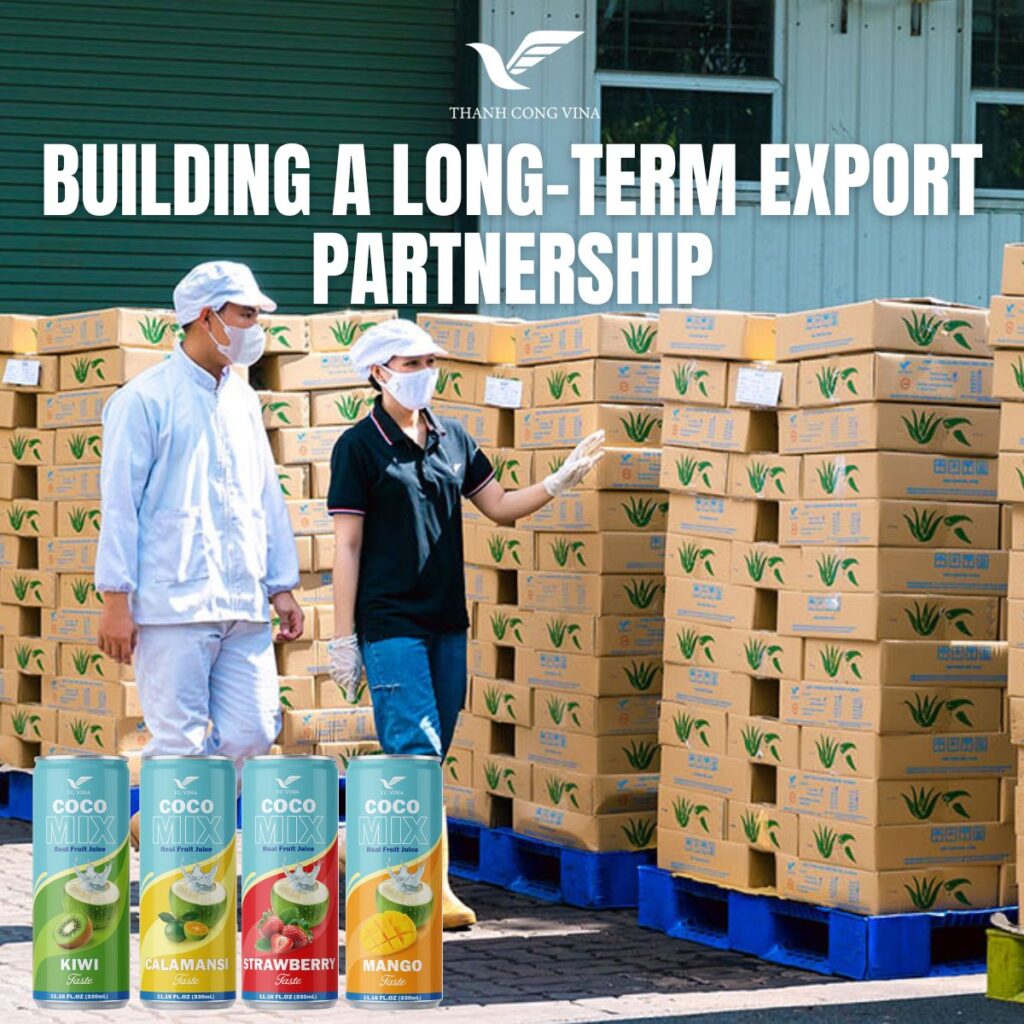
International sourcing works best when manufacturers and buyers develop long-term relationships rather than treating every order as an isolated transaction.
Consistent Product Quality
Consistency is essential for brands selling in multiple countries. Customers expect the same flavor, appearance, packaging, and overall experience with every purchase.
A reliable manufacturing partner maintains approved specifications and applies quality-control procedures across production batches.
Continuous Product Innovation
Consumer preferences can change quickly. International brands may therefore need to introduce new flavors, packaging formats, or beverage categories.
A Beverage Factory Vietnam with product-development capabilities can support these innovations by helping brands test new concepts before committing to large-scale production.
For example, an established beverage portfolio can gradually expand from fruit juice into coconut water, aloe vera beverages, coffee drinks, juice concentrates, or other categories.
Communication and Business Transparency
Successful international partnerships depend heavily on communication. Buyers should receive clear information regarding product specifications, pricing, MOQs, lead times, packaging requirements, production schedules, and shipment arrangements.
Transparent communication allows both parties to make decisions faster and reduces the possibility of costly misunderstandings.
8. Why Vietnam Is Becoming an Attractive Beverage Export Hub
Vietnam’s combination of agricultural resources, manufacturing capabilities, and strategic location makes it increasingly attractive to international beverage businesses.
Strong Agricultural Resources
The country has a diverse agricultural sector with access to many tropical fruits and plant-based ingredients. This provides manufacturers with opportunities to develop products based on locally available raw materials.
For beverage brands, this can create opportunities to develop distinctive tropical product concepts for international markets.
Competitive Manufacturing Environment
Vietnam can provide competitive production costs while supporting modern food and beverage manufacturing. This is particularly attractive to businesses seeking to balance product quality and commercial pricing.
For importers and distributors, competitive manufacturing can improve the potential margin structure of their beverage portfolio.
Access to International Markets
Vietnam’s position in Southeast Asia also provides strategic advantages for businesses operating international supply chains.
With appropriate manufacturing, documentation, logistics, and export planning, Vietnamese beverage products can serve customers across Asia and other international regions.
Conclusion
International beverage export requires careful coordination between product development, manufacturing, quality management, packaging, documentation, and logistics. Choosing an experienced Beverage Factory Vietnam can help international brands manage these stages more efficiently while reducing the need to establish their own production infrastructure.
A capable manufacturing partner can support everything from formulation and sampling to commercial production, packaging, quality control, and export preparation. For international buyers, this integrated approach creates a more efficient pathway from beverage concept to finished product and ultimately to overseas distribution.
Thanh Cong Vina Beverage is positioned to support international beverage businesses with manufacturing and private-label solutions across a diverse range of beverage categories. From fruit-based beverages and coconut water to aloe vera drinks, coffee products, juice concentrates, and other beverage solutions, the company can help customers develop products according to their commercial requirements and target markets.
For brands seeking a dependable production partner, Thanh Cong Vina combines product development, manufacturing capabilities, quality-focused processes, and export-oriented support. By partnering with the right Beverage Factory Vietnam, international businesses can build stronger supply chains, develop competitive beverage products, and create a foundation for sustainable growth in global markets.
