
Products Knowledge
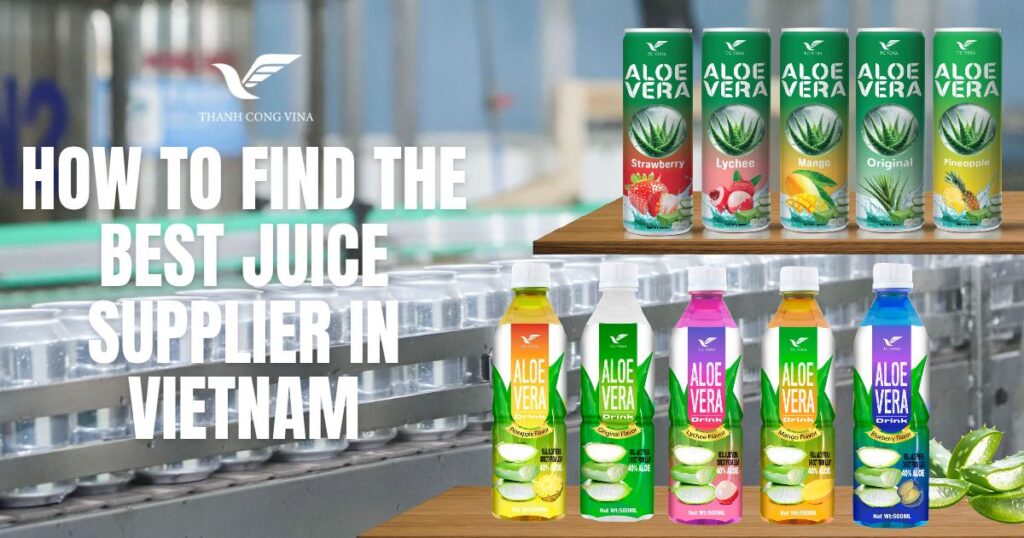
How to Find the Best Juice Supplier in Vietnam
Oct
Finding the right juice manufacturing partner is an important decision for beverage brands seeking to expand their product portfolios, enter new markets, or establish a reliable private-label supply chain. Vietnam has a diverse agricultural sector and a growing food and beverage manufacturing industry, creating opportunities for international buyers looking for fruit-based drinks and customized beverage solutions. However, choosing the right Juice Supplier in Vietnam requires more than comparing quotations or reviewing product catalogs. Buyers must evaluate manufacturing capabilities, ingredient sourcing, quality management, product consistency, packaging flexibility, and export readiness.
A supplier that meets today’s purchasing requirements should also be able to support future product development and changing market demand. Importers, distributors, supermarket chains, and emerging beverage brands therefore need a structured approach to supplier evaluation. By defining product requirements, verifying documentation, reviewing samples, and assessing commercial risks, buyers can make more informed sourcing decisions. This guide explains the key factors to consider when identifying a suitable juice supplier in Vietnam and building a long-term manufacturing partnership.
1. Define Your Business Requirements Before Choosing a Juice Supplier in Vietnam
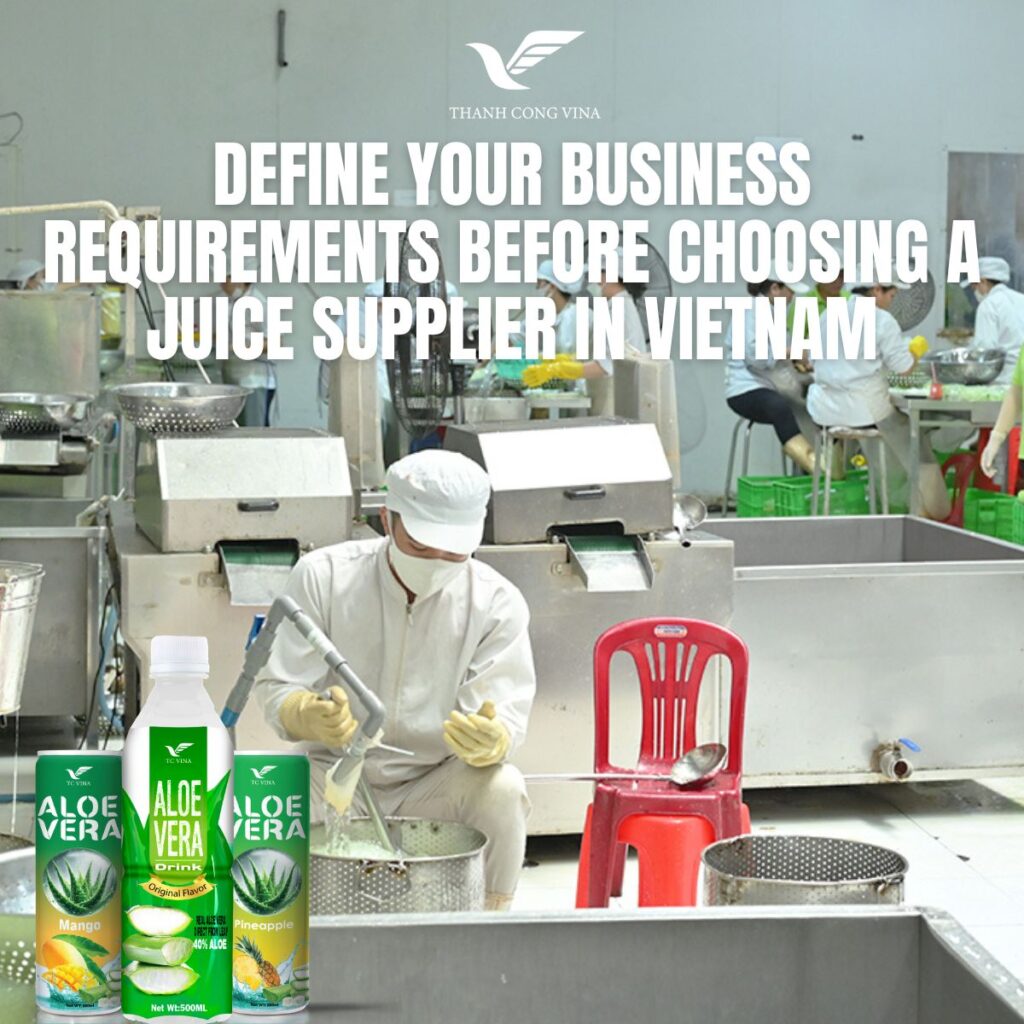
Before contacting manufacturers, buyers should establish a clear understanding of the products they want to purchase and the commercial objectives behind the sourcing project. A well-defined brief helps suppliers assess feasibility, recommend suitable options, and prepare more accurate quotations.
Identify the Right Juice Product Category
The term fruit juice can cover a broad range of beverage products, including juice drinks, fruit juice blends, nectar-style beverages, concentrated ingredients, and other fruit-based formulations. These categories may differ in ingredient composition, processing requirements, labeling rules, and commercial positioning.
International buyers should clarify whether they need a product based on a specific fruit, a blended formulation, or a customized beverage developed for their brand. Potential options may include mango, pineapple, peach, orange, guava, lychee, passion fruit, or other flavors suited to the target market.
It is also important to distinguish between a beverage made from concentrate, a product containing fruit puree, and a product marketed under a different juice category. The appropriate product description depends on the actual formulation and applicable regulations.
Defining these details early allows the supplier to determine whether the requested product fits its existing portfolio or requires additional development.
Establish Target Markets, Packaging, and Order Volumes
A product intended for supermarket distribution may require different packaging and commercial planning from one designed for convenience stores, foodservice, or online retail. Buyers should identify the target customer, preferred packaging format, product size, expected retail price, and estimated order volume.
Packaging options may include cans, PET bottles, or glass bottles, depending on the manufacturer’s capabilities and the product’s requirements. The selection should account for consumer preferences, transportation conditions, shelf presentation, and packaging costs.
Buyers should also provide the destination country and anticipated launch date. These details can affect labeling, documentation, production scheduling, and shipping arrangements.
A realistic initial brief should include:
- Product category and preferred flavors.
- Target market and customer segment.
- Packaging type, size, and design requirements.
- Estimated order quantity and repeat-order expectations.
- Target launch date and relevant regulatory requirements.
With these details established, businesses can compare suppliers against consistent criteria rather than relying on incomplete quotations.
2. Evaluate Manufacturing Capabilities and Production Flexibility
A reliable supplier must be able to produce the required beverage according to agreed specifications and deliver it within a realistic production schedule. Manufacturing capability should therefore be assessed in relation to the buyer’s actual project, not simply the size of the supplier’s factory or the number of products shown in its catalog.
Review Production Processes and Equipment
Buyers should understand the main production stages relevant to their product, from ingredient preparation and blending to processing, filling, packaging, and finished-product inspection. The exact process will vary according to the formulation, packaging system, and intended shelf life.
Ask the manufacturer to explain which stages are handled in-house and whether any activities are outsourced. This distinction matters because external processing or packaging arrangements may affect lead times, quality responsibilities, and communication.
It is also useful to understand how the supplier manages production planning, equipment maintenance, line scheduling, and batch identification. These practices help determine whether the manufacturer can support recurring orders without compromising consistency.
A factory visit or remote technical meeting can provide additional insight into manufacturing operations. Buyers should request relevant supporting information rather than making assumptions based solely on promotional photographs or general statements about modern equipment.
Assess Capacity, Minimum Order Quantities, and Lead Times
Production capacity is valuable only when it matches the buyer’s commercial requirements. A supplier may have extensive manufacturing resources but still be unsuitable for a project with a specific packaging format, low initial volume, or tight launch schedule.
Discuss minimum order quantities for the beverage itself and for customized packaging materials. Printed labels, cans, cartons, and other components may have separate purchasing requirements that influence the total commitment.
Lead times should be broken down into practical stages, including product development, sample approval, packaging procurement, production, quality release, and shipment preparation.
For a new product, the timeline may be longer than for an established formulation using available packaging. Buyers should request realistic estimates and clarify which activities could cause delays.
The goal is to select a manufacturer whose production arrangements align with the business’s sales forecast, cash flow, and inventory strategy.
3. Verify Ingredient Quality, Product Specifications, and Consistency
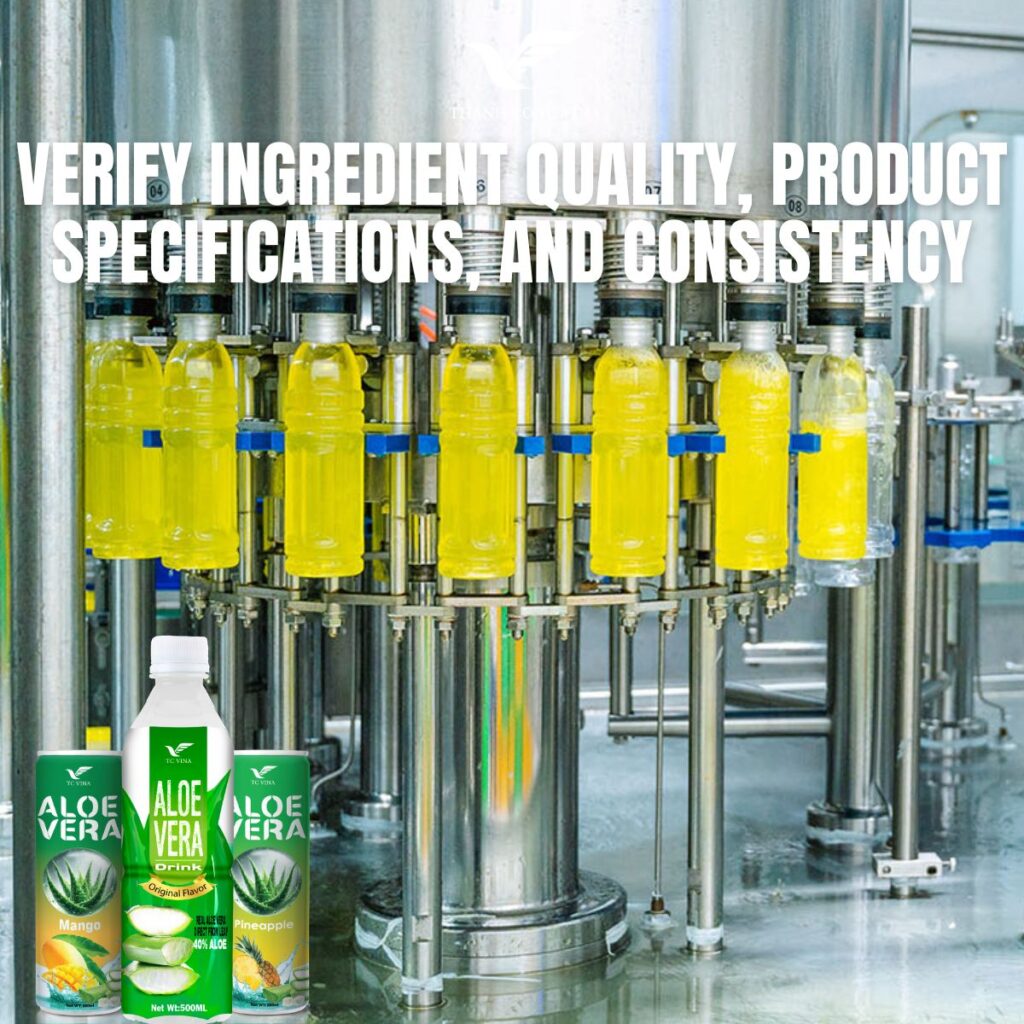
Ingredient quality directly influences the taste, appearance, and overall performance of a fruit beverage. However, buyers should not evaluate a supplier solely on the quality of one sample. They should also determine whether the manufacturer has the systems needed to reproduce the approved product across commercial batches.
Examine Ingredient Sourcing and Traceability
Ask how the supplier selects and approves ingredients, including fruit ingredients, water, sweeteners, flavorings, and other components used in the formulation. Depending on the product, relevant records may include ingredient specifications, supplier documentation, batch identification, and information about storage or handling requirements.
Traceability is particularly important for export-oriented businesses. The manufacturer should have a process for linking incoming ingredients to production batches and finished products.
Buyers should clarify how ingredient substitutions are handled. A change in fruit ingredient, supplier, or formulation component may influence flavor, color, texture, labeling, or regulatory compliance. Any significant change should be assessed and approved according to an agreed procedure.
Where specific fruit characteristics are essential to the brand, those requirements should be documented in the product specification rather than left to informal communication.
Evaluate Samples Against Measurable Criteria
Product sampling allows buyers to assess whether a beverage meets their intended market positioning. However, the evaluation should cover more than general taste preferences.
Relevant criteria may include flavor balance, aroma, color, sweetness, acidity, texture, appearance, and packaging suitability. For products containing fruit pieces or pulp, buyers may also need to review the physical characteristics and distribution of those ingredients.
A written sample approval record helps establish a reference for commercial production. Both parties should understand which characteristics must remain consistent and what procedures apply if a batch falls outside the agreed specification.
Buyers should also ask about finished-product inspection, relevant testing, retained samples, and complaint investigation procedures.
These measures help distinguish a supplier that can deliver a good sample from one that can support a repeatable, commercially reliable product.
4. Check Food Safety Systems and Export Compliance
Food safety and regulatory compliance are essential when importing beverages into international markets. A product that meets one country’s requirements may need different labeling, documentation, or formulation adjustments before it can be sold elsewhere.
Review Quality Management and Certifications
Potential suppliers should provide information about their food safety management systems and the controls used during manufacturing. Depending on the facility and product, these may include ingredient inspection, hygiene procedures, sanitation, process monitoring, finished-product testing, and traceability.
Buyers should verify any relevant certifications by checking the issuing organization, validity period, covered site, and certification scope. Certifications such as HACCP-based systems, ISO-related standards, or other recognized food safety schemes may be relevant, but their applicability must be confirmed for the specific manufacturer and operation.
A certificate should not be treated as a substitute for product-specific documentation or regulatory review. Buyers should establish what evidence is available to demonstrate that the proposed beverage meets their requirements.
It is also useful to ask how the supplier handles nonconforming products, corrective actions, customer complaints, and product recalls where necessary.
Confirm Destination-Market Requirements
Before approving a formulation, buyers should identify the rules that apply in the destination market. These may cover ingredient permissions, food additives, product naming, nutrition declarations, language, date marking, packaging materials, and claims used in advertising.
Brands should pay particular attention to how the product is described. Terms such as juice, nectar, and juice drink may have different meanings under local regulations and should not be used interchangeably without verification.
Export documentation may include commercial invoices, packing lists, transport documents, certificates of origin where applicable, and additional food-related records required by the destination. The exact documents depend on the product, shipment, and trade arrangements.
Agree on responsibilities for preparing and checking documentation before production begins. This can reduce the risk of avoidable customs delays and labeling discrepancies.
5. Compare OEM, ODM, and Private Label Services
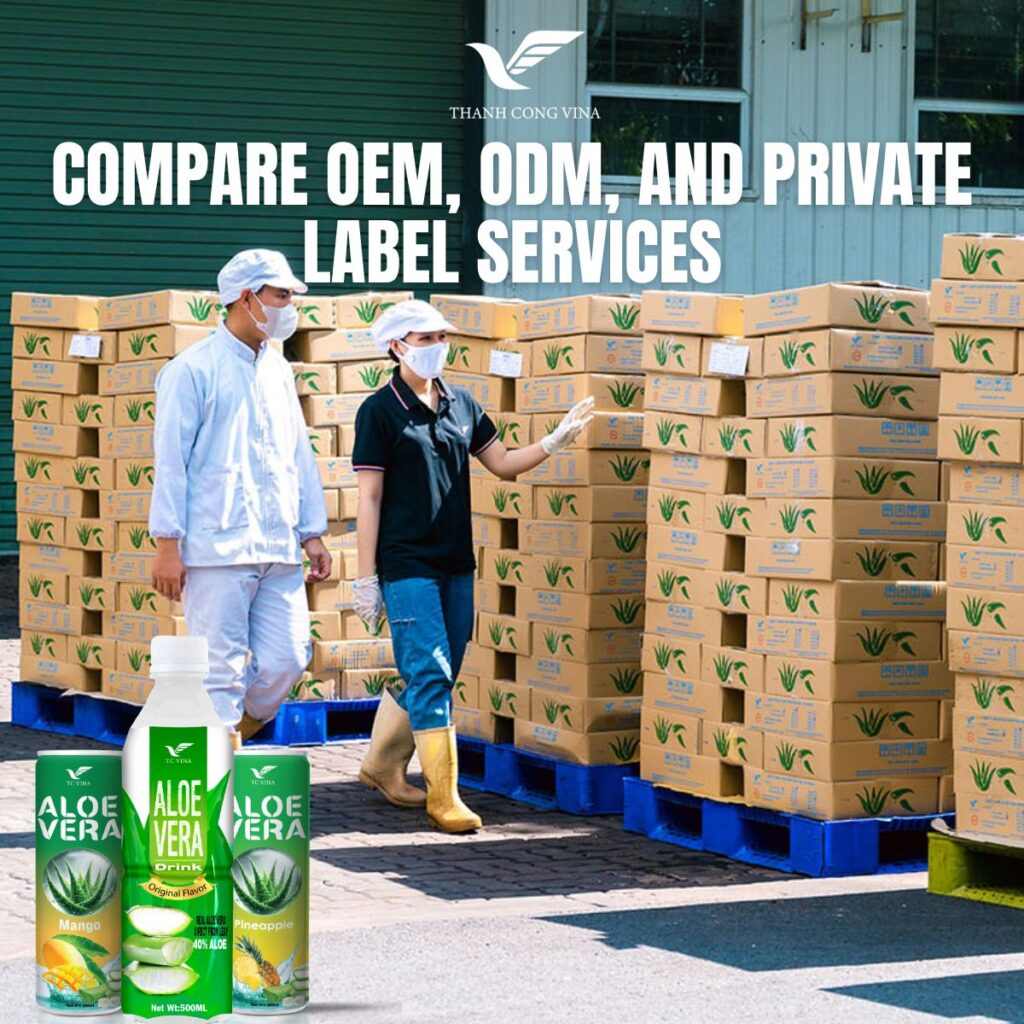
For businesses building their own beverage brands, manufacturing services can influence how quickly and efficiently a product reaches the market. OEM, ODM, and private-label arrangements are not identical, so buyers should understand the proposed scope before signing a commercial agreement.
Choose the Right Product Development Model
OEM projects may involve manufacturing a beverage according to a buyer’s established formulation and specifications. ODM arrangements may involve a greater level of product development support from the manufacturer, depending on the services offered. Private-label projects generally involve selling products under the buyer’s own brand, using an agreed manufacturing and packaging arrangement.
The precise definitions and responsibilities should be documented in the contract. Buyers should clarify ownership of formulations, artwork, packaging designs, and any proprietary product information.
If the supplier is expected to support development, ask how sampling works, how many revisions are included, and how the final formulation will be approved.
A detailed product brief should cover target consumers, preferred flavors, ingredient expectations, packaging, target pricing, and intended distribution channels. The more complete the brief, the easier it becomes to assess technical feasibility and commercial suitability.
Assess Customization and Brand Support
Customization can involve flavor variations, ingredient adjustments, packaging sizes, label design, or other product attributes. Not every manufacturer can accommodate every request, and some options may require additional development or minimum purchasing commitments.
Buyers should confirm which packaging components are available, whether custom artwork can be supported, and how long material procurement typically takes.
They should also review the process for approving label content, final artwork, product specifications, and pre-production samples. These checkpoints help prevent avoidable errors during mass production.
A supplier’s value is not determined by customization alone. The business should also consider communication, technical documentation, schedule reliability, and the ability to maintain approved specifications during repeat orders.
6. Compare Total Cost, Logistics, and Supply Chain Reliability
Price is an important consideration, but the lowest unit quotation does not always represent the best purchasing decision. International buyers should evaluate the total cost of sourcing, including expenses that may arise before production, during shipment, and after arrival.
Calculate Total Landed Cost
A useful comparison should consider more than the ex-factory product price. Depending on the transaction, the total cost may include product development, samples, testing, customized packaging, freight, insurance, import duties, customs clearance, and local distribution.
Payment terms and currency exposure may also influence the financial risk of an order. Buyers should clarify which costs are included in the quotation and which are payable separately.
Comparisons are meaningful only when suppliers are quoting against equivalent specifications, quantities, packaging, and delivery terms. A lower quotation may reflect a different ingredient composition, packaging quality, or service scope.
Businesses should therefore review price alongside product suitability, documentation, production reliability, and responsiveness.
Plan Shipping and Inventory Carefully
Export orders require coordination between production completion, quality release, document preparation, freight booking, and delivery. Buyers should establish realistic milestones and confirm how shipment delays will be communicated.
Shelf life and storage conditions must also be considered. The buyer should understand the validated shelf life of the actual product, the recommended storage conditions, and the amount of remaining shelf life expected upon arrival.
Demand forecasting can help determine an appropriate initial order quantity and reorder schedule. Ordering too much can tie up working capital, while ordering too little may result in stockouts or repeated logistics costs.
A dependable supply relationship includes regular communication, clear escalation procedures, and a shared understanding of how changes in demand or production schedules will be managed.
7. Why Consider Thanh Cong Vina as Your Beverage Manufacturing Partner?
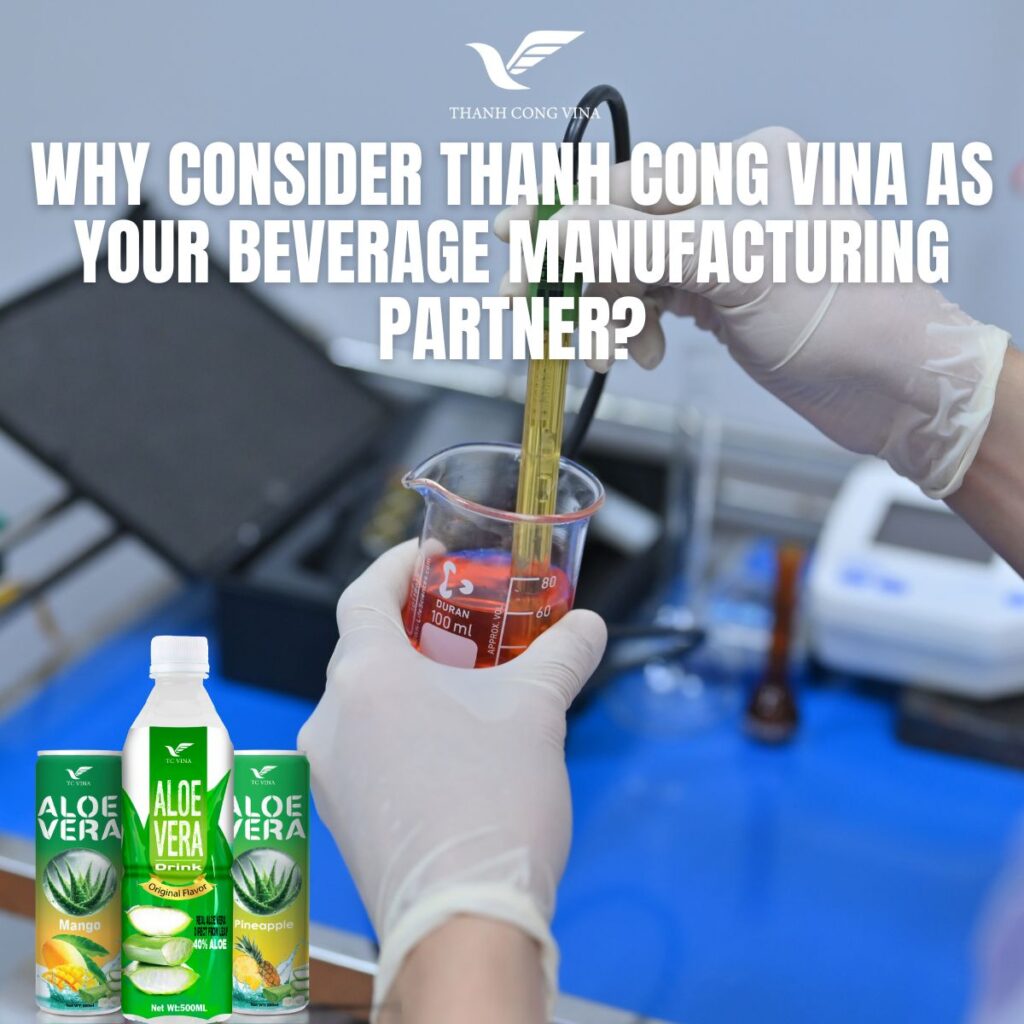
Choosing a manufacturer is a long-term business decision that affects product development, quality management, inventory planning, and brand growth. International buyers should select a partner based on verified capabilities and the specific requirements of their project rather than relying on broad claims about manufacturing excellence.
Thanh Cong Vina operates in the beverage manufacturing sector, serving business needs related to fruit-based drinks and other beverage categories. Buyers interested in OEM, ODM, or private-label production can discuss their product concepts, preferred flavors, packaging formats, target markets, and estimated order quantities to assess project suitability.
Prepare a Clear Supplier Inquiry
To support an efficient evaluation, buyers should provide a concise brief containing the product category, intended flavor, packaging size, destination country, expected quantity, target launch date, and relevant regulatory requirements.
They should also specify whether they have an existing formulation or require development support. This information helps the manufacturer identify what can be quoted immediately and what requires technical assessment.
Before confirming an order, request the relevant product specifications, quality documentation, manufacturing details, minimum order quantities, lead times, payment terms, and shipping responsibilities. Verify that the proposed arrangement meets the commercial and regulatory requirements of the intended market.
A transparent supplier evaluation process makes it easier to compare proposals and establish realistic expectations. Once the product and commercial conditions are agreed, documented approvals and regular communication can support a more consistent sourcing relationship.
Conclusion
Finding the best Juice Supplier in Vietnam requires a balanced assessment of manufacturing capability, ingredient quality, product consistency, food safety, customization, and export readiness. International buyers should begin with clear product requirements, verify relevant documentation, evaluate samples against agreed specifications, and compare total landed costs rather than focusing on unit price alone. Production capacity, minimum order quantities, lead times, and communication practices are equally important when building a reliable supply chain.
Thanh Cong Vina provides a point of contact for businesses exploring beverage manufacturing opportunities in Vietnam, including potential OEM and private-label projects. Buyers should discuss their target products, packaging preferences, destination markets, and projected volumes to determine whether the proposed solution fits their needs. Before placing an order, confirm product specifications, available capabilities, quality documentation, and commercial terms. By approaching sourcing systematically, businesses can make informed decisions and build a stronger foundation for long-term growth with Thanh Cong Vina as a potential beverage manufacturing partner.
