
Products Knowledge
Juice Supplier Vietnam: Custom Juice Manufacturing Solutions
Oct
Choosing the right Juice Supplier Vietnam can help importers, distributors, retailers, and beverage brands develop customized juice products while managing production requirements, packaging options, and export preparation. Vietnam offers opportunities for businesses seeking beverage manufacturing partnerships, supported by its agricultural sector and growing participation in international food and beverage trade. From selecting fruit ingredients and developing product formulations to choosing packaging formats and planning production, customized manufacturing allows buyers to create products aligned with their commercial strategies. Whether a business is launching a new juice line or expanding an established portfolio, working with an experienced manufacturing partner can simplify product development and supplier coordination. Understanding the available customization options is an essential first step toward building a competitive beverage offering for domestic and international markets.
1. Juice Supplier Vietnam: Understanding Custom Juice Manufacturing Solutions
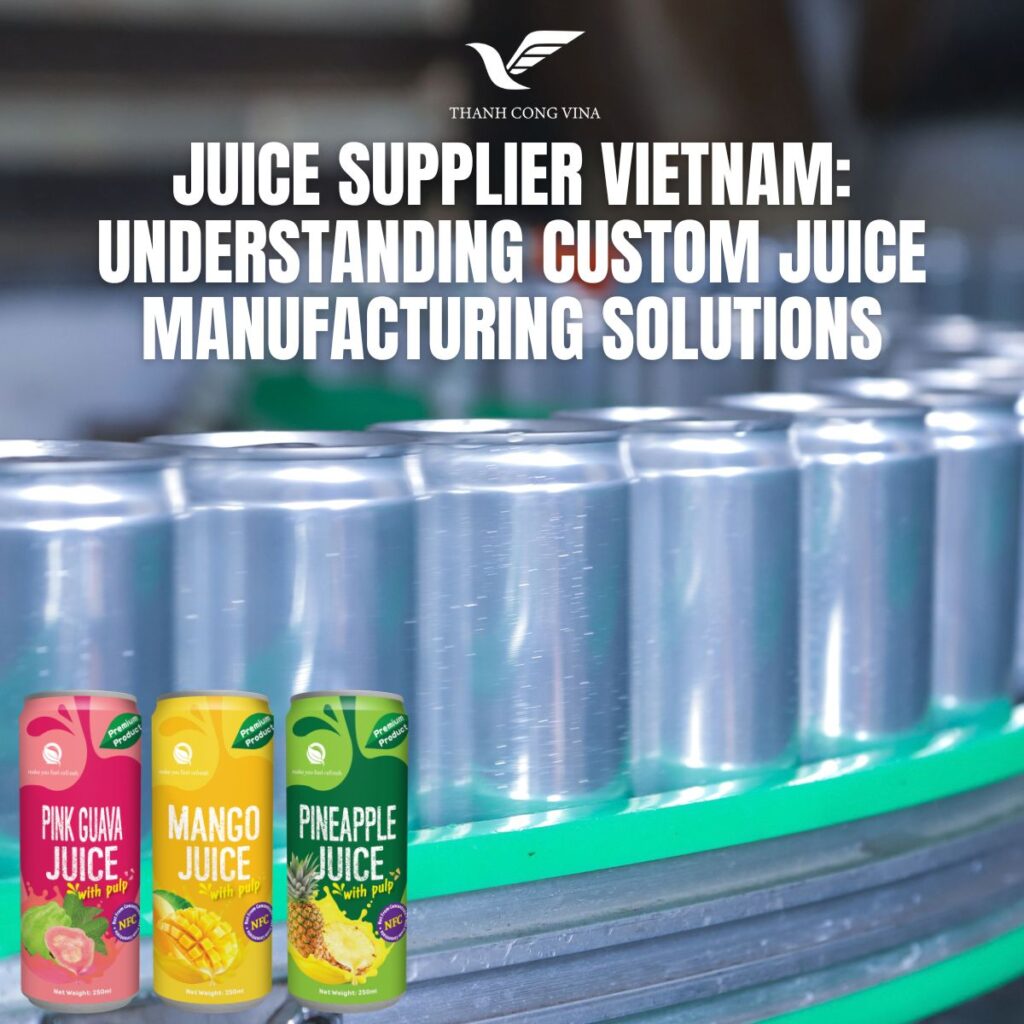
Custom juice manufacturing allows businesses to develop beverages according to their own product specifications rather than relying exclusively on standardized products. Depending on the manufacturer’s capabilities, buyers may be able to customize ingredients, flavor profiles, sweetness levels, packaging formats, product presentation, and other commercial requirements.
For international beverage brands, this approach creates opportunities to differentiate their products and respond to market demand without establishing their own manufacturing facilities.
Tailored Product Development for Different Business Models
Different buyers have different objectives. A supermarket chain may require a private label juice range designed for its retail customers, while a beverage distributor may prioritize versatile products that appeal to multiple customer segments. A foodservice company may need specific packaging formats suitable for restaurants, hotels, or catering operations.
A custom manufacturing project should begin with a clear understanding of the buyer’s intended market and commercial model. Important considerations include:
- Target consumers and their purchasing preferences.
- Intended sales channels, such as supermarkets, convenience stores, or foodservice.
- Preferred fruit flavors and product characteristics.
- Target retail price and estimated production cost.
- Packaging size, materials, and visual identity.
- Destination market requirements and applicable regulations.
Defining these factors early helps both parties evaluate whether a proposed product is commercially and technically feasible.
From Product Concept to Market-Ready Beverage
A successful custom juice project involves several connected stages. The buyer first establishes the product concept, followed by discussions about formulation, ingredient availability, processing requirements, packaging, quality specifications, and production planning.
Samples and formulation reviews can help confirm whether the proposed beverage matches the buyer’s expectations. Before moving into commercial production, both parties should agree on measurable product specifications, approved packaging artwork, quality requirements, and acceptance criteria.
This structured approach reduces misunderstandings and creates a clearer foundation for repeat orders. It also helps buyers evaluate potential suppliers based on their ability to support the entire project rather than simply provide a quotation.
2. Developing Custom Juice Formulations for Target Markets
Product formulation is one of the most important parts of customized juice manufacturing. Flavor, sweetness, acidity, color, texture, ingredient composition, and stability can influence consumer acceptance and determine whether a beverage fits the intended market.
A qualified manufacturing partner should discuss these elements with the buyer before finalizing a formulation. The objective is to develop a product that balances consumer expectations, technical feasibility, regulatory requirements, and commercial considerations.
Selecting Fruit Flavors and Ingredient Combinations
Fruit selection shapes a juice product’s identity. Common options include mango, pineapple, orange, apple, peach, grape, guava, passion fruit, and mixed-fruit combinations. Depending on ingredient availability and manufacturing capabilities, businesses may also explore less conventional flavor combinations to distinguish their product lines.
For example, mango juice may appeal to consumers seeking a familiar tropical fruit profile, while pineapple-based beverages can support refreshing product concepts. Mixed-fruit formulations offer another way to create variety within an existing beverage portfolio.
Buyers should communicate their preferred flavor profile and ingredient expectations clearly. Terms such as fruit juice, juice drink, fruit nectar, and fruit-flavored beverage may describe different product categories, depending on formulation and applicable regulations. These categories should not be treated as interchangeable.
Ingredient specifications should also identify the required fruit content, permitted ingredients, sweetness system, and any restrictions related to additives or allergens.
Balancing Taste, Stability, and Production Feasibility
A formulation that tastes appealing in a laboratory sample must also perform appropriately under the intended processing, packaging, storage, and distribution conditions.
Factors such as acidity, soluble solids, ingredient interactions, and processing methods can affect the finished beverage. Product development may therefore require multiple sample rounds and technical adjustments before a formulation is approved.
Shelf-life expectations should be established early, especially when products will travel through international distribution networks. The proposed formulation, processing method, packaging system, and storage conditions must work together to support the intended shelf life.
Manufacturers and buyers should validate relevant product characteristics through appropriate testing rather than relying solely on appearance or initial taste evaluations. Clear technical specifications help ensure that the approved sample becomes a meaningful reference for commercial production.
Creating Products for Specific Consumer Preferences
Consumer preferences differ across countries, age groups, and retail channels. Some markets may favor sweeter beverages, while others may show greater interest in less-sweet options, recognizable ingredients, or specific fruit combinations.
However, buyers should avoid assuming that a particular flavor profile will perform equally well everywhere. Market research, competitor analysis, customer feedback, and sample evaluations can help identify suitable product directions.
A well-planned development process gives brands the flexibility to refine their beverage concepts before committing to larger production volumes.
3. OEM, ODM, and Private Label Juice Manufacturing
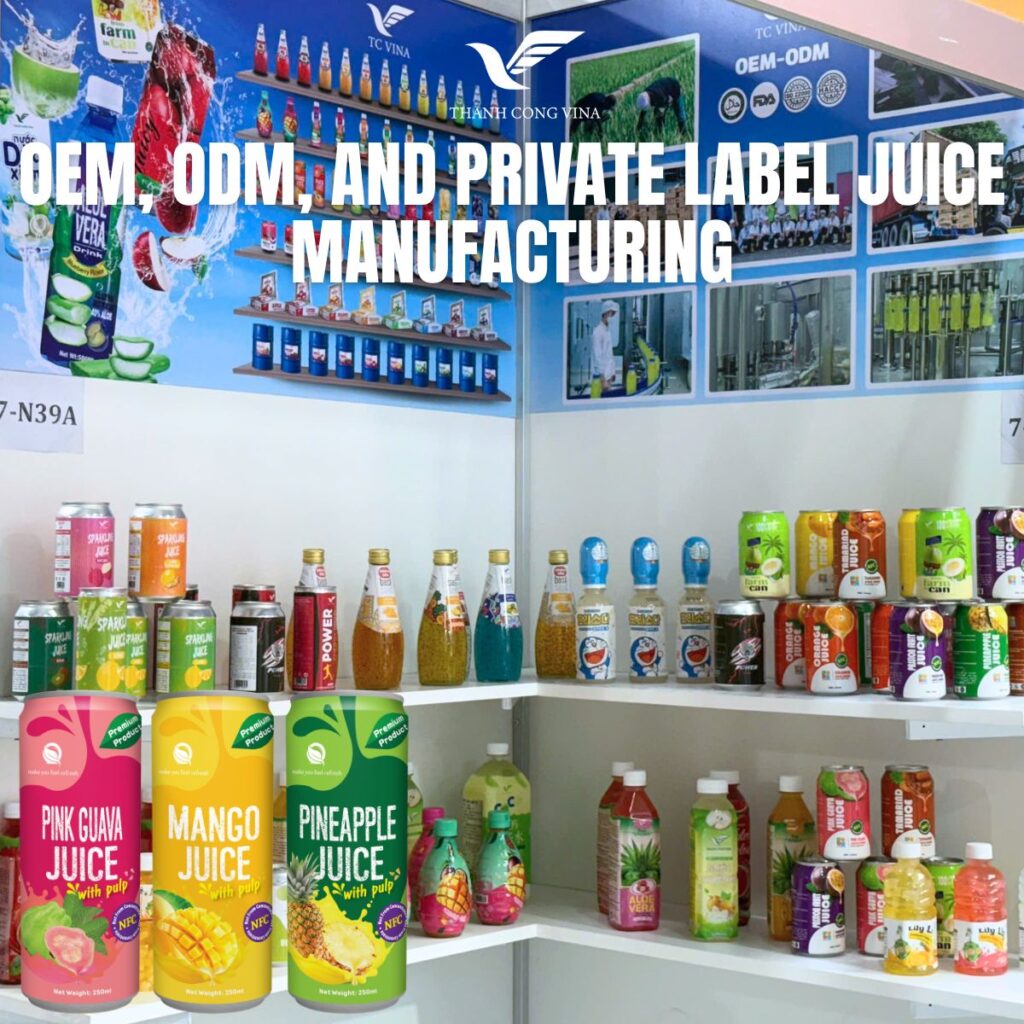
Businesses looking for a Juice Supplier Vietnam may encounter several manufacturing arrangements, including OEM, ODM, and private label services. Although these terms are sometimes used together, they can represent different levels of product development and customization.
Understanding the differences helps buyers select a cooperation model that matches their internal resources, timelines, and brand strategy.
OEM Manufacturing for Established Product Specifications
Original Equipment Manufacturing, commonly known as OEM, generally involves producing beverages according to specifications provided or agreed upon with the buyer.
The buyer may already have a defined formulation, product concept, packaging design, and technical requirements. The manufacturing partner evaluates the specifications, confirms feasibility, and agrees on the production conditions.
OEM can suit established beverage companies that have internal product development resources or want to transfer an existing product concept to an external manufacturer.
Before signing an agreement, both parties should clarify formulation ownership, ingredient sourcing responsibilities, packaging procurement, product testing, and procedures for approving changes.
ODM Services for Product Development Support
Original Design Manufacturing, or ODM, generally provides more support in developing the product concept or formulation. Depending on the supplier’s capabilities, this may include proposing flavors, adjusting formulations, recommending packaging options, or helping buyers assess production feasibility.
ODM can be useful for emerging brands, distributors, and businesses entering a new beverage category without maintaining a large internal research and development team.
The exact scope of service varies between manufacturers. Buyers should therefore confirm which activities are included, whether development fees apply, how many sample revisions are available, and who owns the final formulation.
Private Label Solutions for Brand Expansion
Private label manufacturing allows a buyer to sell products under its own brand using an agreed manufacturing arrangement. This model can help retailers, distributors, and beverage businesses expand their portfolios without investing in their own production infrastructure.
A private label juice project may involve selecting an available product concept, customizing certain characteristics, preparing branded packaging, and coordinating production according to an agreed specification.
Brand ownership does not automatically establish ownership of every formulation, process, or technical document. These matters should be explicitly addressed in the manufacturing contract.
For any cooperation model, buyers should request a written description of services, responsibilities, product specifications, and approval procedures. A transparent agreement helps prevent disputes as the product moves from development to repeat production.
4. Packaging Customization and Product Presentation
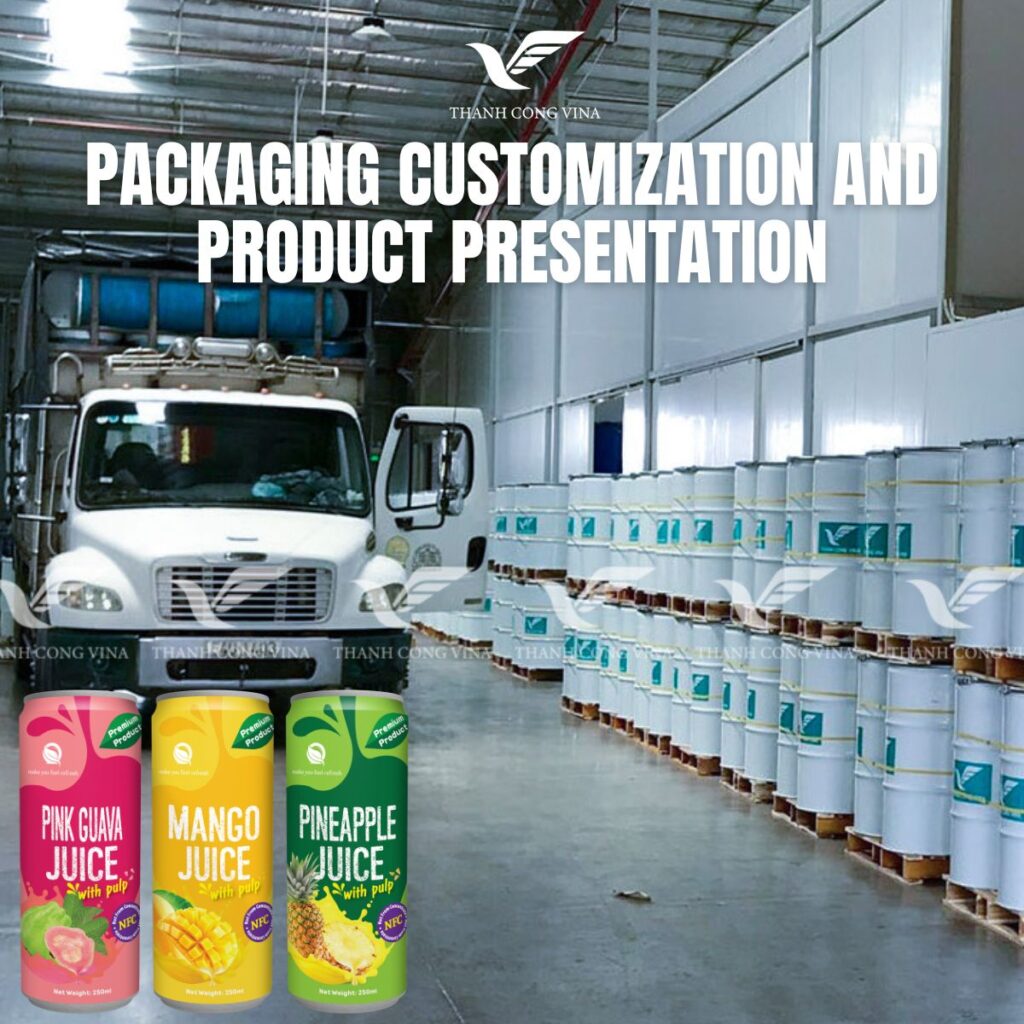
Packaging plays an important role in how consumers recognize, understand, transport, store, and purchase juice products. It also affects production compatibility, distribution planning, and the overall cost structure.
A custom juice manufacturing project should evaluate packaging alongside formulation rather than treating it as a final design decision.
Choosing the Right Packaging Format
Depending on the manufacturer’s available production lines and the product’s technical requirements, juice beverages may be offered in cans, PET bottles, glass bottles, or other suitable formats.
Each option presents different considerations.
Cans may suit products positioned for convenience retail, vending, and on-the-go consumption. PET bottles can offer practical handling and different size options. Glass bottles may support particular premium or specialty product concepts, although their weight and handling requirements should be considered.
The best format depends on the intended beverage, processing requirements, target customer, distribution conditions, and budget. Buyers should confirm that the selected container is compatible with the manufacturing process and suitable for the product’s intended shelf life.
Bottle Sizes, Label Design, and Brand Identity
Packaging size affects portion perception, shelf positioning, shipping efficiency, and pricing. A smaller container may suit convenience-oriented products, while a larger format may be appropriate for sharing or household consumption.
Label design should communicate essential product information clearly while maintaining consistency with the buyer’s brand identity. Depending on the destination market, labels may need to include ingredients, nutrition information, net quantity, storage instructions, allergen declarations, manufacturer details, and other mandatory information.
Artwork should be reviewed before production to confirm dimensions, legibility, language requirements, and compliance with applicable regulations. Buyers should also clarify whether the manufacturer or the buyer is responsible for artwork preparation, translation, and regulatory review.
Evaluating Packaging Costs and Supply Conditions
Packaging decisions can influence minimum order quantities, procurement lead times, storage needs, and production scheduling. Custom printing, special container specifications, and nonstandard components may require additional planning.
Before approving a format, buyers should request a quotation that identifies the main cost components. These may include containers, closures, labels, cartons, printing, and other packaging materials.
It is also important to confirm how unused custom packaging will be handled if an order changes or is discontinued. Clear arrangements can help reduce waste and protect both parties’ commercial interests.
5. Quality Assurance, Food Safety, and Export Preparation
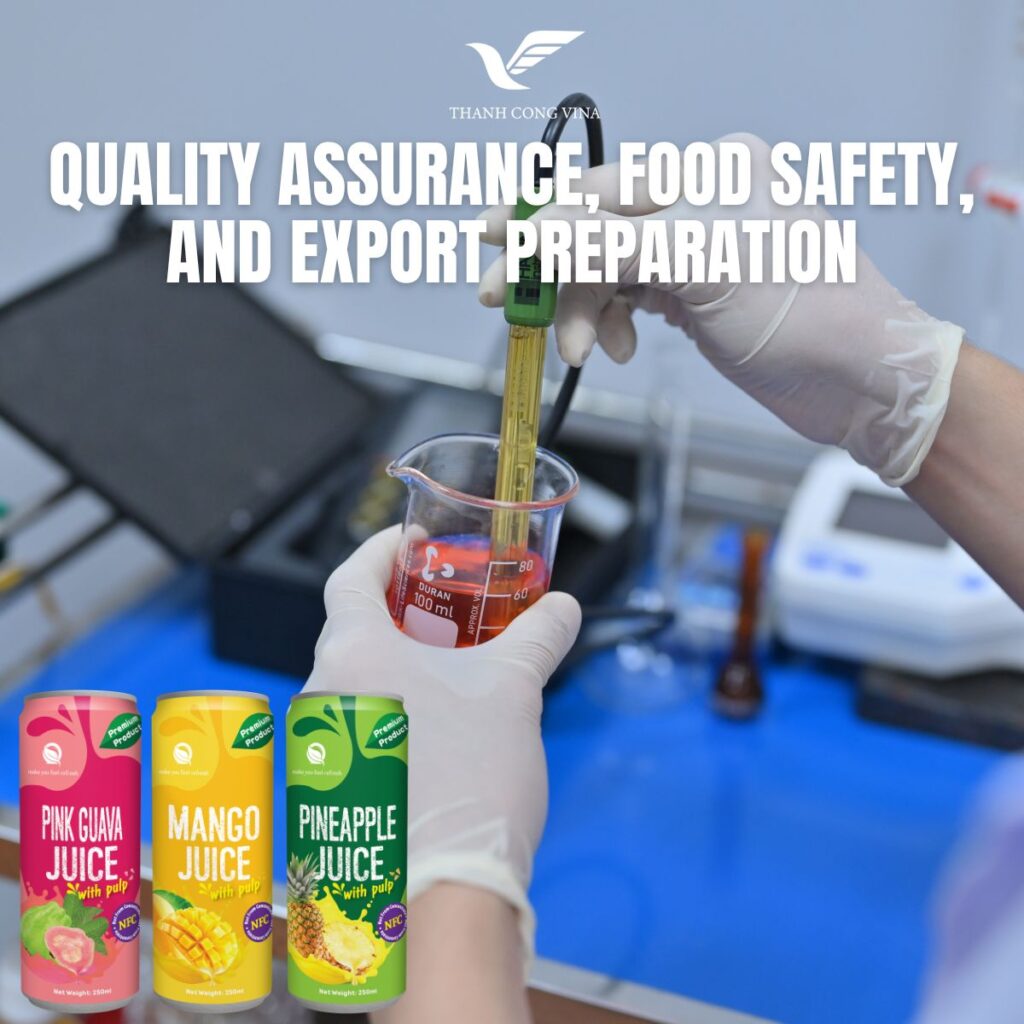
For businesses purchasing beverages internationally, product quality must be supported by documented procedures and clear responsibilities. A competitive Juice Supplier Vietnam should be evaluated not only on its product range but also on its ability to explain relevant quality controls and provide documentation appropriate to the project.
Quality assurance should be considered throughout product development, manufacturing, packaging, storage, and shipment preparation.
Defining Product Specifications and Quality Checks
A product specification establishes the agreed characteristics of the beverage. Depending on the product, it may cover ingredient composition, sensory attributes, physicochemical parameters, packaging requirements, microbiological criteria, and storage conditions.
Buyers should ask how raw materials are evaluated, how production batches are monitored, and how finished products are assessed before release. The specific testing plan should reflect the product category, processing method, applicable regulations, and buyer requirements.
Sample approval is useful, but it should be supported by documented specifications and suitable verification procedures. Businesses should also clarify how deviations are investigated and how corrective actions are communicated.
Reviewing Certifications and Supporting Documents
Food safety certifications and quality management documentation can help buyers assess a manufacturer’s systems. However, certification claims should be verified rather than accepted without review.
Buyers should check the issuing organization, validity period, facility covered, certification scope, and relevance to the proposed product. A certificate associated with one site or activity should not automatically be assumed to cover every product or manufacturing operation.
Depending on the destination market and commercial agreement, buyers may also need product specifications, ingredient declarations, test reports, certificates of analysis, traceability records, or other supporting documents.
The required documentation should be identified before production begins so that responsibilities and timelines are clear.
Preparing Products for International Distribution
Export preparation involves more than manufacturing a beverage that meets the buyer’s taste expectations. The product must also comply with applicable import requirements and be supported by suitable shipping documentation.
Requirements vary according to the destination country, product classification, ingredient composition, packaging, and import arrangement. Buyers should confirm applicable labeling rules, ingredient restrictions, product registration requirements, and documentation needs with qualified regulatory or import specialists.
Logistics planning should account for production lead times, packaging availability, shipping schedules, storage conditions, and expected transit duration. These factors are particularly important when coordinating promotional launches or seasonal demand.
Early communication between the buyer, manufacturer, freight forwarder, and importer can help identify potential delays before they affect delivery commitments.
6. Cost Planning and Long-Term Supplier Cooperation
Choosing a manufacturing partner involves balancing product quality, customization, operational reliability, and total cost. The lowest initial quotation may not represent the best commercial value if it excludes important services or creates additional expenses later.
A structured cost evaluation helps buyers compare suppliers on a consistent basis and plan sustainable purchasing arrangements.
Understanding the Main Cost Components
The total cost of a customized juice product may include ingredients, formulation development, processing, packaging materials, quality testing, labeling, cartons, and production-related services. Freight, insurance, import duties, taxes, and local distribution expenses may also affect the final landed cost.
Not every quotation includes the same items. Buyers should request a breakdown that distinguishes manufacturing costs from logistics and other charges.
The financial model should also consider minimum order quantities, payment terms, sample costs, packaging commitments, and potential costs associated with formulation revisions. These details help businesses calculate realistic margins before launching a product.
Evaluating Minimum Order Quantities and Production Planning
Minimum order quantities can vary according to the product, container format, production setup, ingredient requirements, and packaging specifications.
Custom printed packaging may have separate minimum purchasing requirements. Consequently, the quantity of finished beverages ordered may not be the only factor determining the initial investment.
For a new product, buyers should compare the cost of a smaller market test with the potential unit-cost advantages of a larger order. The decision should reflect expected sales, available storage, cash flow, and the consequences of unsold inventory.
Production schedules should be agreed upon after confirming the availability of ingredients, packaging materials, approved artwork, and any required testing or documentation.
Building a Reliable Manufacturing Partnership
Long-term cooperation depends on communication, transparency, and consistent expectations. Buyers should assess how a potential supplier handles quotations, sample revisions, specification changes, production updates, quality concerns, and repeat orders.
It is also useful to establish clear procedures for handling complaints, product deviations, delayed shipments, and changes to raw materials or packaging. These procedures provide a practical framework for resolving problems before they damage the business relationship.
Regular performance reviews can help both parties identify opportunities to improve cost efficiency, product consistency, and order planning. As market demand develops, the partnership may also support new flavors, alternative package sizes, or additional beverage categories.
For international buyers, a dependable supplier relationship is not simply about placing orders. It is about creating a workable system for developing, producing, documenting, and delivering products in line with agreed commercial requirements.
Conclusion
Finding the right Juice Supplier Vietnam is an important step for beverage businesses seeking customized products, flexible brand development, and a practical route to international markets. From fruit selection and formulation development to packaging customization, quality assurance, and export preparation, every stage should be evaluated against the buyer’s technical requirements and commercial objectives. A structured manufacturing process can help reduce avoidable risks, improve coordination, and establish a stronger foundation for repeat orders. Before making a decision, buyers should review product specifications, confirm manufacturing capabilities, clarify costs, and verify the documentation relevant to their destination market.
Thanh Cong Vina operates in Vietnam’s beverage manufacturing and export sector, providing a potential starting point for businesses exploring juice product development and manufacturing cooperation. By communicating product expectations clearly and evaluating each project carefully, buyers can work toward beverage solutions aligned with their brand strategy. For businesses seeking a Juice Supplier Vietnam, Thanh Cong Vina can be considered as part of the supplier evaluation process for customized juice manufacturing and long-term beverage business development.
