
Products Knowledge
Mango Juice Supplier Vietnam for Importers and Distributors
Nov
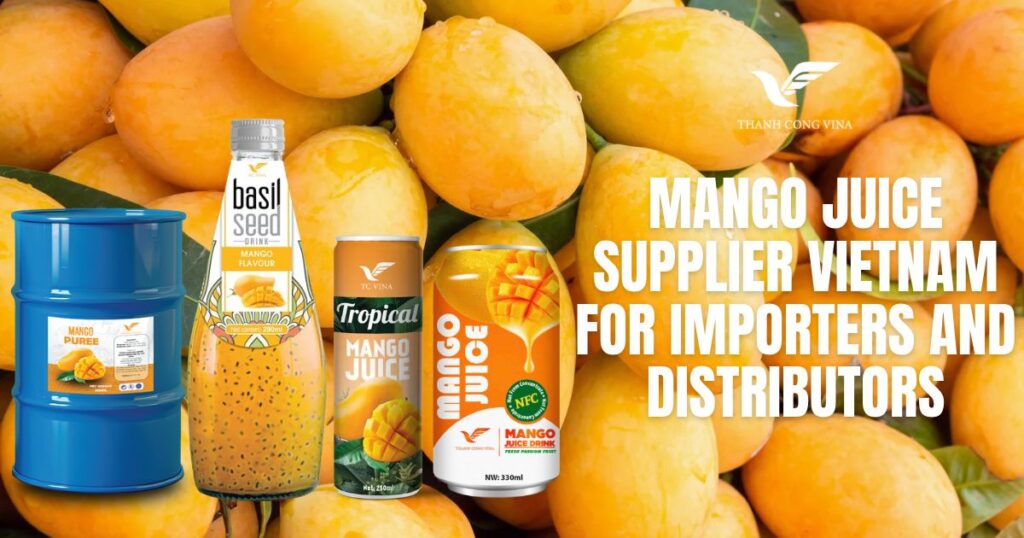
As international demand for diverse fruit-based beverages continues to evolve, finding a reliable Mango Juice Supplier Vietnam becomes an important consideration for importers, distributors, supermarket chains, and beverage businesses.
Vietnam is known for its tropical fruit resources and developing food processing industry, making it an interesting sourcing destination for mango-based beverages. However, successful sourcing requires more than identifying a supplier. Buyers need to evaluate product specifications, flavor consistency, packaging suitability, quality management, and export coordination. Understanding these factors can help international businesses make informed purchasing decisions and build a competitive mango juice portfolio.
1. Why Vietnam Is an Interesting Sourcing Destination for Mango Juice
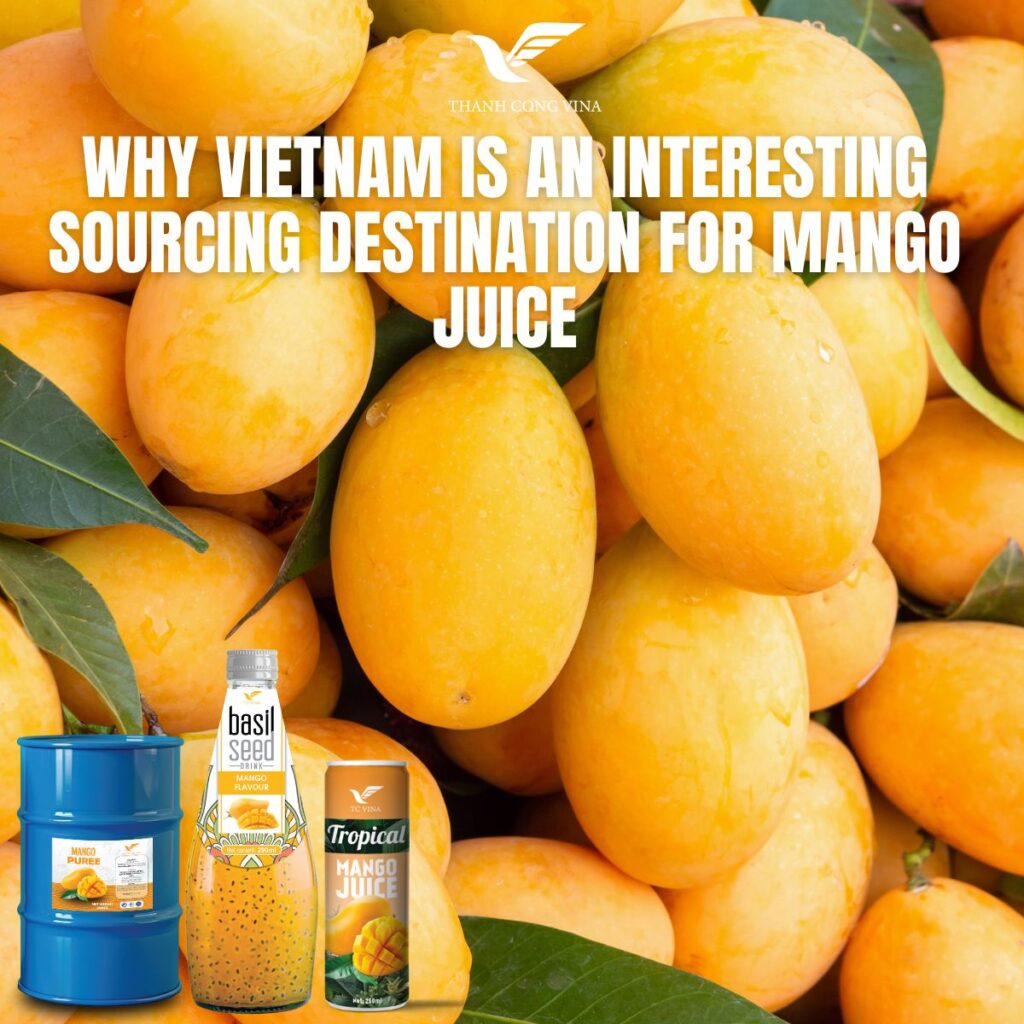
Vietnam’s tropical climate supports the cultivation of various fruit varieties, including mango. Combined with the country’s food processing sector and export-oriented business environment, this creates opportunities for international buyers exploring mango-based beverage products.
Access to Tropical Mango Resources
Mango is an important tropical fruit in Vietnam, with different growing regions contributing to the country’s fruit supply. Vietnamese mango varieties are known for their distinctive characteristics, including sweetness, aroma, flesh color, and texture.
For beverage production, the characteristics of the raw material influence the final product’s flavor profile and appearance. Mango varieties with suitable pulp characteristics can be considered for juice processing, depending on the intended formulation and product specifications.
Working with a Mango Juice Supplier Vietnam allows importers to explore products developed within a country that has an established tropical fruit industry. Nevertheless, buyers should evaluate the actual origin, sourcing arrangements, and raw material specifications of each product rather than assuming that every mango beverage uses locally grown mangoes.
Developing Food Processing and Export Capabilities
Vietnam’s food and beverage industry serves both domestic consumption and international markets. Beverage businesses may offer different product categories, including fruit juice drinks, coconut water, aloe vera beverages, and other tropical fruit-based products.
For international buyers, working with a supplier in Vietnam can provide opportunities to explore a broader range of tropical beverage products through commercial discussions with manufacturers and exporters.
The suitability of a supplier should be assessed based on its actual production capabilities, product portfolio, quality procedures, documentation, and ability to meet the buyer’s market requirements.
Opportunities for Tropical Beverage Positioning
Mango has a familiar flavor profile in many markets, making it suitable for different consumer segments. It can be positioned as a tropical refreshment, a fruit-based everyday beverage, or part of a broader collection of exotic fruit drinks.
For distributors, mango juice can complement other fruit flavors and help retailers build a more varied beverage selection. Its recognizable taste also gives brands an accessible starting point when introducing tropical beverage products to new customers.
2. Mango Juice Supplier Vietnam: Understanding Product Types and Formulation Options
Choosing the right Mango Juice Supplier Vietnam starts with understanding the different types of mango beverages available. Not every product described as mango juice has the same formulation, fruit content, or sensory characteristics.
Importers should identify the product category that matches their commercial positioning and the regulations of their destination market.
Mango Juice Drinks
Mango juice drinks are formulated beverages that combine mango-derived ingredients with other components according to the product specification.
Depending on the formulation, these products may offer different levels of fruit content, sweetness, and flavor intensity. They can be developed for consumers seeking a convenient fruit-flavored beverage in ready-to-drink packaging.
For importers and distributors, mango juice drinks may be suitable for supermarkets, convenience stores, wholesale channels, and foodservice businesses.
Before placing an order, buyers should review the ingredient list, fruit content declaration, nutrition information, and product description to ensure that the product is accurately classified and labeled.
Mango Nectar and Mango-Based Blends
Mango nectar generally has a different formulation profile from products marketed as 100% juice. It may contain mango puree or juice combined with water and other permitted ingredients, subject to applicable regulations.
Mango can also be combined with other fruits to create differentiated beverage concepts. Possible combinations include mango with passion fruit, orange, pineapple, or other tropical fruit flavors.
These blends provide opportunities for brands to develop distinctive products and address consumers who prefer more complex flavor profiles.
However, each formulation should be evaluated individually. Fruit proportions, acidity, sweetness, aroma, and texture can influence the finished beverage and its suitability for a particular market.
Mango Juice Concentrate and NFC Products
Mango juice concentrate and not-from-concentrate (NFC) juice are two different product categories that buyers may encounter when sourcing fruit ingredients or finished beverages.
Mango juice concentrate is produced by removing a portion of the water content from juice or puree. It can be used as an ingredient in beverage manufacturing and may offer logistical advantages depending on the supply chain and application.
NFC juice is processed without concentrating the juice and subsequently reconstituting it. Its production and storage requirements differ from those of concentrate-based products.
Importers should clarify whether they are sourcing finished ready-to-drink beverages, bulk juice ingredients, concentrate, or NFC products. These categories have different specifications, packaging needs, and commercial considerations.
3. Key Quality Factors Importers Should Evaluate Before Purchasing Mango Juice
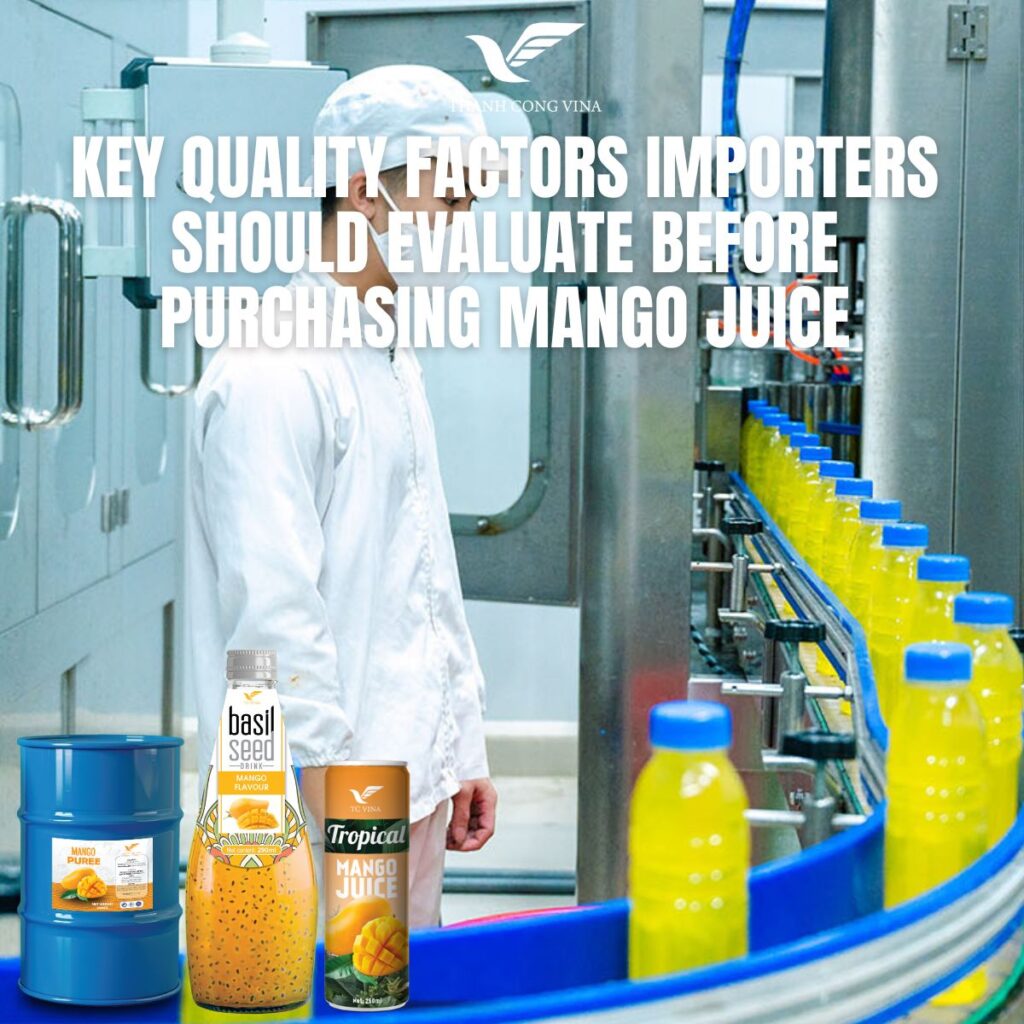
Product quality is a major factor in building consumer trust and maintaining consistent sales. For international buyers, evaluating mango juice requires attention to both sensory characteristics and technical specifications.
Flavor, Aroma, and Color Consistency
Mango beverages are expected to deliver a recognizable fruit profile. Flavor consistency is therefore important when products are distributed across different batches and markets.
Buyers should evaluate:
- Mango aroma and flavor intensity.
- Sweetness and acidity balance.
- Color and visual appearance.
- Mouthfeel and beverage texture.
- Aftertaste and overall sensory quality.
Natural fruit ingredients can vary due to variety, maturity, growing conditions, and processing factors. Manufacturers need appropriate product specifications and quality procedures to manage these variations.
Importers should request product samples and assess them against agreed specifications before confirming commercial orders.
Fruit Content and Ingredient Transparency
Fruit content is an important consideration when evaluating mango beverages. Different product categories may contain different proportions of mango juice, puree, concentrate, or other fruit-derived ingredients.
Buyers should review ingredient declarations and technical documentation to understand the actual composition of the product.
Clear ingredient information also supports accurate labeling and helps importers communicate product characteristics to retailers and consumers.
A responsible supplier should be able to clarify the formulation and provide relevant product information for the items being considered.
Food Safety and Manufacturing Controls
Food safety requirements must be considered throughout the manufacturing and distribution process. Buyers should evaluate the supplier’s applicable quality management systems and the controls used for the specific product.
Depending on the product and manufacturing process, relevant considerations may include raw material inspection, processing controls, filling conditions, packaging integrity, microbiological testing, and finished-product evaluation.
Importers should request valid supporting documents and verify that any certificates or quality claims apply to the relevant facility, product scope, and period of validity.
4. Packaging and Commercial Formats for Mango Juice Distribution
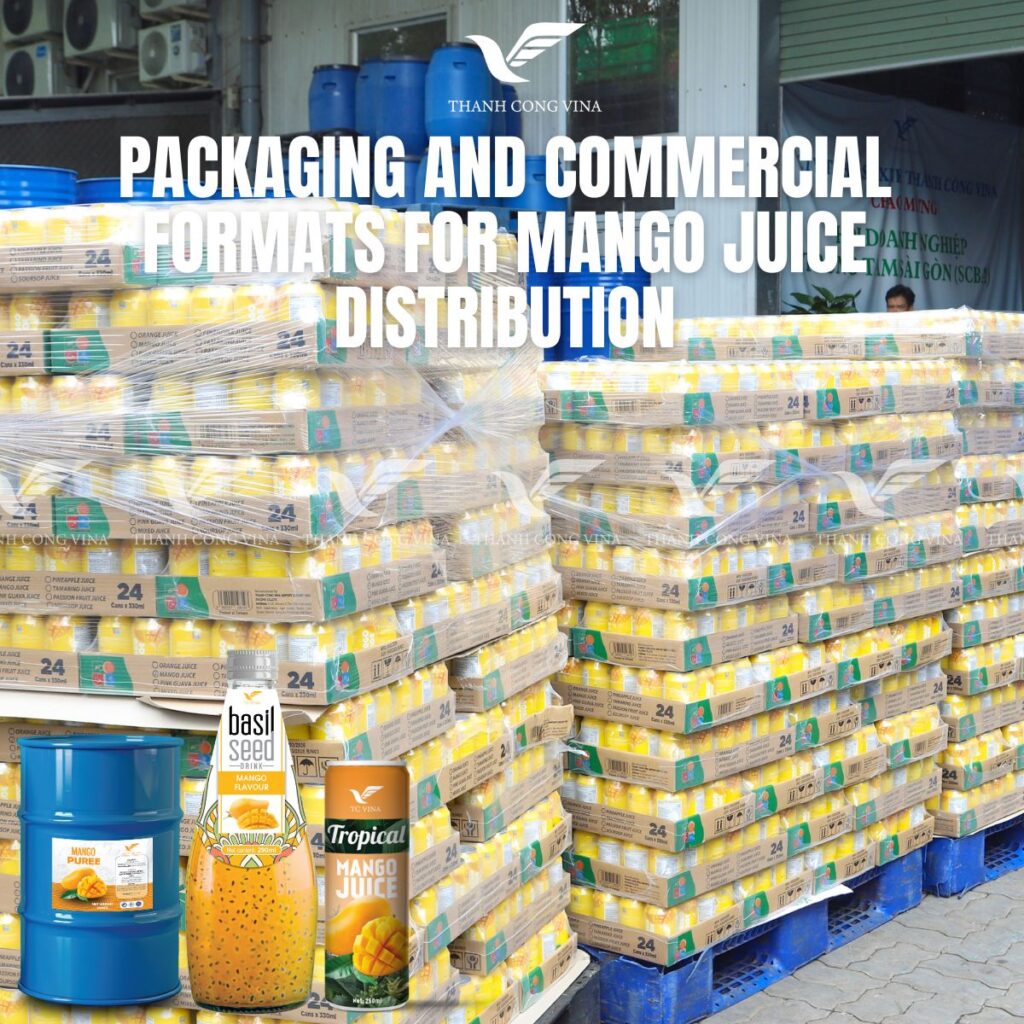
Packaging influences product protection, transportation, retail presentation, and consumer convenience. The appropriate format depends on the product formulation, distribution channel, target price, and destination-market requirements.
Selecting the Right Packaging Format
Mango beverages can be considered in different packaging formats, depending on the manufacturer’s available production lines and project requirements.
Common formats in the beverage industry include:
- PET bottles: Often used for convenient ready-to-drink beverages.
- Aluminum cans: Suitable for compact packaging and various retail environments.
- Glass bottles: Can support selected premium product concepts.
- Carton packaging: Used for different types of packaged fruit beverages.
Each format has different requirements concerning filling technology, product compatibility, transportation, storage, and labeling.
Importers should confirm packaging availability directly with the supplier rather than assuming that all formats are offered for every formulation.
Choosing Suitable Product Sizes
Serving size can influence the product’s positioning and sales channel. Smaller formats may be appropriate for convenience stores, vending, or individual consumption, while larger formats may suit household use or selected foodservice applications.
For example, 250 ml and 330 ml formats are commonly considered for individual servings, while 500 ml bottles may offer another option for consumers seeking a larger drink.
The final selection should account for local purchasing habits, retail shelf dimensions, pricing strategy, and applicable packaging regulations.
Label Design and Retail Readiness
A well-designed label helps consumers identify the flavor, product category, and brand. For mango beverages, visual elements such as mango imagery, tropical colors, and clear product descriptions can communicate the product’s identity.
However, attractive packaging must also comply with destination-market regulations. Label information may need to include product name, ingredient declaration, nutrition information, net volume, manufacturer details, country of origin, date marking, storage instructions, and other required information.
Importers should review label artwork and regulatory requirements before mass production to reduce the risk of costly corrections.
5. How Importers and Distributors Can Build a Successful Mango Juice Product Range
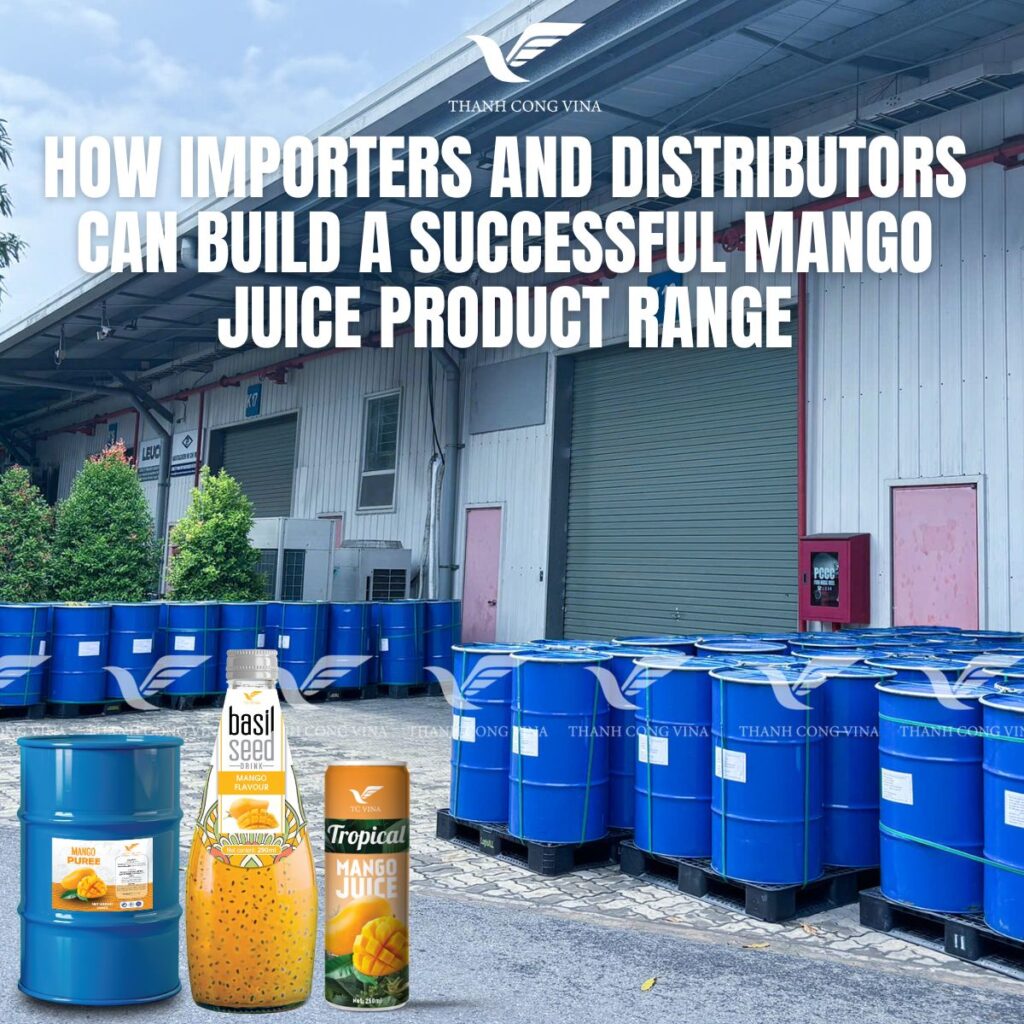
Sourcing a beverage is only one part of a successful distribution strategy. Importers and distributors also need to understand their target customers, retail channels, pricing expectations, and competitive environment.
Identify the Target Market and Consumer Segment
Before selecting a product, buyers should define the market segment they intend to serve.
A mango beverage designed for mass-market supermarkets may require a different positioning from one intended for specialty retailers, hospitality businesses, or premium beverage stores.
Market research should consider:
- Consumer familiarity with mango beverages.
- Preferred sweetness and flavor intensity.
- Competitor products and retail pricing.
- Popular packaging formats.
- Local labeling and import regulations.
- Distribution and storage conditions.
These factors help businesses determine which product specifications are commercially appropriate.
Develop a Balanced Tropical Beverage Portfolio
Mango can serve as an anchor flavor within a broader tropical beverage collection. Distributors may consider combining it with other fruit-based products to provide retailers with more variety.
Potential complementary categories include coconut water, aloe vera drinks, pineapple beverages, passion fruit drinks, and mixed-fruit juice products.
A diversified portfolio can create cross-selling opportunities and allow businesses to serve different consumer preferences through one supplier relationship.
However, portfolio expansion should be guided by actual market demand, available resources, and the commercial performance of each product.
Evaluate Supplier Reliability and Communication
A supplier relationship should be based on clear communication and realistic expectations.
Before entering a long-term agreement, importers should discuss product specifications, order quantities, lead times, packaging requirements, quality documentation, payment terms, and shipment arrangements.
Buyers should also establish procedures for handling product deviations, packaging issues, and changes to agreed specifications.
These discussions help both parties understand their responsibilities and create a more predictable sourcing process.
6. Working with Thanh Cong Vina as a Mango Beverage Business Partner
Selecting a supplier involves evaluating how well its product portfolio and business capabilities match the buyer’s requirements. For companies exploring tropical beverages from Vietnam, Thanh Cong Vina is a business to consider when discussing mango-based beverage products and related categories.
Exploring Mango and Other Tropical Beverage Products
Mango beverages can be positioned alongside other fruit-based drinks to create a varied product offering. Buyers may explore mango juice products together with selected fruit flavors and other beverage categories, depending on the available portfolio.
This approach can help importers assess opportunities for building a broader range rather than focusing on a single product.
Product availability, formulation, packaging, and commercial conditions should be confirmed directly with Thanh Cong Vina for each project.
Discussing Product Specifications and Export Requirements
International buyers often have specific requirements related to fruit content, ingredient declarations, packaging formats, shelf life, labeling, and destination-market compliance.
These details should be discussed at the beginning of the sourcing process. Importers should provide their target market, preferred product type, packaging expectations, and estimated order volume so that the supplier can assess the project requirements.
Documentation should also be reviewed carefully to ensure that the product and its supporting records meet the applicable requirements of the importing country.
Building a Long-Term Supply Relationship
A sustainable business relationship depends on consistent communication, transparent specifications, and practical planning.
For importers and distributors, working with a Vietnam-based beverage supplier can create opportunities to explore tropical fruit products and develop commercial partnerships around their target markets.
The most suitable cooperation model should be established through direct discussions covering product feasibility, quality expectations, production arrangements, and export logistics.
Conclusion
Mango beverages offer international importers and distributors opportunities to expand their tropical drink portfolios with a familiar and versatile fruit flavor. However, successful sourcing requires careful consideration of product formulation, fruit content, sensory consistency, packaging, food safety, and destination-market regulations. Buyers should evaluate samples, verify technical documentation, and establish clear specifications before confirming commercial orders.
For businesses searching for a Mango Juice Supplier Vietnam, Thanh Cong Vina is worth considering when exploring mango-based beverages and other tropical drink categories from Vietnam. By discussing product requirements, packaging options, and export expectations with Thanh Cong Vina, importers and distributors can assess suitable opportunities for their markets. A well-planned sourcing strategy can help businesses develop a differentiated product range, support retail distribution, and build stronger long-term relationships in the international beverage industry.
